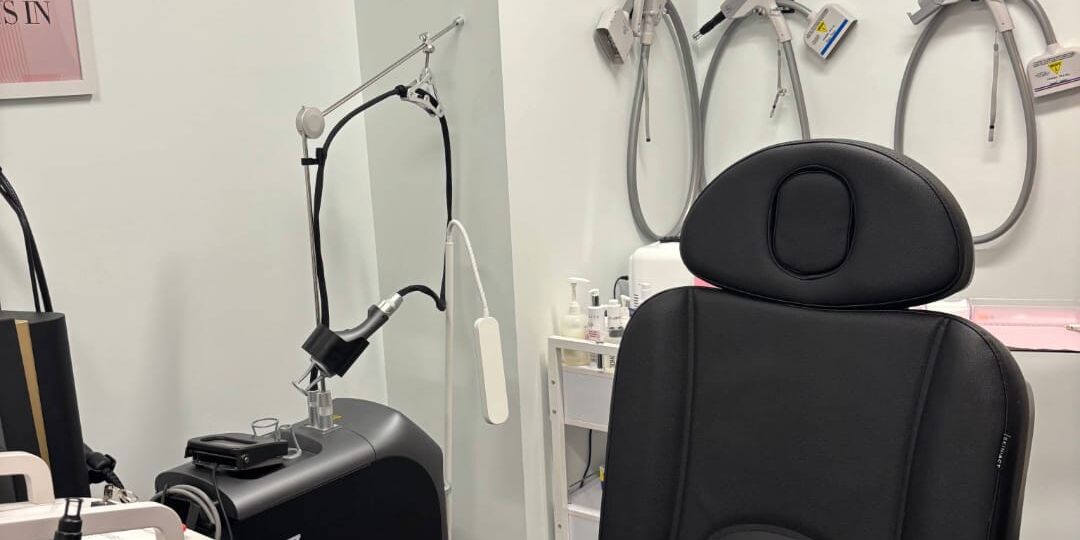
A treatment room at RESTOR Medical Spa in Boulder is pictured on Oct. 9, 2026. (Photo by Emily Doskow)
CU Boulder students and locals bypass doctors as demand for GLP-1s rise
Carter Eckert, 20, was diagnosed with prediabetes in early 2024 and advised by his doctor to take the GLP-1 medication tirzepatide. The junior at the University of Colorado Boulder studying psychology and sociology had been overweight most of his life.
“Originally, I was 290 pounds. I lost about 65 pounds on my own, but then I went in for routine bloodwork,” Eckert said.
Eckert’s cholesterol levels had not improved, and his doctor warned he was still at risk for type 2 diabetes, recommending the drug as a temporary intervention.
“Weighing the options between a drug for a couple of months or needing to take insulin for the rest of my life, I feel like it was a pretty easy decision,” Eckert said.
Eckert followed his doctor’s orders. But for many college students and young adults, getting GLP-1s no longer involves a clinic or prescription.
GLP-1s were developed to treat chronic conditions like diabetes, but social media turned them into a shortcut for fast weight loss. For students who don’t qualify for a prescription, online sellers and word-of-mouth gym deals have stepped in with unregulated vials.
Getting medication can be an arduous process, but not in this case.
“What we’re seeing with GLP-1 is that it’s being sold basically direct to consumer,” said Jack Gugel, CEO and co-founder of Arkana Therapeutics, which studies how python blood could lead to the next innovation in weight loss.
According to a New York University study, patients are receiving prescriptions for GLP-1s without meeting standard medical criteria. The study analyzed the medical records of over 92 million adults and found that more than 1.1 million people take GLP-1s despite not being obese or diabetic. Off-label prescriptions jumped 15-fold between 2021 and 2025, and that doesn’t account for people who get them through telehealth providers or take compounded versions.
When increased demand for GLP-1s caused a shortage in 2022, the Food and Drug Administration permitted compounding pharmacies to distribute copies of brand-name GLP-1s like Ozempic and Wegovy. The official shortages opened the door for compounding pharmacies to sell cheaper custom versions. But even as brand-name drugs returned to shelves, many online sellers kept making them, triggering federal safety warnings.
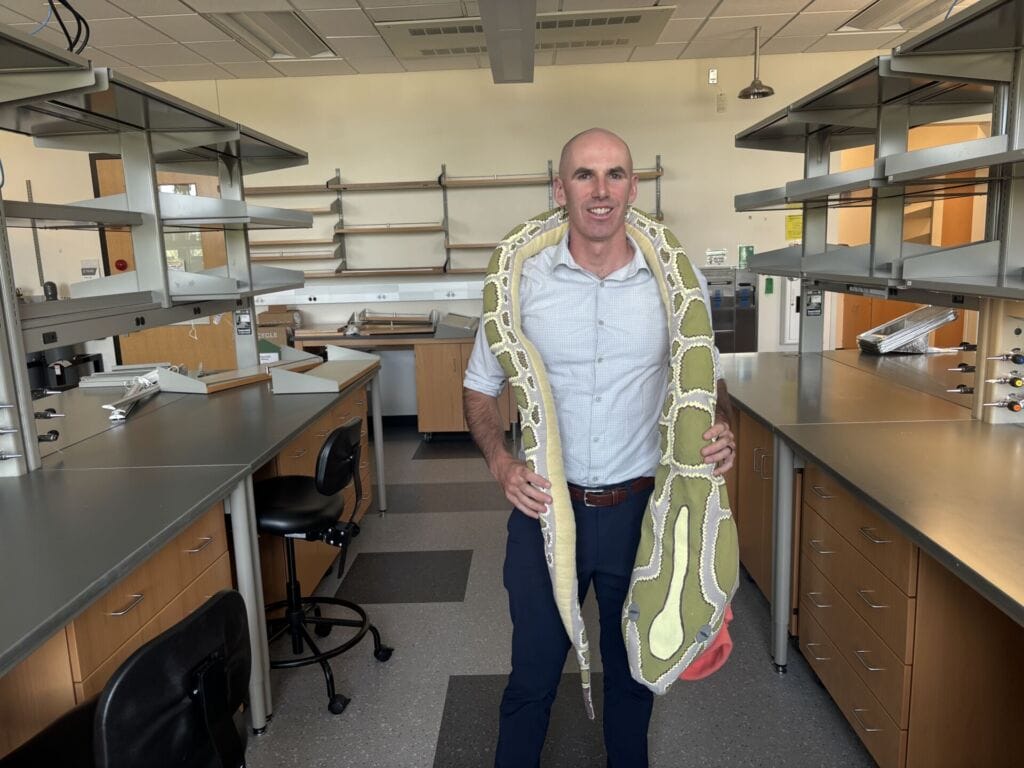
“This raises questions about safety and how these things are being handled,” said Gugel. “Both at the level of getting it prescribed, and then also: what is the final product that you’re getting, and where does it come from?”
Medical spas are another way to get GLP-1s without a prescription.
Dr. Flora Waples founded RESTOR Medical Spa in Boulder. She said the main risk of GLP-1s is human error, not impurities. Without a doctor’s oversight, people can mess up the powder-to-water ratio when reconstituting a peptide.
“If instead of saying, ‘Eat 10% less,’ you get the dosing wrong and you tell your body, ‘Vomit whenever you have food,’” Waples said. “Then you get in a situation where you’re dehydrated, where you get malnourished.”
She said impurities are a theoretical problem, but dosing is the main culprit in cases of extreme nausea. She also noted the importance of nutritious eating while taking the drug.
“If patients eat well and exercise, they can get everything they need while on a GLP-1. That being said, in the real world, a lot of people don’t,” Waples said.
Since taking a GLP-1 compound three years ago, she has lost 20 pounds and continues to take them intermittently.
“I was going to be diabetic. I was going to be sick, and I was going to spend the rest of my life like that. Instead, yesterday I ran 16 miles on the Continental Divide Trail,” Waples said.
When her own doctor declined to write the prescription, Waples found another route.
“I was like, you know what, no. I’m going to get it from a compounding pharmacy because I choose not to spend the next five years getting sicker … until I cross that arbitrary threshold where now all of a sudden, I qualify,” Waples said.
While she won’t prescribe a GLP-1 to someone with a body mass index below 19, she doesn’t think someone should need to be obese, or even overweight, to access GLP-1s.
“That’s why med spas started doing GLP-1s because there’s a lot of people out there who don’t meet the criteria, but whose lives can be incredibly improved by these medications,” she said.
The demand has also created an unregulated market on campus.
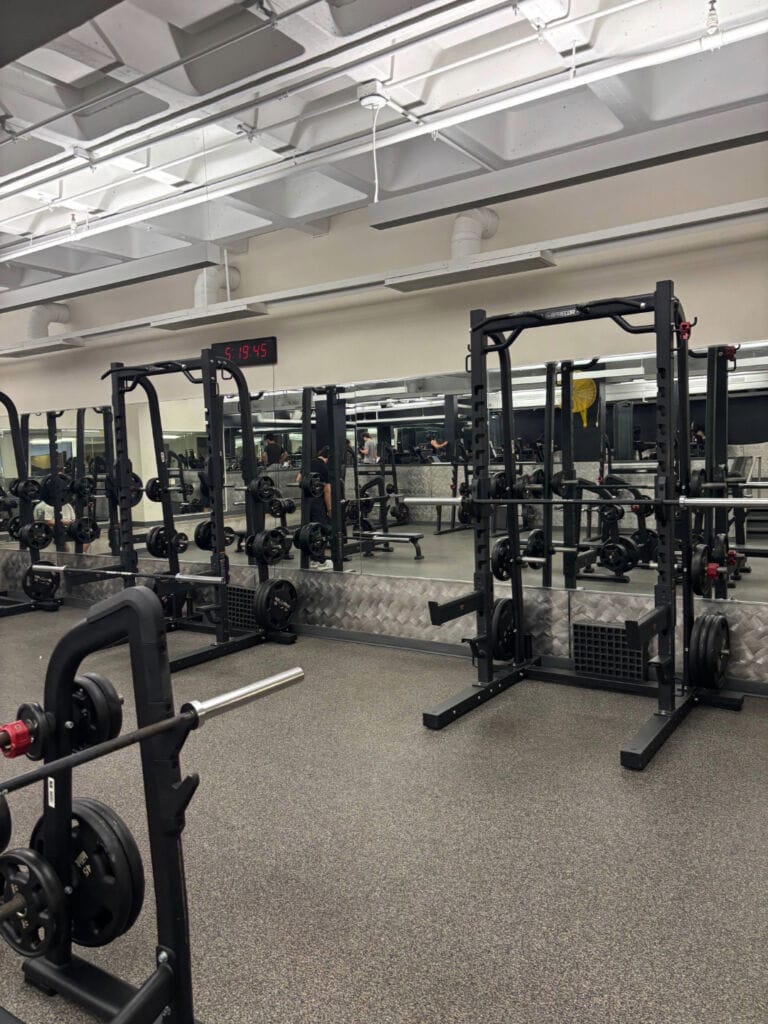
Caroline Lacey, a senior at CU Boulder, has powerlifted competitively for three years. She said she has seen upperclassmen selling peptides like retatrutide to freshman girls at the campus recreation center.
Retatrutide, often shortened to “Reta” in the fitness community, remains an unapproved experimental compound. Its manufacturer, Eli Lilly and Co., has warned against using anything marketed under the name outside of clinical trials.
Lacey said that once lifters hit certain milestones, people routinely approach them, offering illicit compounds.
She said she’s been offered everything from human growth hormone and anabolic steroids – known as “gear” — to unapproved weight-loss peptides like retatrutide.
Lacey never bought weight-loss drugs from people at the gym, but she saw how easy it is to bypass doctors online. With a few clicks and $150, she ordered a research peptide straight to her door, complete with a vial of bacteriostatic water for self-injection.
“I was so desperate to just feel better. And I stared at this bottle of bacteriostatic water and this random BPC-157 vial, and I was like, I can’t do it,” she said.
While these storefronts explicitly state the products are not intended for human consumption, they require no prescription, medical verification or age check before checkout.
Lacey ultimately refused to take the compound because there was no way to verify what was inside the bottle.
“I don’t know what I’m putting in my body,” she said. “I could just be making this worse.”
While Lacey understands why athletes and students look for chemical shortcuts, she draws the line at taking serious medical risks without a doctor in the loop.
“I’m not opposed to people taking steroids and peptides,” she said. “But with the very important caveat, you’ve got to know what you’re doing.”
Knowing what you’re doing, however, is nearly impossible when the ingredients come from unregulated online sellers. Until federal oversight catches up to the online market, students buying outside a doctor’s office are ultimately running an experiment on themselves.