
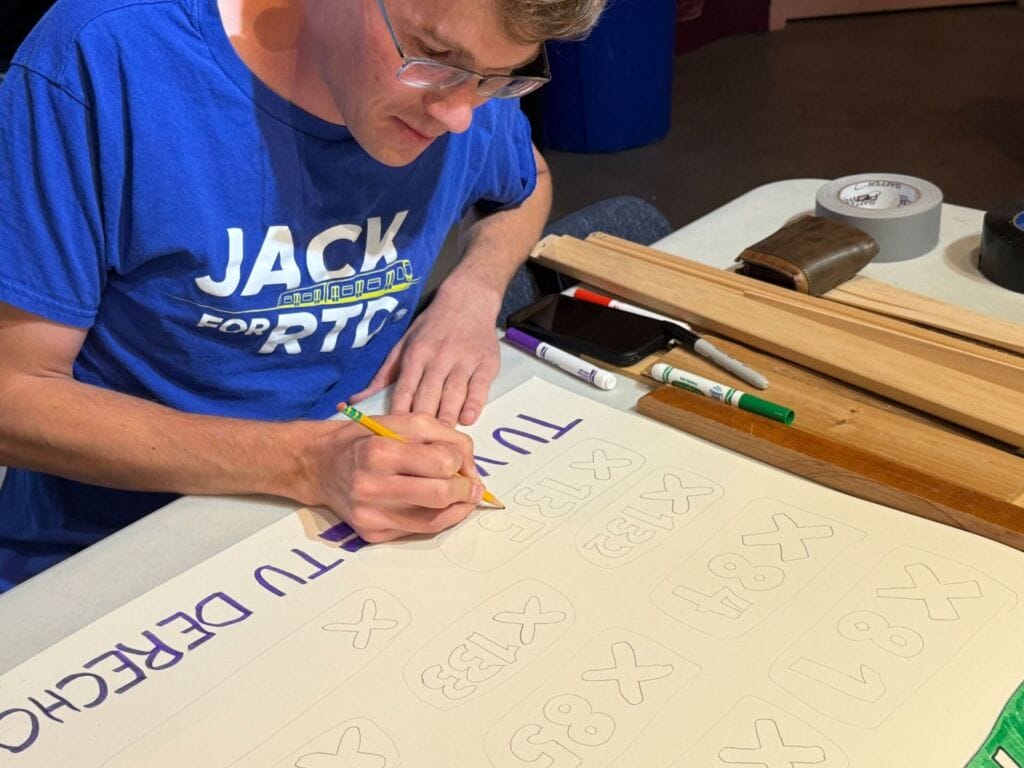
Jack Rosenthal, a Colorado voter and a candidate the RTD Board of Directors in District O, sketches out “135” on what he calls a “voter’s guide” a few days before the No Kings protest in October 2026. (Photo by Ellie Chase)
Colorado voters rally against Proposition 135 aiming to prohibit gender-affirming surgeries for minors
Naraya Pongthong was only 14 years old when they first considered transitioning.
Living in California, Pongthong began seeking gender-affirming care as a minor — speaking with a psychiatrist, communicating with friends and family and exploring hormonal replacement therapy.
They couldn’t access any gender-affirming care until they turned 18. And now, living in Colorado at 25 years old, they are witnessing another push to further restrict gender-affirming care for minors — Proposition 135.
“It’s very fatiguing living in a world where everybody wants to write laws against your basic human rights,” Pongthong said.
Colorado voters must decide this November on whether to prohibit surgical gender-affirming care for minors and prohibit the use of state or federal funds or insurance coverage to pay for these surgeries.
If passed, the measure would ban any gender-related surgeries for transgender and cisgender patients under the age of 18. Specific surgeries under the ban are not listed, so legality is based on if the treatment is interpreted as a response to a minor’s gender identity. This includes altering or reconstructing sexual and reproductive organs, modifying body shape, changing facial appearance or altering vocal characteristics.
Proponents of 135, such as Protect Kids Colorado, argue that minors lack the emotional maturity to make life-changing medical decisions. Colorado would become the 28th state to establish bans on gender-affirming care if the proposition were to pass.
Pongthong has since continued hormonal replacement therapy in Colorado, and has become familiar with the gender-affirming care systems.
“It would put a lot of transgender youth at risk, more at risk than they already are. For those who need it, it’s life-saving and they will no longer be able to access that medical care,” Pongthong said. “It shouldn’t be up to the government to decide what you can do with your body.”
Following President Donald Trump’s executive order in January 2025 that threatened hospitals’ federal funding, many Colorado health centers have stopped offering gender-related surgeries for minors.
Denver Health, Children’s Hospital Colorado and UC Health have maintained that they will not offer surgeries for transgender youth under 18, however Denver Health and Children’s Hospital have resumed other gender-affirming care such as hormone therapy and puberty blockers.
For minors that are able to find a provider in Colorado, there is an extensive process in order to be approved for surgery — involving medical and mental evaluations and parental consent.
These challenges make it difficult for transgender minors to get surgical gender-affirming care. A 2024 study from Harvard’s School of Public Health found that only 2.1 per 100,000 transgender teens undergo gender-affirming surgery.
Jerard Brown, a research analyst for the Colorado Legislative Council Staff, said he and the other contributing Blue Book writers conduct in-depth interviews with opposing and supporting parties to establish a unbiased summary for state residents.
“I think the first thing that really struck me (about Proposition 135) was the lack of concrete research on how often this occurs, as well as the extent to which individuals receive these procedures,” Brown said.
The study from Harvard also found that the majority of surgeries on minors were chest surgeries. With gender-affirming breast surgeries in particular, 97% of surgeries among minors were performed on cisgender male teens.
A condition called gynecomastia causes the enlargement of breast tissue in males, and is treated with surgery in persistent and symptomatic cases. In 2025, there were 20,879 breast reductions due to gynecomastia for males in the U.S., making it the most common cosmetic surgery among male patients according to the 2025 Plastic Surgery Statistics Report. Proposition 135 would ban this surgery.
Z Williams is the director of Protect Trans Kids (an issue committee) and the co-executive director of Bread and Roses Legal Center based in Denver. Williams believes that gender-affirming care has always been necessary for both transgender and cisgender individuals.
“People have received gender-affirming care for decades. The fact that it’s an issue now in 2026 is a manufactured outrage by a group of people who are upset that the world is changing, that their worldview is being challenged, and that the world that they grew up in will never exist again,” Williams said.
Williams also fears for the mental health issues that transgender children may face if their healthcare is further restricted.
“Kids that have the ability to are fleeing the state, or fleeing the country. Kids are reporting increased rates of depression, anxiety, inability to focus in school, discomfort participating in the community, increased suicidal ideations,” Williams said. “We’re worried about their kids making it to adulthood to be able to receive care. Even just the threat of these and the existing restrictions, and it will only get worse.”
Supporters of Proposition 135 argue that it is important to reach adulthood before making any major medical decisions.
Protect Kids Colorado, is an advocacy group aiming to “protect kids from becoming victims of dangerous and false ideologies” as stated on their website. With a focus on public policy, Protect Kids placed this initiative on the ballot along with two others this year.
Founder Erin Lee and director Lori Gimelshteyn failed to respond to multiple requests for comment from The Bold. But in an interview with the Colorado Sun, Lee said: “When you talk to these young people and you experience their pain, you think, why not? Why not let them just grow up a little bit? Why not just let them turn 18 before they make these permanent decisions?”
Gays Against Groomers and the Catholic Conference also failed to respond to multiple requests for comment, and Protect Our Children denied an interview request.
Policies restricting minors’ access to gender-affirming care have proliferated in recent years according to KFF, a health policy research organization. Following the 2025 U.S. Supreme Court decision in United States v. Skrmetti, which said Tennessee’s laws banning gender-affirming care did not violate the constitution, bans in 27 states have remained in place.
KFF estimates 50% of trans youth live in a state that has limited access to gender-affirming care.
The American Medical Association and several other professional medical organizations have supported gender-affirming care for transgender youth. The AMA maintains that medical decisions should be made by the physician and the patient and the patient’s family, and that surgeries for minors should “generally be deferred until adulthood.”
As of now, Colorado has no enacted laws or policies to restrict care for minors.
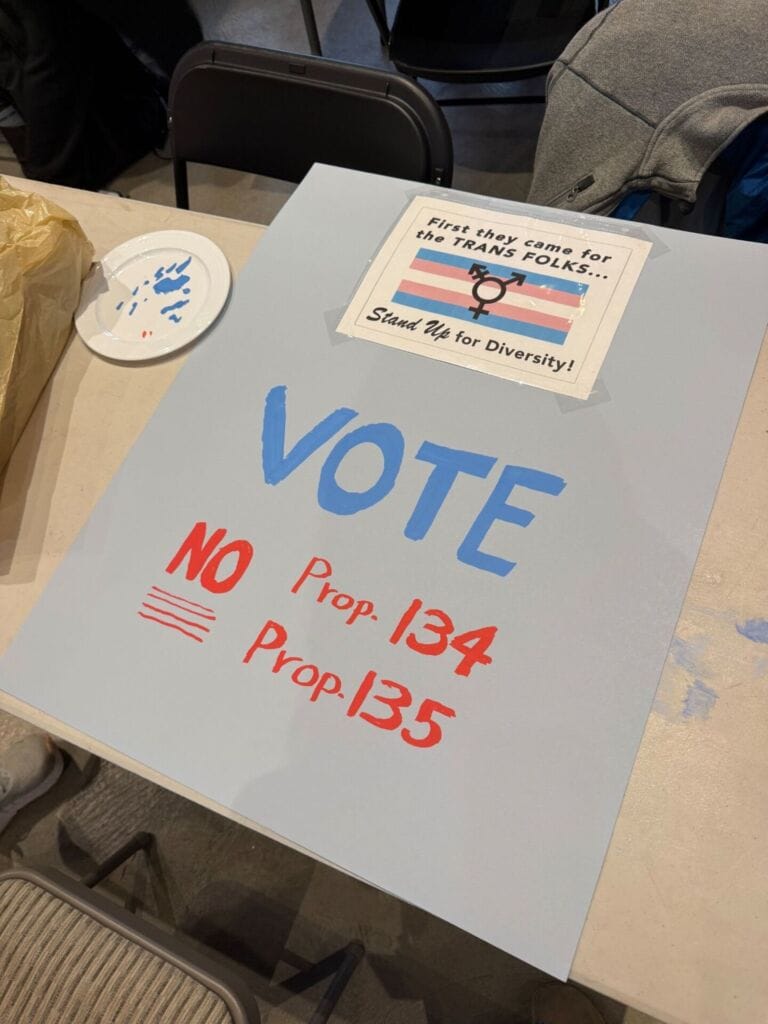
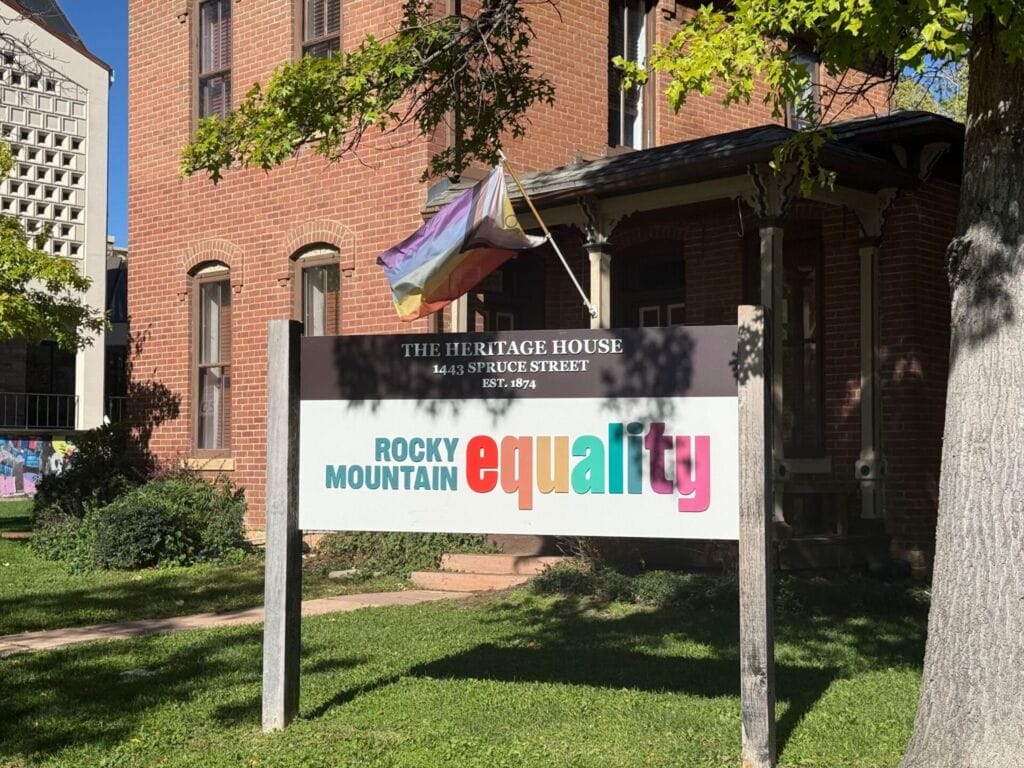
Rocky Mountain Equality hosted a protest sign-making event October 14 at their Boulder location to protest this proposition amongst others. Attendees were concerned about the message that Colorado will send if it joins other states in banning gender-affirming care when the state has been supportive of trans rights in the past.
Jack Rosenthal, a Colorado voter and candidate running for the Regional Transportation District (RTD) Board of Directors in District O, says initiatives against the transgender community in Colorado are unacceptable.
“An attack on one of us is an attack on all of us,” Rosenthal said. “I sure hope that voters decide that Colorado is no place for hate.”