
Travelers overlook a holiday display outside of the DEN Plaza in Concourse A at Denver International Airport on Nov. 13, 2026, when the FAA put in a nationwide ground stop for a few hours. (Photo by Gean Chambers)
Denver airport travelers, gate associates describe effects of the FAA ground stop
Travelers at Denver International Airport faced widespread flight delays and cancellations on Friday, Nov. 13 after a nationwide Federal Aviation Administration ground stop disrupted air travel across the country.
The ground stop temporarily prevented departing flights from taking off because of communications problems affecting the nation’s air traffic control system.
Although the FAA lifted the restrictions Friday evening, the disruption continued to affect passengers as airlines worked to reorganize flights and crews.
“It’s frustrating because you don’t really know what’s going on or when you’re going to leave,” said Michael Reynolds, a frustrated traveler flying from Denver to Chicago. “You keep checking the departure board, but the times just keep changing.”
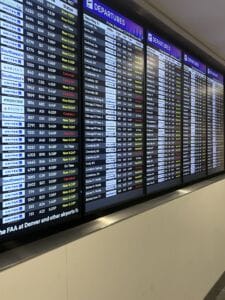
By Friday afternoon, Denver International Airport had experienced hundreds of delays and cancellations. For travelers, the situation created uncertainty about when they would reach their destinations.
“I understand that safety comes first, but it’s stressful when you have somewhere you need to be and nobody can give you a clear answer,” said Sarah Mitchell, a traveler whose connecting flight was canceled.
Other passengers faced missed connections and changes to travel plans. Some were forced to contact airline representatives to find alternative flights, while others waited for updates at their departure gates.
Gate associates also faced challenges as passengers looked for answers about the situation.
“We’re trying to help everyone get where they need to go, but sometimes we’re waiting for the same information as the passengers,” said Daniel Carter, a United Airlines gate associate. “When so many flights are affected at once, it becomes difficult to find everyone another option.”
The FAA’s communications problems affected flight operations across the United States. Transportation officials worked to address the issue before allowing departures to resume.
“People want answers, and understandably so,” said Emily Parker, a Southwest Airlines gate associate, “Our job is to keep passengers informed and help them figure out their next steps, even when things are changing quickly.”
Even after the ground stop was lifted, the effects did not immediately disappear. Aircraft and flight crews were left out of position, creating additional scheduling challenges for airlines.
Airlines encouraged passengers to monitor their flight status and contact their carriers about potential rebooking options.
The incident also raised questions about the reliability of the nation’s air traffic control infrastructure and the challenges of managing air travel during widespread technical disruptions.