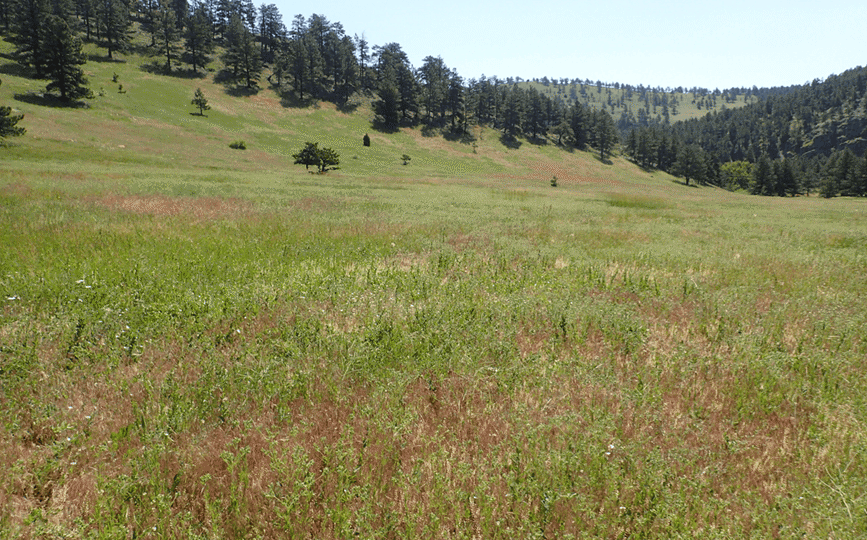
A grazing meadow taken over by cheatgrass. (Photo courtesy of Timothy Seastedt)
Cheatgrass, an invasive grass species, continues to destroy Colorado land
Grass is everywhere, from the fields we pass to the lawns outside our homes. It provides food for many animals and plays a significant role in the ecosystem. However, not all grass helps the environment.
Cheatgrass, an invasive species, has spread across large areas of Western rangeland, competing with native vegetation and disrupting the ecosystems that depend on it. It poses many dangers due to its flammability and its tendency to steal nutrients from native grasses that many Colorado species rely on.
Boulder County has experienced several documented cases of the cheatgrass epidemic, and county land managers are struggling to manage the issue in these areas.
Spruce Gulch Wildlife and Research Reserve has experienced rising numbers of cheatgrass growth. This affects local ranchers, and the grazing cattle Boulder residents rely on for dairy and food.
“Disturbed grazing lands are by far the most affected,” said Timothy Seastedt, an expert on invasive grass species.
Additionally, the 476-acre land acts as a reserve to protect plant and animal species. If the cheatgrass continues to take over, the reserve and all who reside there will be placed in jeopardy.
Invasive species are plants and animals that are non-native to an area but are introduced to it, usually through human activities. This can happen either intentionally through agriculture and landscaping or accidentally through transportation, trade and the movement of contaminated soil or seeds.
These non-native species can disrupt and harm the natural environment and also have a negative impact on human economies and health.
“Undesirable effects of cheatgrass are reduced grazing capacity for livestock, it can invade habitats and damage wildlife, and it can also contribute to fire spread,” said Retta Bruegger, a Colorado State University Extension rangeland management specialist.
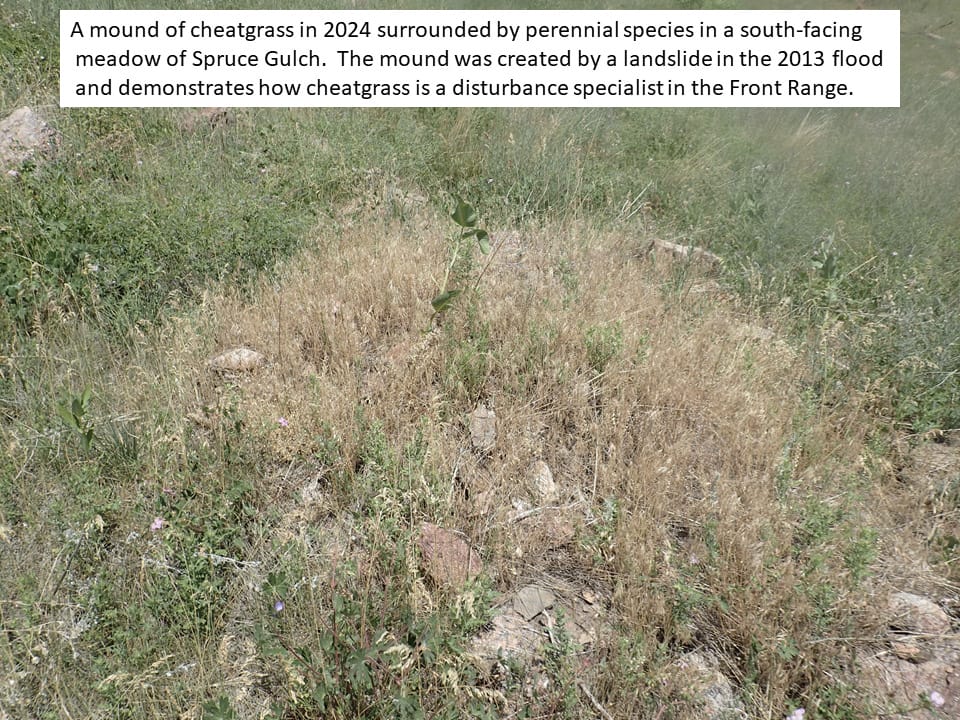
Cheatgrass acts as an invasive species because it lives in direct competition with sagebrush, an important plant for many areas in the American West, including Colorado. Cheatgrass primarily affects sagebrush but also displaces native wildflowers.
Sagebrush is a native shrubbery that thrives in dry climates and cold conditions and has adapted to low water availability. However, it is especially susceptible to the threat of the ever-consuming cheatgrass.
Sagebrush is crucial to the local ecosystem because it provides food and shelter for many wildlife species, protecting them from harsh weather and predators. Once cheatgrass invades sagebrush, experts “consider that area transitioned, mostly permanently, to a different ecosystem type,” according to Bruegger.
This affects the greater sage-grouse especially, named after the plant, which is entirely dependent on sagebrush for shelter and food, as it makes up 99% of the grouse’s diet.
The greater sage-grouse has already experienced significant population declines over the last 19 years in part due to the cheatgrass epidemic. Native birds and rabbits have also had trouble surviving without cheatgrass to shield them from predators.
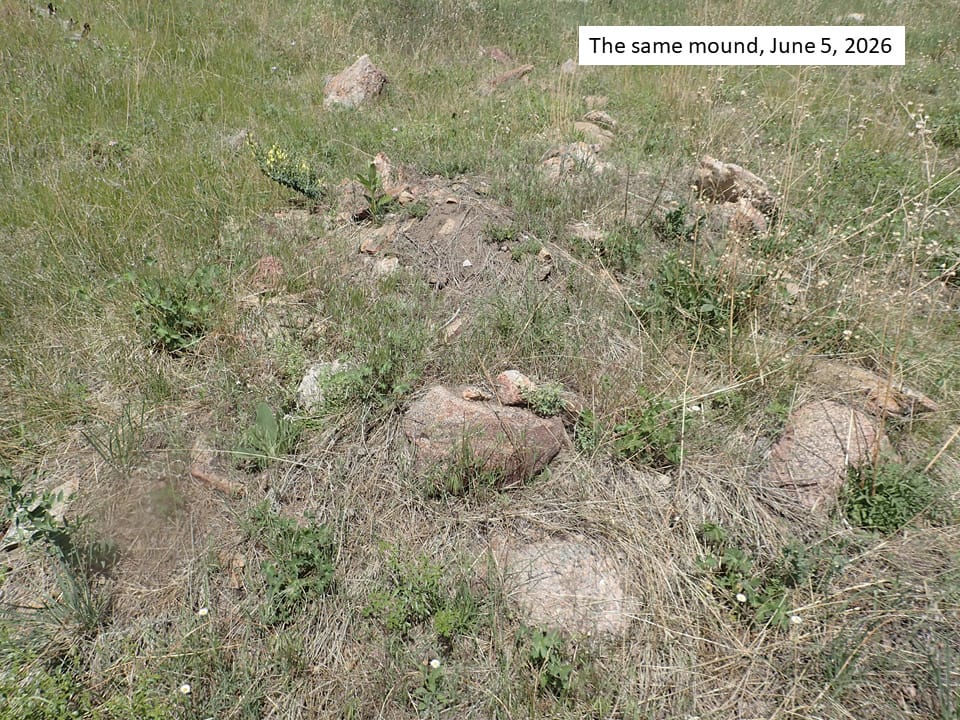
The species that nibble on the native flowers have been affected as well.
More broadly, livestock and other grazers rely on native grasses and vegetation found in sagebrush landscapes. As cheatgrass displaces these plants, it can reduce the forage available for livestock, forcing ranchers to manage grazing differently or move their animals to other areas.
“The reason it’s called cheatgrass is because it can cheat you out of forage … once it puts out its seed heads, it has seed heads that are kind of poky, livestock don’t like to eat it,” explained Brueger.
Cheatgrass is extremely flammable, and when it takes over large areas of land, it increases the risk of fires spreading. Colorado has been struggling with wildfires recently and has implemented fire restrictions to protect communities and wildlife.
However, cheatgrass works against these protection efforts by creating more continuous fuel for fires and threatening the organisms that depend on native vegetation.
Repeated fires also prevent young sagebrush from growing back. As sagebrush disappears, animals that depend on it for food and shelter lose important parts of their habitat. This creates a cycle where sagebrush is unable to recover, more cheatgrass grows, and the risk of further fires increases.
“Cheatgrass can grow up to 36 inches tall and form dense monocultures, which provides a significant fine fuel source when the plant dies and dries out in the summer,” said Sam Clusman who works for City of Boulder’s Open Space and Mountain Parks. “Cheatgrass generally grows back even thicker after a fire, which forms a positive feedback loop as the cheatgrass populations and fire frequencies and intensity both continue to increase.”
Cheatgrass spreads quickly, establishing itself in an area before expanding into surrounding land. It competes with native plants like sagebrush for resources such as sunlight, water, and nutrients. As native vegetation struggles to survive, cheatgrass can leave destroyed land in its wake, further disrupting our ecosystems forever.