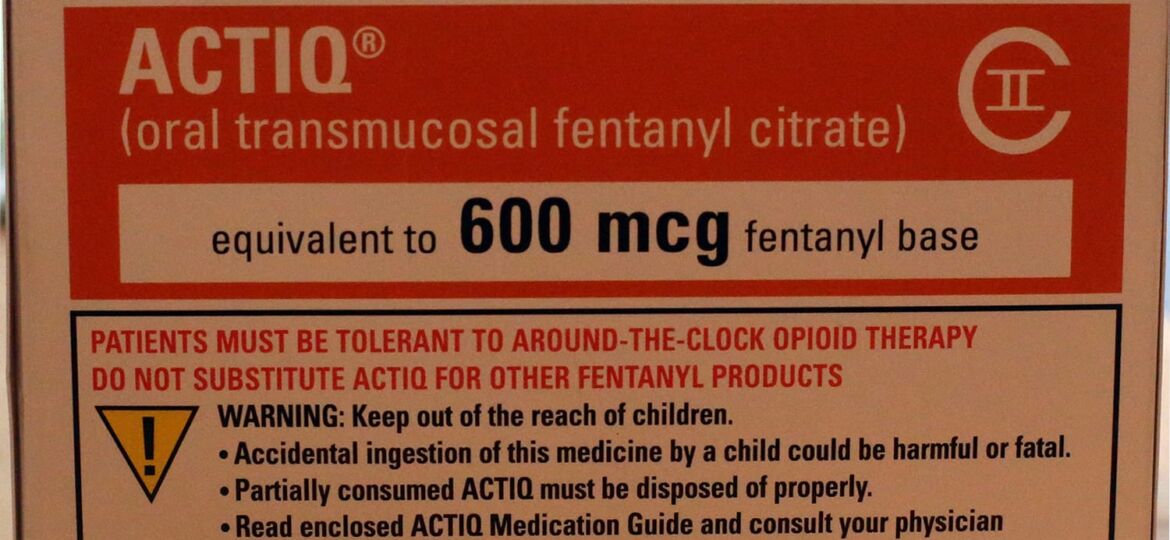
Actiq is a fentanyl lozenge used in medical settings. (Photo by Daniel Tahar, Wikimedia Commons, no changes were made, https://commons.wikimedia.org/w/index.php?curid=93935728)
Colorado voters said yes to Proposition 132, expanding felony penalties for fentanyl-related crimes
Colorado voters said yes to Proposition 132, expanding felony penalties for fentanyl-related crimes and raising questions about how the state will fund the resulting increase in incarceration and court-ordered treatment.
The Associated Press called the race Friday, Nov. 6, a few days after the election. The proposition had 52.7% of the vote in support, with 47.4% opposed.
This follows a year in which fentanyl-related deaths rose by approximately 200 statewide.
Under current Colorado law, possessing one gram or less of fentanyl is generally a misdemeanor, while possessing more than one gram is a felony. Proposition 132 will make possession of any amount a felony.
The measure also establishes an eight-year mandatory minimum prison sentence for certain fentanyl distribution offenses and limits opportunities for reduced sentences, including in some cases involving people seeking emergency medical assistance for someone else.
Julie Wright is the founder of the Maddie Wright Foundation, which is named after Wright’s daughter, who died from a fentanyl poisoning in 2020. Wright also is an advocate for Proposition 132.
“I believe that our citizens are sick of repeat criminals, sick of burying their loved ones and friends and they see what a crisis this is,” Wright said.
The measure faced opposition from public health advocates and local officials, including the ACLU of Colorado, Mental Health Colorado and Boulder County commissioners.
Their main criticism was the use of incarceration to prevent overdoses.
“We’re going to see a lot more fentanyl overdoses that will actually make the crisis much worse,” said Katherine LeMasters, a social epidemiology researcher at CU Anschutz.
LeMasters said incarceration increases an individual’s risk of overdose and creates conditions within communities and families that lead to more drug-related deaths overall.
Based on a fiscal analysis by the Colorado Legislative Council Staff, the proposition is expected to increase Colorado’s prison population by about 5% by 2030. It is expected to cost about $570 million in the first five years, not counting additional court and public defender expenses.
The proposition includes a provision in which people charged with fentanyl possession can have that felony removed upon completion of a court-ordered treatment program.
LeMasters said that, with no designated funding, no specification on what type of treatment and already strained treatment options in Colorado, this may not have much of an impact.
Denver District Attorney John Walsh told 9News that he doesn’t support the measure because it comes with “a whole set of additional costs and creates no funding mechanism for that.”
Michael Fields, president of Advance Colorado, the conservative political group responsible for the proposition, told 9News in the same article that the measure is “a really good use of state money to make sure people aren’t dying.”
LeMasters noted that the cost of more people in prison will lead to less funding for “voluntary community-based services, particularly in rural areas that are really needed.”
It’s still unclear where the funding will come from and what other areas may be affected by this.
Colorado’s governor-elect, Phil Weiser, has said the measure may need adjustments.