Declining literacy rates prompt Colorado schools to rethink reading
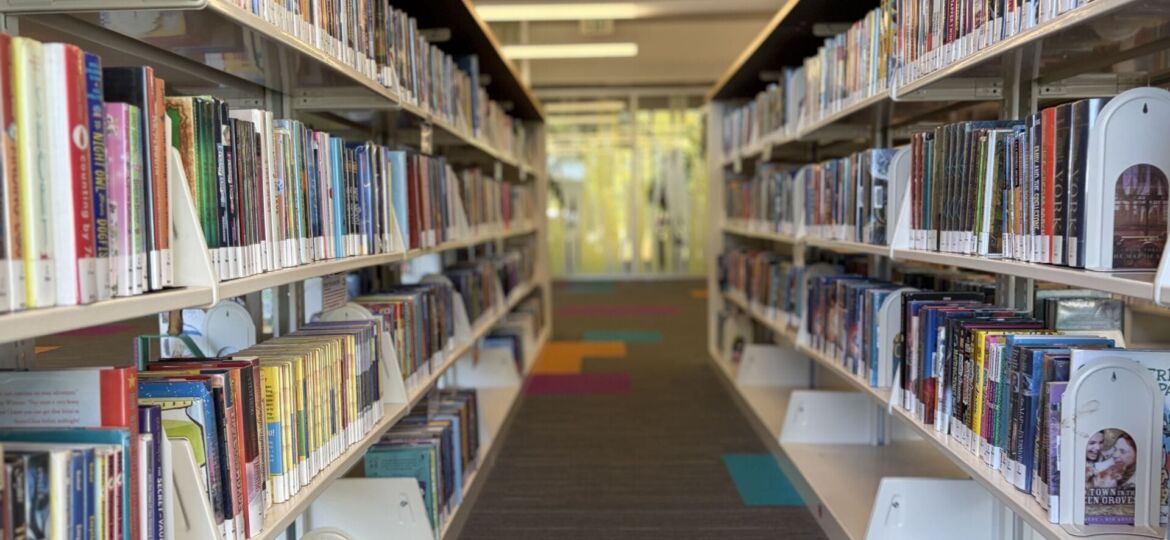
A view of the children’s section at the main Boulder Public Library on Oct. 7, 2026. (Photo by Bronte Moore)
Nationally, only 31% of fourth graders performed at or above the National Assessment of Educational Progress “proficient” level in 2024.
Since the early 2010s, national literacy rates have largely stagnated, and after the pandemic, the decline became more noticeable. Reading scores among 9-year-olds have dropped 5 points since 2022, the largest four-year decline since 1990.
“Imagine being five or six years old and going to school and everybody’s wearing a mask,” said Silvia Noguerón-Liu, program chair of literacy studies at the University of Colorado Boulder, “you really need to be able to see somebody’s mouth and hear the sounds of English.”
In the 2026 Colorado Measures of Academic Success results, 96 districts in Colorado reported a decrease in the percentage of students meeting or exceeding expectations in English Language Arts, compared to 88 districts reporting an increase.
Low literacy scores are forcing Colorado’s educators to rethink how they teach before students further fall behind.
“We have asked colleges to change the way teachers are taught how to teach reading to focus more on the science of reading and have made it a goal to improve the reading levels of third graders across the board,” said Jeremy Meyer, director of communications at the Colorado Department of Education.
The science of reading is an emerging area of study that focuses on evidence-based methods to increase the efficiency and level at which reading is taught. Focuses of this method include explicit instruction in phonics, vocabulary, fluency and comprehension.
Colorado has increasingly incorporated these principles into its approach to early literacy through the READ Act.
Currently, schools emphasize whole-word literacy, in which students would memorize entire words rather than syllables, like the phonic approach.
The READ Act has produced mixed results. In 2026, literacy performance improved by 5% among fourth graders and 1.9% among fifth graders, but declined across all three middle-school grades, which were the elementary grades affected by the pandemic.
Other states have turned to phonics as well, some with greater success. Mississippi’s literacy rates jumped from 49th in 2013 to 9th in the nation in 2024.
“If more folks were using linguistic phonics and worked with the child’s brain,” Tal Most said, “that would yield so much more success.”
Most is the Deputy Director of ColoREADo, an early language literacy tutoring that focuses on evidence-based literacy instruction.
The question remains whether literacy rates will improve with new learning techniques.
“We want to act locally to help children, be invested, and knowing that reading is something social and that makes the community better,” Noguerón-Liu said.