
Colorado’s 2026 Blue Book walks voters through what’s on the ballot and how it could change state laws and the state constitution. (Photo by Ellie Chase)
A voter's guide to Colorado's 2026 state and federal elections
By CU Boulder journalism classes
The midterms are here. Your ballot is on your kitchen table. Now what?
CU Boulder journalism students sifted through several congressional and statewide races and ballot measures to bring you this voter’s guide. Dig in.
Federal races
2nd Congressional District: Rep. Joe Neguse vs. Kelley Dennison
Neguse, 42, has served since 2019 as the Democratic U.S. representative in the 2nd Congressional District, which covers Boulder, Fort Collins, Longmont, Lafayette and Erie on the Front Range and the mountain towns of Vail, Breckenridge, Steamboat Springs, Estes Park, Idaho Springs, Nederland, Granby and Black Hawk. He holds a leadership role as the House’s assistant minority leader and currently lives in Lafayette.
According to Neguse’s campaign website, his re-election platform is centered around public lands and the climate, as well as preserving public spaces, investing in outdoor recreation, protecting wildlife and preserving their natural habitats.
Neguse also has pointed to the importance of accessibility and equality, and advocates for affordable healthcare, attainable economic opportunities and quality public education.
Neguse’s supporters say he is a reliable leader who is hard working and dedicated to even the smallest, more rural parts of Colorado. They also admire his support and loyalty to the working class. Neguse’s opponents say that his campaign is too focused on legislation that has not been passed, and that his policy stances on environmental issues don’t take into account the livelihood of farmers, ranchers and energy workers.
Dennison, 27, is running as a Republican. She’s a first-time political candidate who lives in Estes Park and is a licensed massage therapist and small business owner.
Dennison’s platform focuses on affordability of living for Coloradans. She is also a big advocate for 2nd Amendment rights and helping veterans and senior citizens. Similar to Neguse, Dennison also looks towards helping the environment but instead she focuses on energy workers and farmers.
Dennison’s supporters say that she criticizes both political parties and advocates for younger voices in order to share those generations’ frustrations with the current state of politics. Her supporters also say they admire her dedication to the safety of American families. Critics of Dennison point to her age and lack of experience as a politician.
— Katelyn Emmons
8th Congressional District: Rep. Gabe Evans vs. Manny Rutinel
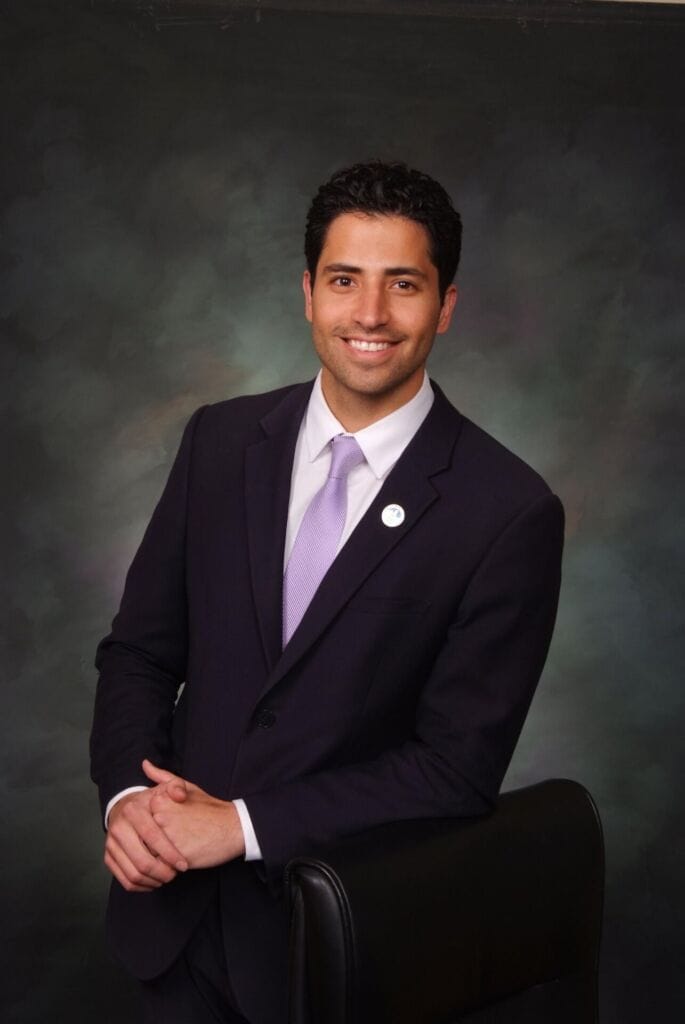
Incumbent Republican U.S. Rep. Gabe Evans faces a challenge from Democrat Manny Rutinel for Colorado’s 8th Congressional District, which includes Greeley, Thornton, Northglenn, Johnstown, Fort Lupton and portions of Westminster.
Rutinel, 31, is basing his campaign on lowering the cost of living for Coloradans. Rutinel also advocates for improvements to immigrant rights.
Rutinel resigned Sept. 7 from his Colorado House District 32 seat in Adams County to focus on the congressional race.
Supporters cite Rutinel’s goals to defend workers’ rights and his opposition to cuts to social service programs, such as Medicare and Social Security. Critics call to attention his past statements supporting vegan activism, particularly focusing on his flipped position.
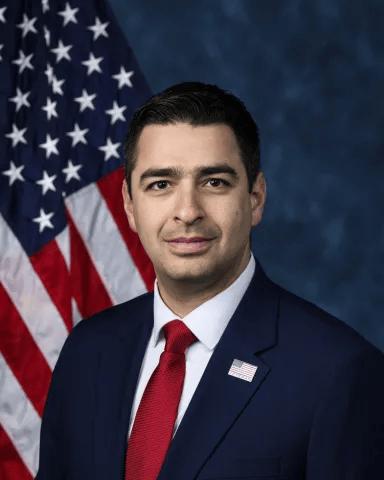
Evans, who won the seat in 2024 in a narrow victory, is campaigning on lowering the cost of living through decreasing federal deficit spending. The 40-year-old has advanced legislation requiring data centers to bear all new energy infrastructure costs, and legislation for the Drug Enforcement Administration to create operation and response plans for the distribution of fentanyl and other counterfeit substances.
Evans’ supporters favor his strict immigration policies, while his critics point toward his close alliance toTrump administration policies.
— Ainsley Coogan
For information about the U.S. Senate race between incumbent Democratic Sen. John Hickenlooper and Republican candidate and current state Sen. Mark Baisley, see reporting from The Denver Gazette and The Fort Collins Coloradan.
Statewide races
Colorado governor
Current Democratic Gov. Jared Polis is ineligible to seek re-election after two consecutive terms, setting up a three-way race for the office.

The Democratic candidate is 58-year-old Phil Weiser, who has served as Colorado’s attorney general since 2019. According to his campaign website, Weiser aims to protect federal funding, stand up for democracy and defend reproductive and LGBTQ+ rights.
Supporters cite his record of suing the Trump administration over federal actions Weiser believed were unconstitutional, such as the Trump administration’s plans to open an immigrant detention camp north of Denver and major cuts to the U.S. Department of Education. Supporters also like his campaign’s emphasis on affordability. Critics have accused Weiser of accepting donations from entities that were engaged in litigation with the attorney general’s office.

The Republican candidate, 61-year-old Victor Marx, is a minister, Marine Corps veteran and first-time political candidate. As outlined on his campaign website, Marx would focus on government accountability, improving the cost of living and strengthening law enforcement.
Supporters appreciate his faith-driven, unconventional background and anti-establishment stance. Critics cite the state issuing a fine on Marx’s campaign for accepting campaign donations above the state’s legal limit. Marx’s unverified or disputed claims about his personal life have also come under scrutiny, such as his claim that he was forced to commit a homicide as a child, which authorities told Colorado Public Radio there is no record of.
The independent candidate is 62-year-old Greg Lopez, who won a special election in 2024 to finish out former U.S. Rep. Ken Buck’s tenure in the 4th Congressional District after Buck resigned early. Lopez previously was the state’s director for the Small Business Administration and was mayor of Parker in the 1990s.
According to Lopez’s campaign website, he intends to improve government efficiency, address housing affordability and reform the Colorado Department of Transportation.
Supporters appreciate his status as an unaffiliated candidate, with Lopez recently leaving the Republican Party after claiming both parties are more committed to wins than the people. Critics cite a 2020 civil case in which Lopez paid a $15,000 settlement after being accused by the Department of Justice of trying to influence Small Business Administration colleagues by asking for a “favor.”
— Lily Defnet
For information about the races for secretary of state, attorney general and treasurer, see coverage from The Colorado Sun and Colorado Public Radio.
Amendments
Constitutional amendments need 55% of the vote to pass, except for Amendment 87, which would repeal language and would need just a simple majority.

Amendment 81: Law Enforcement Reporting Requirements to Federal Authorities
Voters are being asked to decide if they want to change the Colorado Constitution to require that state and local law enforcement officials notify the U.S. Department of Homeland Security within 72 hours of charging a person whose immigration status is unclear. The change also would require notification of DHS if the person is in the country without legal permission and is charged with either a violent crime or any offense if that person has a prior felony.
This is a citizen-led initiative, and the registered issue committees are Advance Colorado, a conservative political organization, and the Eagle County Republican Women Club.
Supporters argue that this is a basic public safety measure that will keep felons and repeat offenders out of Colorado, which they say can only be ensured if immigration law enforcement are immediately notified.
Opponents argue Amendment 81 will encourage racial profiling and violate local sanctuary policies for people who are in the U.S. without legal permission.
To read the full measure, go here.
— Valentine Motte
Amendment 82: Constitutional Right to Purchase and Sell Natural Gas
Voters are being asked to amend the Colorado Constitution to establish a right to purchase and sell natural gas for businesses and homes. This two-sentence amendment would allow consumers to buy natural gas for cooking and heating, as well as permit distributors and utilities to sell natural gas to homes and businesses.
If it passes, Colorado would be the first state to enshrine this right in the constitution. No other state is considering this move in the midterms, though several have similar laws.
In August 2026, Advance Colorado, a nonprofit that advocates for conservative policies, submitted enough petition signatures for the measure to be certified for the ballot. Michael Fields, institute president of Advance Colorado, told Colorado Politics that natural gas is a “clean, reliable and affordable” form of energy that many residents use in their homes.
Conservation Colorado, an environmental advocacy group, opposes the measure. CEO Kelly Nordini told Colorado Newsline that the proposed amendment was vague and had no definitions, limits or exceptions.
Colorado already regulates investor-owned natural gas utilities and the installation and repair of natural gas services. If the amendment passes, it may limit state or local governments’ ability to regulate issues involving natural gas.
To read the full proposed amendment, go here.
— Caitlyn Garza

Amendment 83: Constitutional Right to Hunt and Fish
If passed, Amendment 83 would establish a right of the people of Colorado to hunt, fish and harvest fish and wildlife. It would also establish hunting and fishing as the primary and preferred means of managing fish and wildlife in the state.
Under the proposed amendment, the Colorado Parks and Wildlife Commission and the General Assembly would continue to regulate hunting, fishing and wildlife management as long the regulation is reasonable and necessary for sound scientific wildlife conservation and management, public safety or to preserve the future of hunting and fishing opportunities for all species across the state.
Twenty-four other states have instituted constitutional provisions for the right to hunt and fish as of October 2026.
Those who support this ballot measure want to preserve hunting and fishing in Colorado for generations to come. Luke Hilgemann, the executive director of the nonprofit International Order of Theodore Roosevelt, told Colorado Newsline that hunting and fishing are part of Colorado’s heritage.
The opposition includes animal rights and wildlife conservation groups, who argue that it would protect “traditional methods” of hunting like trapping and baiting methods that were banned by Colorado voters decades ago, according to Ballotpedia. Colorado Hunters and Anglers for Sensible Wildlife Conservation argues that the language about “traditional methods” is left intentionally vague as an attempt to garner more votes.
To read the full proposed amendment, go here.
— Augie Falborn
Amendment 87: Graduated Income Tax
Amendment 87 would replace Colorado’s current 4.4% flat income tax rate for individuals and businesses with a graduated system beginning in 2027, lowering rates on incomes below $500,001 while increasing rates on incomes above $500,000.
Amendment 87 made it to the ballot due to work from Protect Colorado’s Future, a coalition of progressive advocacy organizations. Other groups include the Bell Policy Center and Colorado Fiscal Institute; the full list of groups can be found here.
Supporters argue that the measure would create a more progressive tax system and generate about $2 billion for healthcare and K-12 education while lowering taxes for most Coloradans, according to Colorado Public Radio.
Opponents argue that increasing income-tax rates could make Colorado less competitive for businesses and investment, allowing the state to collect substantially more revenue, according to the Colorado Chamber of Commerce.
Amendment 87 needs just a simple majority to pass. To read the full proposed amendment, go here.
— Rylee Sahl
For information about Amendments 84, 85 and 86, visit the 2026 Colorado Blue Book, The Fort Collins Coloradan and The Denver Post.
Propositions
Propositions need just a simple majority to pass.
Proposition NN: TABOR Revenue Cap Increase for Education
Proposition NN is a measure on Colorado’s ballot that will determine whether the state can allocate funds exceeding the Taxpayer’s Bill of Rights limit to K-12 education rather than refund them to citizens.
This measure was referred to the ballot by the legislature through SB26-135. The main sponsors, all Democrats, were Sens. Jeff Bridges and Cathy Kipp, with additional support from Reps. Jennifer Bacon and Meghan Lukens.
Colorado Education Association President Kevin Vick welcomes the proposition, telling Denver7 that the current revenue cap has prevented the state from fully funding public education and supporting those who make it possible. He pointed to Colorado’s 35th-place ranking in average teacher starting salary at $45,489. The minimum living wage in Colorado begins at $74,205.
Jon Caldara, the president of the Independence Institute, a Colorado think tank, told Denver7 that the proposition is another way for the government to take taxpayers’ money.
“They use kids as a way to get to the heartstrings and take our TABOR refunds,” Caldara added.
To read the full resolution, go to page 84 of the Colorado Blue Book.
— Meg Avery
Proposition 132: Penalties for Fentanyl Sale and Possession

Voters are being asked to decide whether to establish higher penalties for the manufacturing, sale, dispensing or any possession of fentanyl. The ballot measure also would change the ability to charge someone with misdemeanors related to fentanyl.
The measure is backed by Advance Colorado, a nonprofit that advocates for conservative policies.
Supporters of the bill argue fentanyl is so deadly and dangerous that Colorado needs stronger penalties, including a required felony sentence of eight to 32 years in prison for any level of distributing fentanyl to discourage trafficking. The measure also would require people charged with small amounts of the drug to undergo treatment.
Groups that oppose this proposition are the League of Women Voters Colorado Criminal Justice Reform. These opponents argue that it would be too harsh for even small quantities of fentanyl, and they are worried about prison funding and if there’s enough money for treatments.
To read the full text, go here.
— Ryan Donziger
Proposition 133: Penalties for human trafficking of a minor
If Colorado voters vote yes on Proposition 133, it would reclassify sexual trafficking of a minor from a Class 2 felony as a Class 1 felony that mandates a life sentence without the possibility of parole for offenders. It also would consider buying sexual activity with a minor as sex trafficking.
If Colorado voters vote no, human trafficking of a minor would remain a Class 2 felony and the definition would remain the same alongside the current sentencing rulings.
This is a citizen-initiated statutory measure backed by the issue committee Protect Kids Colorado.
Supporters say that Proposition 133 is prompted by elevated minor sex trafficking levels in the state, and that passing the law will guarantee punishment without a chance of reoffending.
Opponents, including a national think tank Third Way, claim that the addition of a new clause to preexisting statutes will soften current language, which could be used to restrict access to reproductive health care and gender-affirming care.
To read the full bill, go here.
— Kay Tassie
Proposition 134: Male and Female Participation in School and Collegiate Sports
Colorado voters are being asked whether K-12 and college athletes should play sports on a team that matches their sex assigned at birth. If it passes, it would not affect coed sports.
This ballot measure was brought by a citizen-led petition initiative from Erin Lee, founder of Protect Kids Colorado, and Michele Austin, a Republican political strategist and activist.
The Supreme Court ruled earlier this year that Idaho and West Virginia may enforce laws restricting transgender girls and women from competing on women’s teams, while 27 other states have enacted similar laws.
In February, Colorado Newsline published a statement from Lee, who said Protect Kids Colorado’s success in the signature-gathering process “clearly shows how much Coloradans reject policies that put ideology ahead of children’s well-being.”
The initiative’s biggest opponent, Families Not Politics, objects to the initiative. It told Colorado Newsline that the ballot measure is “a Trojan horse using the language of child protection to advance a broader political agenda,” Toomer reported.
To read the full ballot measure, go here.
— Katie Kendall
Proposition 135: Prohibit Surgery on Minors in Response to Perception of Sex or Gender
If passed, Proposition 135 would prohibit surgeries for minors that would change their sex assigned at birth. It would also prohibit the use of state or federal funds or insurance coverage to pay for these surgeries in Colorado.
This measure was placed on the ballot by Erin Lee, a Colorado mom who is also the founder of Protect Kids Colorado, an advocacy coalition that aims to protect children from what it describes as “dangerous and false ideologies.”
Supporters of Proposition 135 argue that minors lack the maturity to undergo gender-affirmation surgery, and that nonsurgical methods of gender-related care can be provided until the individual reaches legal age.
Opponents of Proposition 135 argue that the measure is overly broad and will interfere with medical care for all minors — transgender and otherwise — as well as worsen the stigma around transgender youth.
To read the full proposition, go here.
— Ellie Chase
For information about Propositions 136 and 137, see coverage from The Denver Post and The Colorado Sun.