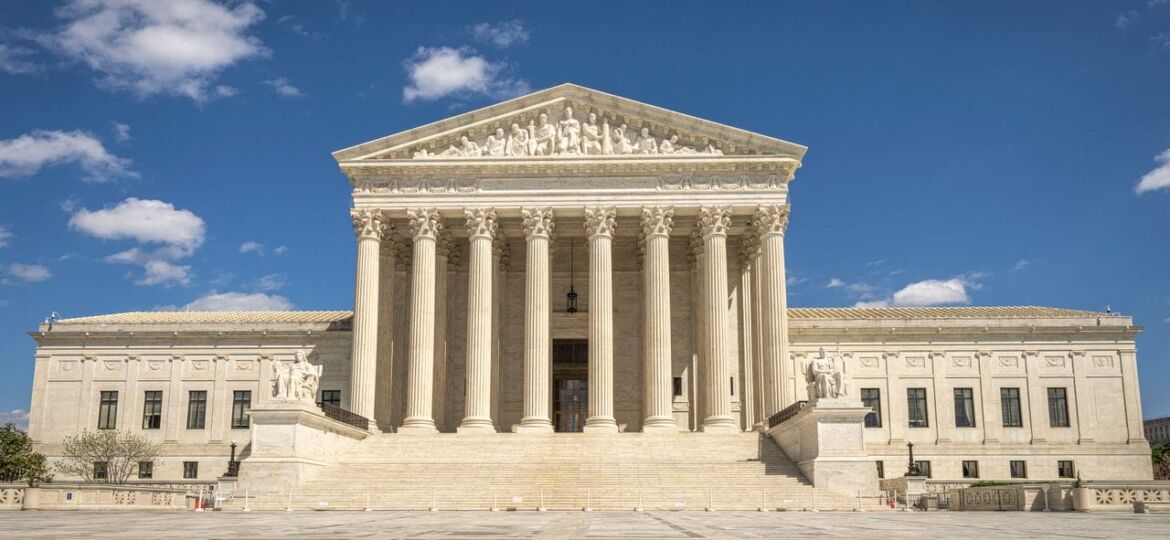
A photo of the U.S. Supreme Court building in Washington, D.C., on April 8, 2026. (Photo by Mark Stebnicki via Pexels)
Colorado preschool case lands in Supreme Court over religious freedom and LGBTQ+ rights
The United States Supreme Court heard opening arguments in St. Mary Catholic Parish v. Roy on Tuesday, November 3rd. The Catholic preschool is challenging the state of Colorado over whether religious schools can participate in the universal preschool fund without agreeing to the non-discrimination rule.
The rule, typically a prerequisite for receiving funds, requires that a school provide equal opportunity regardless of sexual orientation. Colorado’s Catholic schools claim that denying funds restricts their First Amendment rights.
St. Mary Catholic Parish wants an exception, arguing admitting LGBTQ+ students or students from LGBTQ+ families would go against their catholic teachings. The state did not grant them an exemption.
“As someone who identifies as LGBTQ+, it was really disheartening to see the church I grew up in as the face to discriminate against the families who are trying to live their best lives,” said Mark Lester, Policy Analyst at Rocky Mountain Equality.
Colorado says they can join the program, but must follow the nondiscrimination rules like other participating schools.
St. Mary Catholic Parish is located outside Denver and operated by the Archdiocese of Denver; one of 239 private faith-based schools in Colorado.
“The Archdiocese of Denver schools exist to pass on the faith to the next generation. To do this, they ask all families who enroll to be open to and supportive of the church’s teachings,” Nicholas Reaves, lead attorney for the petitioners, said during the hearing.
Conservative justices expressed concern about religious freedoms, while the liberal justices opined that granting an exemption could weaken protections for LGBTQ+ families.
Justice Brett Kavanaugh called an exemption a win-win solution. Since there only 34 religious schools in the area, he argued that it did not significantly limit LGBTQ+ students and families.
“There are plenty of opportunities to respect the rights of the religious believers and respect the ability of LGBT parents to find, among the 2,000 schools, (an) appropriate fit for their children,” Kavanaugh said during the hearing.
Experts say the Supreme Court’s decision could shape the future of religious exemptions and nondiscrimination requirements in schools across the country.
“I think it is actually unhelpful and harmful not only to LGBTQ people, but to religious people and to religious LGBTQ people,” said Jonathan Sawyer, a member of the National Education Policy Center at the University of Colorado Boulder.
Ryan Colby, the primary media contact for this case on behalf of the petitioners, did not wish to comment on this story.