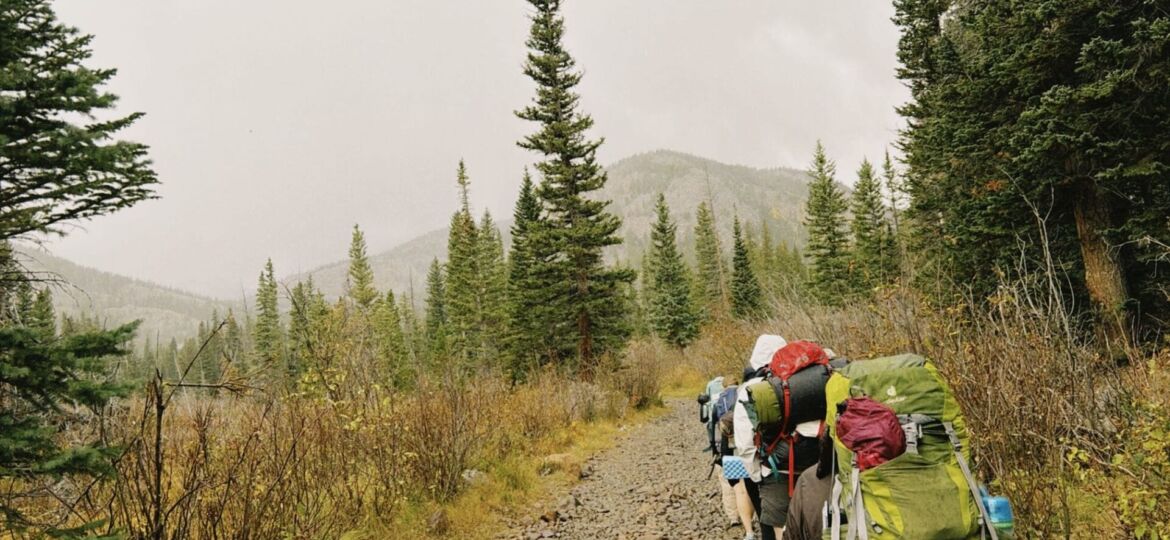
Backcountry Squatters members participate in an advanced backpacking trip at Holy Cross Wilderness, one of the club’s most popular fall events. The trip allows students to explore the outdoors, meet new people and build friendships that often last beyond the experience. (Photo courtesy of Phebe Foley)
Backcountry Squatters builds community among women hikers at CU Boulder
When University of Colorado Boulder senior Liv Acree joined Backcountry Squatters during her freshman year, she was excited to explore Colorado’s mountains. Coming from Missouri, Acree had always wanted to spend more time outdoors, especially while doing activities like snowboarding and backpacking.
What she found was a club that welcomed students of different skill levels, and made it easier to try new activities and meet people in the great outdoors.
“I went on a backpacking trip the first month of school and met girls that I still to this day call my best friends, four years later,” said Acree, now the club’s co-president.
Backcountry Squatters is a CU Boulder student club affiliated with a national nonprofit that brings women and genderqueer students together through outdoor recreation. Through hiking, skiing and backpacking trips, the club provides students with opportunities to explore Colorado, connect with their fellows and participate in activities that can sometimes feel intimidating or inaccessible.
The club organizes trips for students of different experience levels and provides free gear to help students get involved in outdoor recreation. As the club continues to grow, it has become a place for students to make friends, build confidence and find a sense of community on campus.
“Our goal is to create a space for women, like a non-competitive space for women, to exist in the outdoors,” said Phebe Foley, a CU Boulder senior and the club’s risk and resources manager.
Acree believes outdoor recreation in Boulder can sometimes feel competitive for students who are just getting started.
She explained that students can feel pressure to have the newest equipment or participate in challenging activities, even though enjoying the outdoors doesn’t have to look the same for everyone.
Backcountry Squatters works to create a different environment by offering beginner and advanced trips, free equipment and opportunities for women to participate without feeling pressured to compete with others.
According to Acree, Backcountry Squatters has grown significantly during her four years at CU Boulder. When she first joined the board, getting eight people to attend an event was considered a success. Today, the club sometimes plans events for more than 100 people.
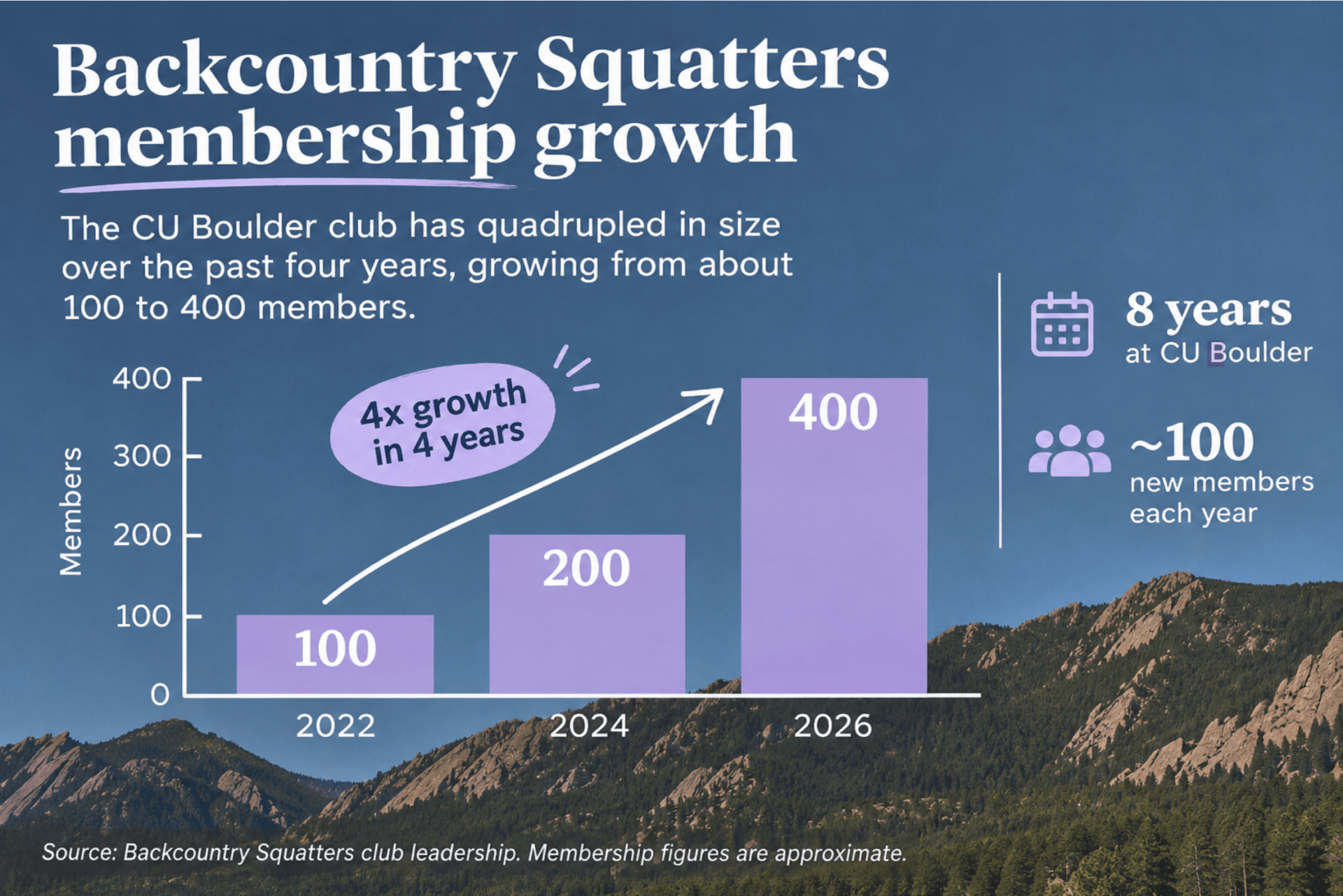
The club, which has been at CU Boulder for eight years, has seen its membership quadruple over the past four years. Membership grew from about 100 to 400 between 2022 and 2026, according to information provided by club leadership. The club estimates it gains around 100 members each year.
Kathryn Castanoli, a senior at CU Boulder and the club’s head media manager, believes social media has played a major role in attracting new members. As membership has increased, the club has also built a larger online presence, reaching around 3,700 Instagram followers and more than 1,000 participants in its GroupMe.
Castanoli said the club’s Instagram posts almost every day to share trip recaps, upcoming events and information about how students can get involved.
The growth has brought new opportunities and challenges for club leaders, who work to make outdoor activities accessible while maintaining the welcoming environment that first attracted members like Acree.
For Acree, the friendships she made through Backcountry Squatters became one of the most meaningful parts of her college experience.
“I think that bringing together like-minded people in this way in a very intimate setting, especially on a backpacking trip, helps people really get to know each other and become friends on a deeper level,” Acree emphasized.
Foley experienced that welcoming environment firsthand during her first week of college. On her first Squatters backpacking trip.
“I felt so comfortable talking to absolutely everyone because a board member came up to me and introduced herself and introduced me to all of the people that she knew,” Foley said.
That experience helped Foley form friendships that continued throughout college, including with students who later became her roommates.
While friendships are an important part of the club, its leaders also focus on making outdoor activities more approachable for students who might not know where to start.
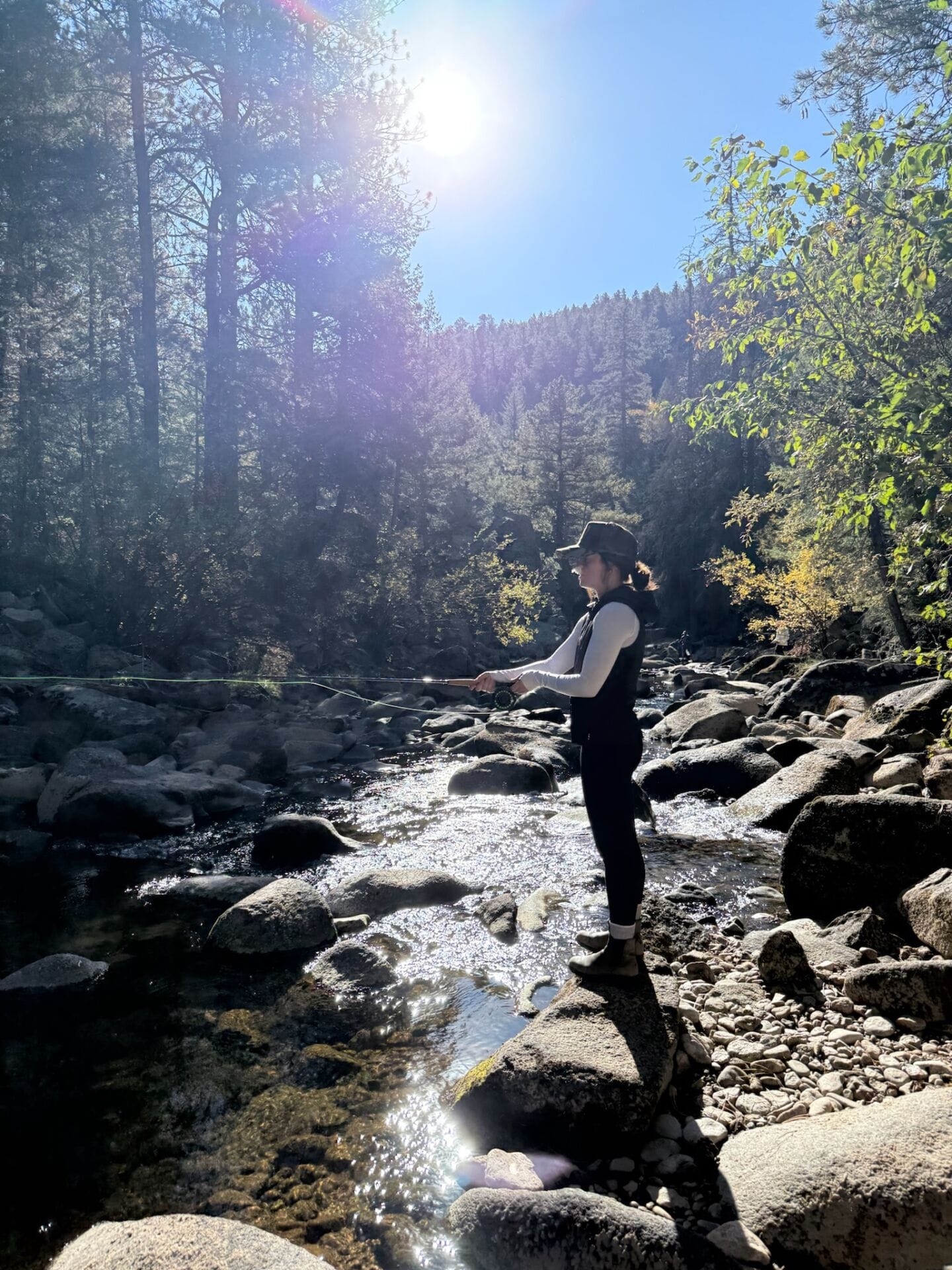
Eva Szuchumacher, a junior and the club’s director of diversity, equity, inclusion and belonging, helped lead a beginner backpacking trip this fall. The trip was designed for students who had never backpacked before and included lessons on packing equipment, cooking outdoors and other basic skills.
The beginner trip took place the same weekend as an advanced trip, allowing students to choose an experience that matched their skill level.
“I think realizing, oh, maybe it’s not so scary is like awesome and like can give you the confidence to get out there and do it yourself,” Schumacher said.
The connections made through Squatters also continue outside of organized club events, with members planning their own activities and spending time together.
Castanoli said the club’s GroupMe has also become a place where students can make plans and meet people outside of club events. Members use different channels to organize their own camping trips, hikes and just hanging out.
“We really love to see members planning activities together outside the club,” Castagnoli said.
Although Boulder offers plenty of opportunities for outdoor recreation, getting involved can sometimes feel intimidating, especially for students who don’t have much experience or even their own equipment.
Squatters works to make outdoor recreation more approachable by organizing activities for different experience levels.
Szuchmacher said the club recently organized a beginner backpacking trip alongside an advanced trip. She helped lead the beginner trip this fall, teaching students who had never backpacked before.
“My main responsibility is running gear checkout,” said Foley. “We provide free gear to all of our members.”
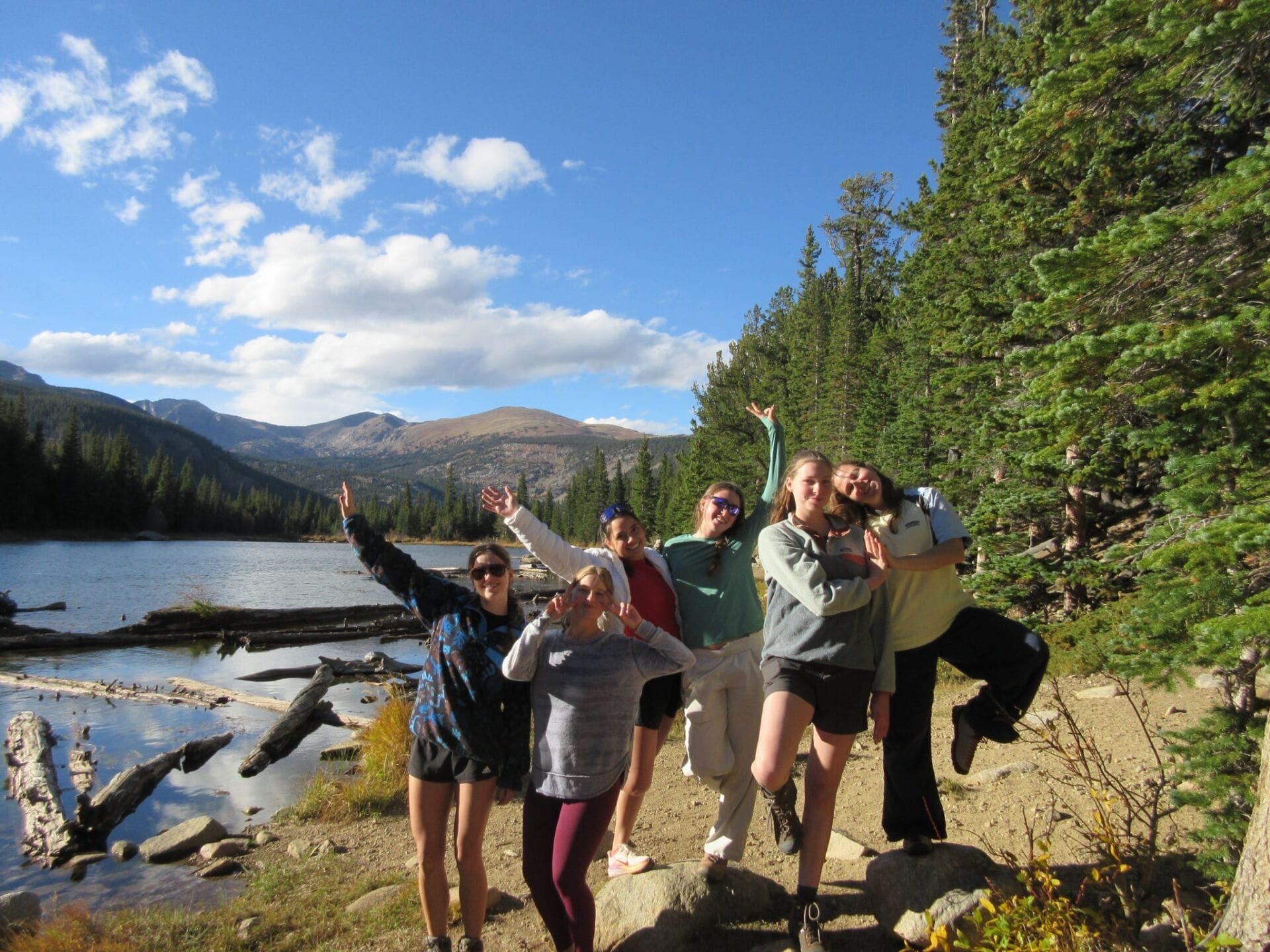
Transportation is another part of making activities accessible. Foley said the club plans some hikes within walking distance of campus or near bus routes. For activities farther away, members can carpool.
Castanoli said another reason students may be attracted to the club is that there are no membership dues or required number of events to attend. Students can participate whenever they have time or find an activity that interests them.
As the club continues to grow, its leaders are also facing challenges in making outdoor activities accessible to students from different backgrounds.
Acree said she has been in situations where she felt her opinions were not taken as seriously because she wasn’t the most experienced person participating.
“I have been in a lot of spaces in the outdoor recreation world where I feel like my voice is not valued,” Acree said.
Szuchmacher said she remembers feeling intimidated when she first joined the club, however she believes that having a supportive group of women can make trying new things less overwhelming.
She explained that the club’s board members are volunteers who balance their responsibilities with school, which makes it difficult to take on every new project.
Szuchmacher said she is focusing on making current members feel included while continuing to look for ways to reach more students. She said she has spoken with CU Boulder’s first-generation student office about possible future collaborations.
As Backcountry Squatters continues to grow, club leaders hope to maintain the welcoming environment that brought many of them together in the first place.
Schumacher remembered how board members continued to recognize her around campus after her first backpacking trip, making her feel included even outside club events.
“I think just feeling seen, even if it’s in a very simple way, is like, that’s what makes you feel like you belong,” Schumacher said.
Edited by Ella Policastri