How riots sparked Boulder's infamous ban on porch couches
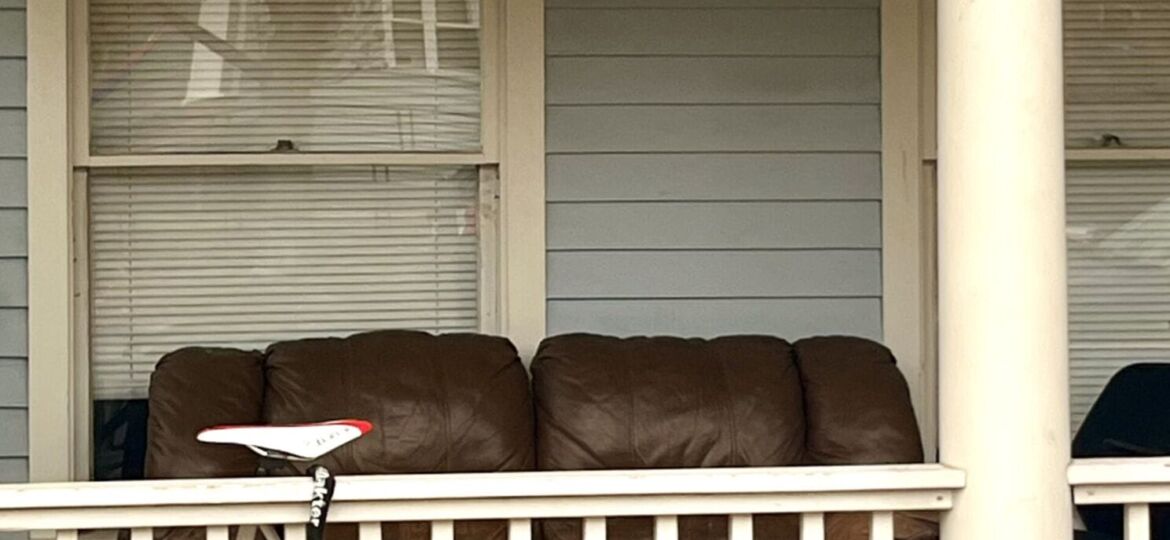
Leaving an upholstered couch on a front porch along University Hill might look like a standard college tradition, but under Boulder municipal law, it is a citable offense.
Known as Section 5‑4‑16, the ordinance bans the storage of indoor, upholstered furniture on porches, decks, yards or other exterior areas. Enacted in 2002, the so-called “sofa ordinance” was intended to protect public health and safety.
The couch ban started with a string of chaotic street parties on University Hill in the late 1990s and early 2000s.
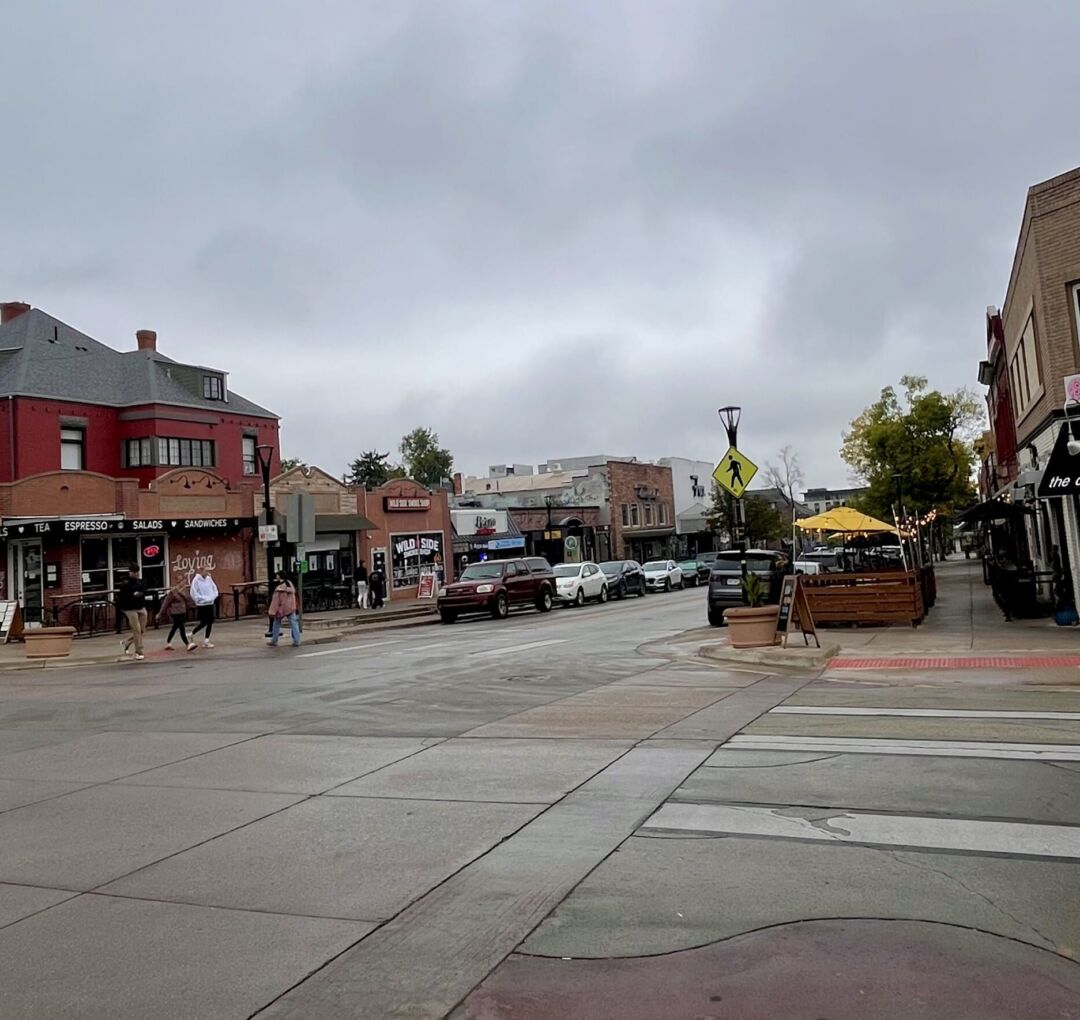
In 1997, Boulder’s intense party culture caused regular property damage, pushing Boulder police to crack down on underage drinking. Tensions between partying students and Boulder police escalated in May 1997 during graduation weekend, when an end-of-semester block party erupted into a riot on University Hill. This drew attention to the challenges of managing crowds and maintaining order, ultimately pitting young adults against law enforcement.
A News Brief summary of a Boulder Daily Camera report described the scene: “The riot began shortly after police arrived at a party where hundreds had gathered and built a bonfire in the street, a CU end-of-the-school-year tradition. During the five-hour standoff, rioters overturned dumpsters, set bonfires, and threw rocks, bricks and bottles at law enforcement officers. More than 100 officers, from Boulder and surrounding areas, were called in to quell the riot.”
The end-of-year party that escalated to a riot gained national attention, with coverage from The Washington Post, The New York Times and the Los Angeles Times. Publications described the ongoing tensions between students and Boulder police.
“Police called the five-hour standoff in the University Hill section of Boulder late Friday and early Saturday the worst riot in the city in 25 years,” The Washington Post story said.
The Los Angeles Times reported, “Tear gas chased off many of the rioters, but about 400 remained, damaging more than 50 cars, starting fires and smashing store windows and parking meters, police said. Calm was restored at about 5:30 a.m.”
The violence that unfolded on University Hill marked a breaking point for city officials with off-campus crowd control.
But the problem was not limited to the crowds themselves. City leaders soon realized the problem was not just the people but the flammable furniture lining the street.
Front-porch couches and armchairs outside student rentals became the center of destruction.
The University Hill Action group, a coalition of permanent residents, landlords, business owners and CU students, pushed the city to intervene. The group warned that upholstered furniture left outdoors created easy fuel for street arson that risked spreading to nearby rental properties.
After that, then-City Manager Ron Secrist requested community input; one proposal was to ban indoor furniture outdoors. The measure marked the start of a major shift in how the city regulated University Hill.
The initial couch ban proposal was introduced in 2000. It was amended and tabled to allow more public input. Over the next month, council chambers filled with heated debate as students, longtime residents and neighborhood associations turned out to testify. Facing backlash, the council tabled the measure to gather more input and work through amendments.
By February 2002, Boulder City Council adopted a compromise version that included exceptions for moving-in and moving-out periods. The measure took effect on Aug. 1, 2002, across University Hill, with an initial two-year sunset provision set for Aug. 2, 2004.
After Secrist stepped down, new City Manager Frank Bruno made this provision permanent.
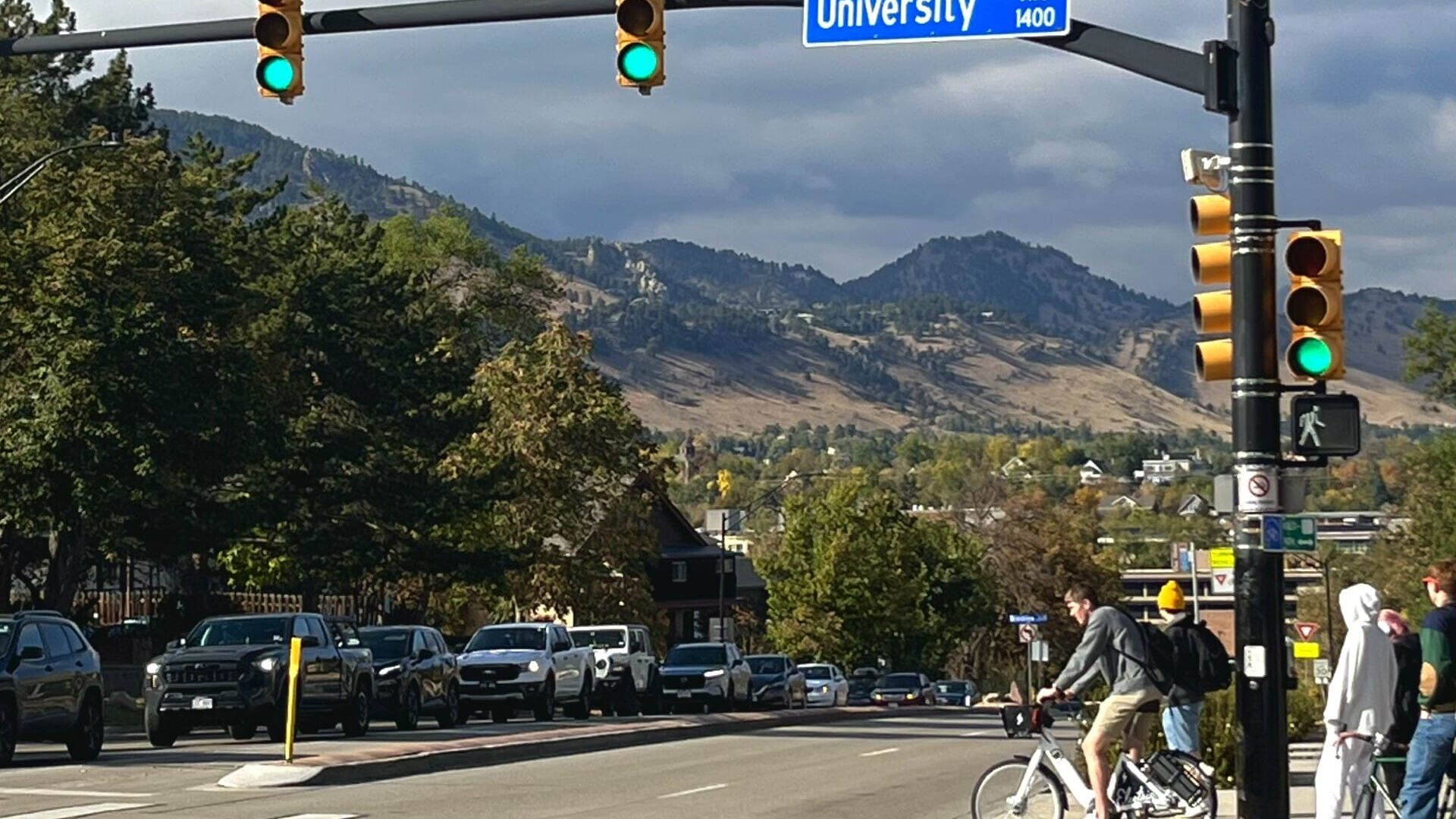
The ban does not apply to the entire city: It only targets indoor furniture visible from the street inside the boundary running roughly between Baseline Road, Arapahoe Avenue, Broadway and Ninth Street. The council voted to extend the rule beyond its sunset frame in 2004, then amended it into the current Boulder Revised Code Section 5-4-16.
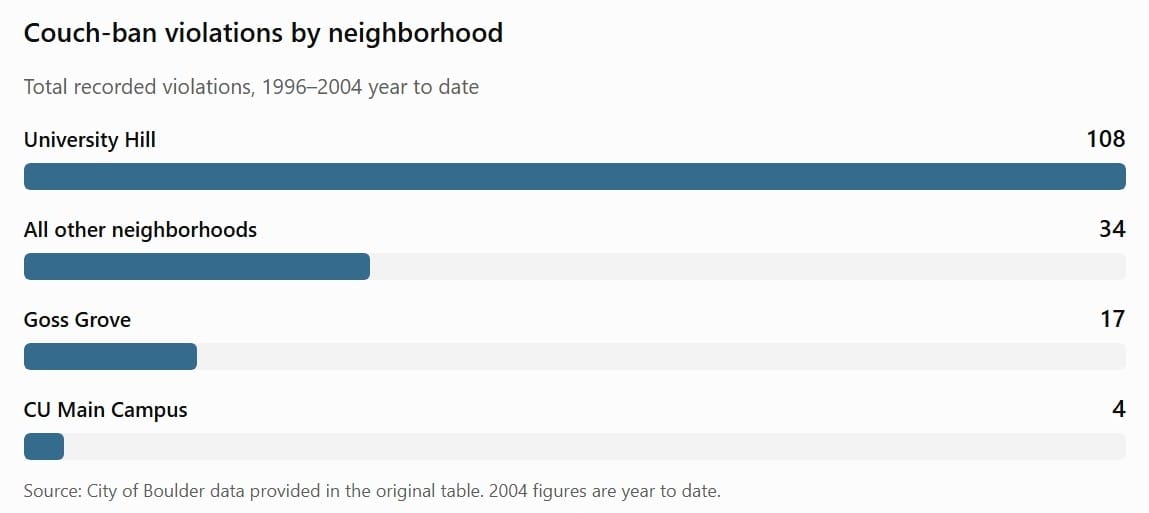
According to The New York Times, “the ordinance in Boulder, where more than 100 couches have been torched since 1996, mirrors laws in other campus towns, including Fort Collins, Colo., Normal, Ill., and Blacksburg, Va., as well as cities in which aesthetics was the primary concern, including Wilson, N.C.”
Two decades later, the ordinance is routinely ignored by student tenants across the neighborhood. It still exists but is not upheld to the same standards as it once was. On University Hill in particular, indoor couches are visible on nearly every street within the cited boundary.
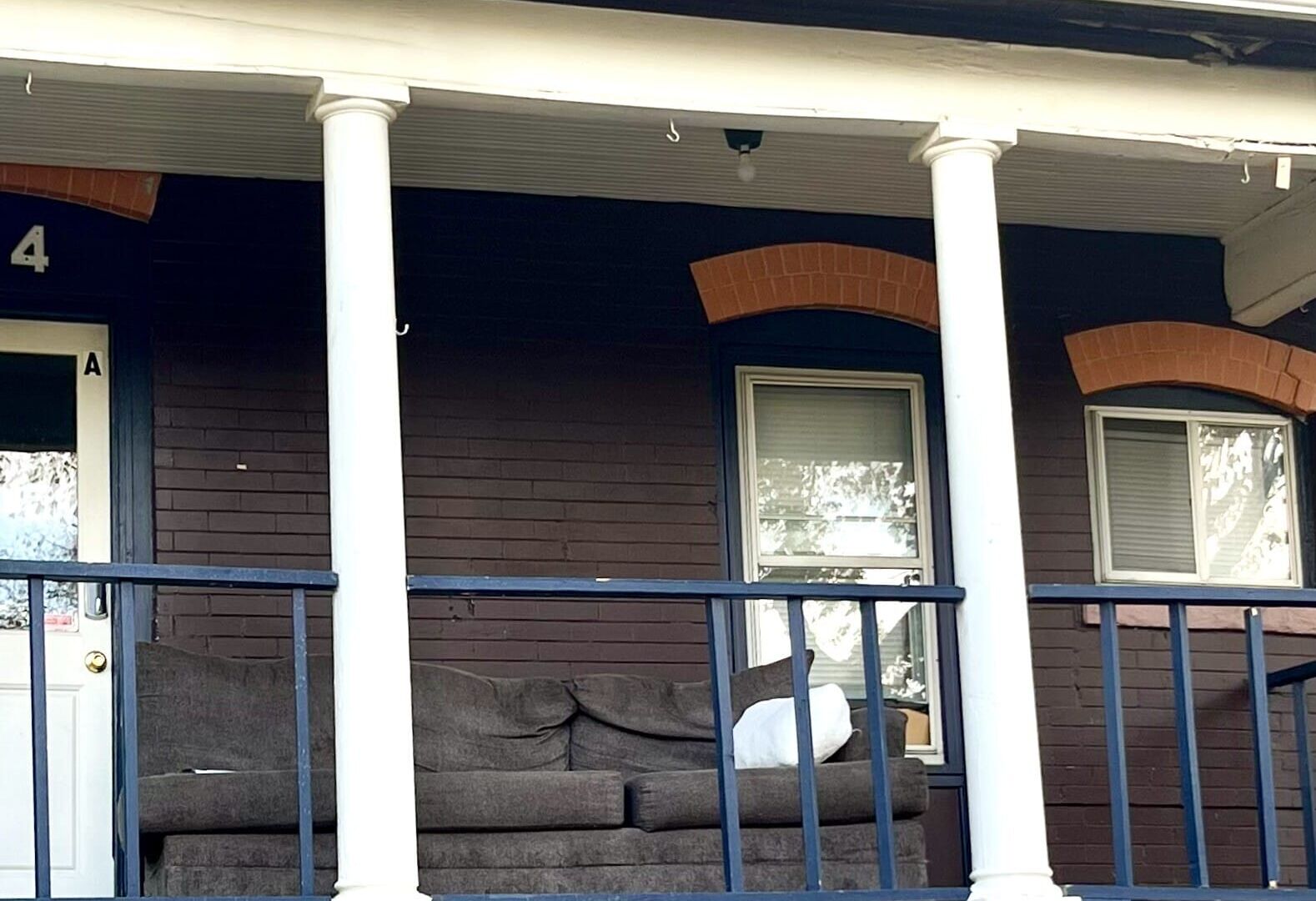
The consequences can be found in the City of Boulder’s “offenses against property.” The law includes exceptions for upholstered furniture kept on enclosed, lockable porches or balconies on the second floor or higher. There is an initial tenant notice, but if a violation is not corrected within seven days of notice, the city may remove and dispose of the furniture and charge the responsible parties for the costs, plus a $25 administrative fee.
“I clearly didn’t know that was something I needed to be concerned about. Especially in our area, it’s kind of funny just how many like random couches are outside, and probably not even getting a notice,” said Amelia Mena, a 19-year-old CU student and resident on University Hill. “I feel like maybe circumstances just aren’t as dramatic as they used to be.”
Couches continue to line porches and sidewalks throughout the neighborhood, making the once-contentious issue a seemingly ordinary part of off-campus life. While enforcement has largely faded into the background, the rule remains on the books.
If this law remains an effective safeguard, regulation may depend on what happens the next time a student gathering turns into a public safety concern.