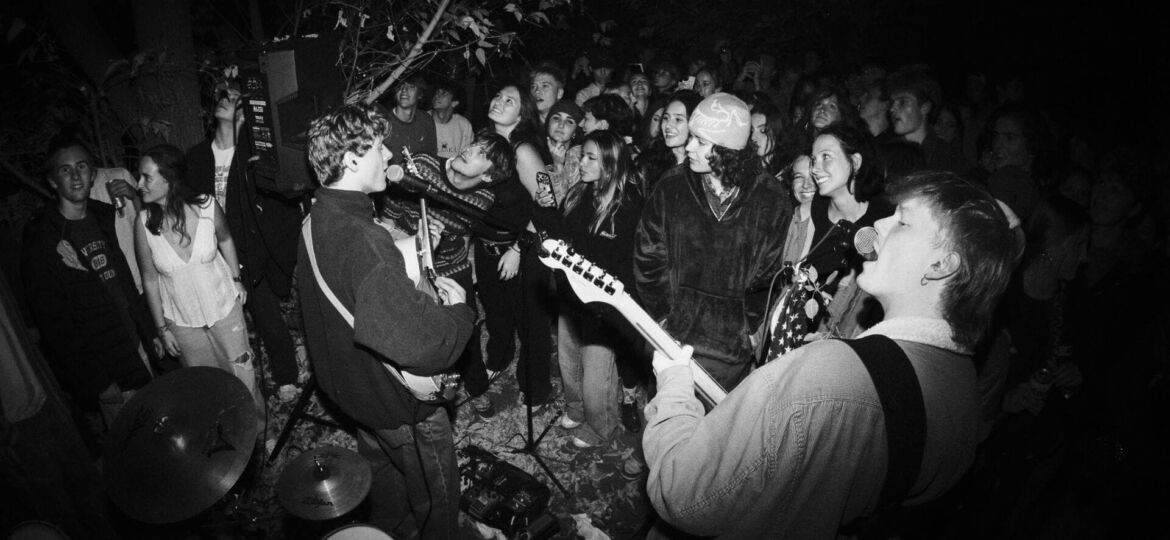
Huck N Pray members Cory Shishik, vocalist and guitarist, and Fintan Canning, guitarist, perform at a backyard house show in Boulder, Colo., on Oct. 18, 2024. (Photo courtesy of Phillip Adams)
Is CU Boulder’s house show scene being silenced?
By Sarah Binette
The University of Colorado Boulder is a hub for student musicians looking to build an audience.
The Hill, a neighborhood near campus, has long been regarded as a haven for bands such as Sunkissd, Huck N Pray and Red Revival to showcase their music and gain recognition.
However, increasing concerns about noise complaints and police enforcement have left some musicians questioning whether there is still room for live music at student house shows.
The “Let Live Music Live” petition launched by Olivia Dawson Vazquez of Junkyard Jams in Boulder proposes creating a student house show permit that would allow students to host small-scale live music events under designated conditions — such as limiting events to Thursdays, Fridays and Saturdays and setting an 11 p.m. noise cutoff.
The petition would also prevent police from disrupting registered shows before 11:30 p.m., giving student musicians more time to perform while establishing clearer expectations for hosts and neighbors. It has received 4,280 signatures as of Nov. 11.
The Hill is a mix of university students, longtime residents and families who may have different perspectives on the noise and activity associated with student house shows. This has left some bands unsure of where noise complaints are coming from.
“If you play in the middle of a bunch of students, the chances that someone’s going to call a noise complaint are a lot lower,” said Fintan Canning, the guitarist from Huck N Pray.
The “Let Live Music Live” petition has begun circulating among students as musicians seek a way to address conflicts between live music and noise regulations.
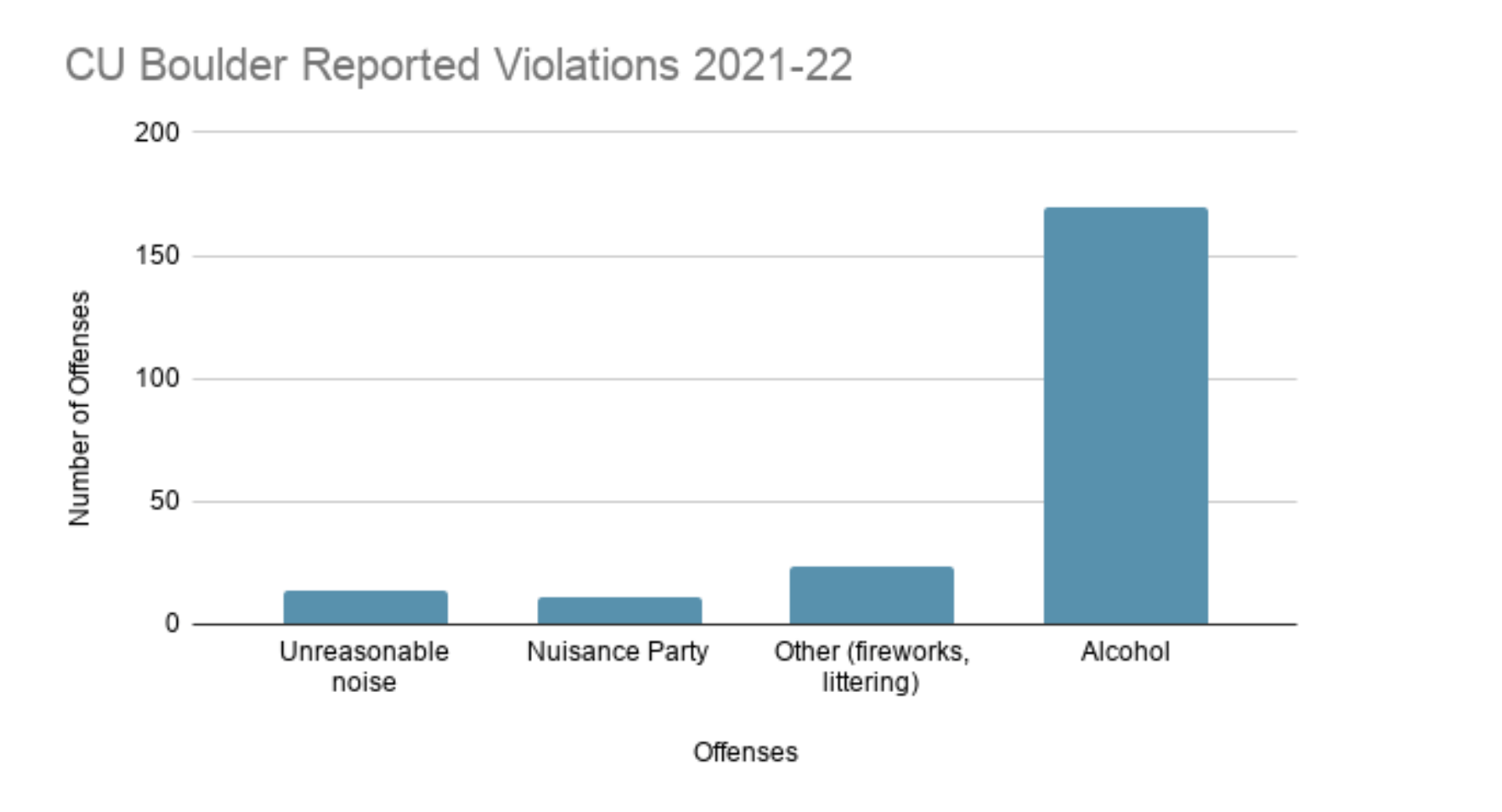
The city of Boulder’s noise ordinance prohibits any amplified sound that can be heard 100 feet or more beyond the property line from 11 p.m. to 7 a.m. In September 2022, the ordinance expanded to cover daytime hours, prohibiting amplified sound that can be heard 200 feet or more beyond the property line between 7 a.m. and 11 p.m.
When asked by to comment on the proposed permit, Boulder Police Department responded in email: “Since this issue and any proposed permit could involve several city departments, we’re unable to speak to it at this time.” The department did not respond to a follow-up email asking which departments would be involved.
Evan McLaughlin, lead singer and guitarist for Red Revival, said measuring sound levels could help address concerns surrounding house shows.
“Finding a way to actually check what the decibels are and following the laws as they’re stated … I think that would be the biggest step,” McLaughlin said.
Canning, a senior at CU Boulder, has played with his band since freshman year.
“That’s how you start out as a band; you play free house shows outside,” Canning said.
Canning said performing at parties for free is one way smaller bands gain recognition. He also described the growing number of emerging bands in Boulder.
“Now it seems like there’s a new couple bands every week or so,” Canning said.
Folsom Field’s concert history provides another example of how noise restrictions have affected live music at the University of Colorado Boulder.
Since concerts returned to Folsom Field, CU Boulder students have once again had access to large-scale live music events on campus. The stadium has hosted artists including John Summit, who performed Oct. 18, 2025, and RÜFÜS DU SOL, which performed Aug. 22, 2026.
Beyond simply giving bands a place to perform, house shows in general have become an important part of student culture at CU, particularly around The Hill.
“It really is a situation where we have a lot of demand for music, and Boulder has a history of having music opportunity … It seems like the city doesn’t recognize that,” said James Ritchie, lead vocalist and guitarist for Sunkissd.
At the same time, residents deserve to have concerns about excessive noise taken seriously. As of Fall 2025, approximately 74% of CU Boulder students lived off campus.
Not all residents of The Hill are students, however. Around 23% of residents are between the ages of 25 and 44, while 13.4% are between 45 and 64. The demographics highlight the need to consider residents of all ages when addressing late-night noise.
Ultimately, the debate surrounding live music on The Hill highlights the challenge of balancing student culture with the needs of the surrounding community. While house shows provide opportunities for student bands to gain experience and reach new audiences, residents have also raised concerns about late-night noise. The proposed Student House Show Permit aims to address both sides by establishing guidelines for hosting live music events.
The “Let Live Music Live” petition is still circulating, and it remains unclear whether Boulder police or city officials have considered the proposal. Until city officials respond, the future of the proposed permit remains uncertain, leaving student musicians and residents without a clear resolution to the ongoing debate over house shows on The Hill.