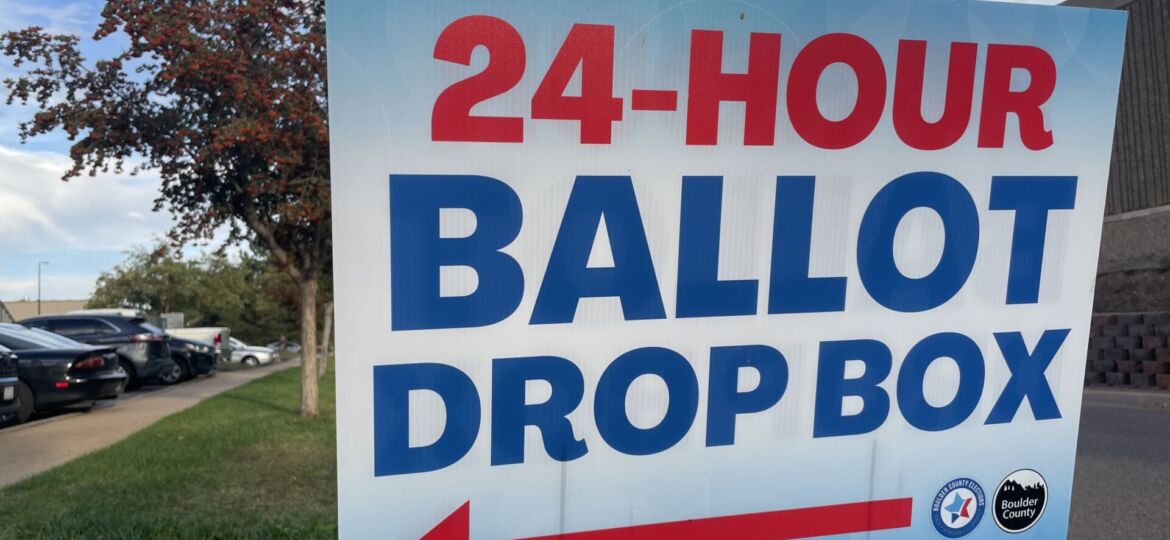
A guide to local issues on the Nov. 3 ballot
By CU Boulder journalism classes
Boulder voters — and voters in the county — have a lot to pick through for the Nov. 3 midterm election.
CU Boulder journalism students sifted through several local, county and regional races and ballot measures to take the mystery out of your ballot.
Boulder city races
City of Boulder Ballot Issue 2J
Boulder wants voters to decide whether to add a vacancy excise tax to residential properties that are left empty for more than half of the year, or 183 days. You may hear it referred to in shorthand as the vacancy tax. Read Caitlyn Garza’s story about Ballot Issue 2J.
For the city’s other ballot measures, including the $400 million bond issue, see coverage from Boulder Reporting Lab and Axios Boulder.
Mayor
Six people are running to be Boulder’s mayor, including current mayor Aaron Brockett. Keep reading to learn about the candidates.
Taishya Adams
Adams is 52 years old and has been on the Boulder City Council since 2023. This is her last year as a council member because of her run for mayor. Her platform focuses on climate justice and resilience, affordability and community-driven governance.
Adams faced a petition with more than 3,000 signatures calling for her removal from the council in June 2025 over comments she made about the firebombing attack on Pearl Street Mall. Adams also faced a code of conduct complaint filed the same year by two Boulder residents who claimed Adams discriminated against a Jewish resident after blocking them on Instagram and barred another from a book club she organized. The investigation concluded that Adams did not break any laws.
Supporters of Adams say she has a great vision for the future of Boulder, and, as the Boulder Beat noted in 2023, often quote one of her favorite sayings, “It’s a city where climate and culture are not competing for attention and resources but both are attended.”
Aaron Brockett (incumbent)
Brockett is 51 years old, and was elected mayor in 2021 after serving on the Boulder City Council since 2015. Brockett’s policies consist of expanding housing opportunities, addressing homelessness, strengthening climate resilience and confronting the city’s budget challenges.
Supporters say Brockett is a highly intelligent and progressive leader. Brockett’s endorsements include Gov. Jared Polis, Boulder Progressives, Bedrooms Are For People, Better Boulder and Sierra Club Indian Peaks.
Brockett endured a turbulent council term throughout 2024 and 2025, with residents protesting and urging the city to pass a resolution calling for a ceasefire in Gaza. Brockett and the city council also received criticism for reaching an informal agreement regarding the future of the Boulder Municipal Airport.
Jameson Goldstein
Goldstein is a 21-year-old CU Boulder student and the youngest candidate in the mayoral race. Goldstein is currently studying philosophy and has studied finance in the past. Goldstein expects to graduate in 2028.
His campaign supports affordability, transparency and an opposition to Flock cameras. Goldstein has often referred to himself as “pro-people.”
Supporters appreciate the young energy and new perspective he brings to the race. Goldstein often advocates for the younger generation, which has more college-age voters watching the race.
Critics say Goldstein lacks executive experience necessary to run a city. People also focus on his student status and his age.
Lisa Ann Jacobs
Jacobs has worked for various governmental and private organizations, and currently works as a realtor. Her priorities include transparency, fiscal sustainability and more effective trial lawyers for the city.
But Jacobs has run a private campaign with no public website, registered contact information or filed financial support. Unlike the other candidates, there isn’t much discussion of support or opposition to Jacob’s campaign. In an August forum hosted by the Boulder Chamber of Commerce, Jacobs said her history in the city and her intellect are assets for the role, as well as her job as a realtor, which she believes will set her up for success when tackling issues such as housing.
Aquiles La Grave
La Grave is a 47-year-old entrepreneur who has been involved in local government and civic issues for about 30 years. He was very involved in the campaign to preserve the Iris Ball Fields.
His main priorities consist of creating a more visible role for the mayor, including extending office hours and creating transparency through a Mayor’s Office of Constituent Affairs. That role would consist of responding to residents within 48 hours and creating a public control center to track the city’s goals and results.
Supporters of La Grave say he is a community-oriented and driven leader who is ready to challenge the current local government.
La Grave had faced a campaign finance complaint from his former campaign manager. In September, the city clerk’s office said there was probable cause for two reporting issues worth $280, but dismissed the rest, according to a Boulder Reporting Lab story.
La Grave also has been sued by his former campaign manager, Sarah Glynn, who is seeking $7,500 for 60 hours of allegedly unpaid work. La Grave has said the suit has no merit. The next court date is Dec. 7.
Fred Smith
Smith, 63, works as a laborer on a farm doing landscaping. He is also on disability for mental health issues, and has been a patient representative on the board of what is now Clinica Family Health and Wellness.
Smith has run four previous campaigns for City Council using the name “Grateful Fred,” which he carries over into his mayoral campaign. His platform focuses on lowering the drinking age, which means working with CU and law enforcement on underage drinking, raising the minimum wage, proposing a 10% city income tax on household income above $184,500 and economic fairness.
Supporters say Smith has experience working with local mental health organizations. But many people question the legal feasibility and practicality of Smith’s potential policies. Others say he lacks experience and a traditional administrative background.
— Bella Benson
City council
Five seats on the Boulder City Council are up for grabs in this election. Keep reading to learn about the 13 people running for a seat.
Benita Duran
Duran, 65, owns a consulting firm and serves on the Boulder Public Library District Board. She is also the vice chair of the Colorado Educational & Cultural Facilities Authority, and a former board member of Boulder Community Health.
Duran’s campaign is centered around an affordable cost of living, safety and inclusivity for the community, sustainability, climate resilience, strengthening local economy and protecting Boulder’s land.
Duran’s supporters appreciate her willingness to have difficult conversations and how she aims to represent those who feel underrepresented in Boulder politics. However, in 2019, she received pushback about her goals to diversify housing in Boulder; many Boulder residents don’t want more people moving to the town.
Sam Faqua
Faqua, 62, is an audio producer, podcast host and former Boulder Valley School District board president. He is focused on affordable housing for families, transparent government, climate resilience, infrastructure and arts and culture.
Faqua previously was the news director and station manager at KGNU, and credits his time in journalism with teaching him the value of transparent decision-making and hearing many perspectives.
Faqua’s supporters find his commitment to transparency through governance and community engagement impressive.
Lee Gilbert
Gilbert, 75, is an engineering consultant and an independent software consultant and contractor.
He is running for city council on a single issue: opposing transportation projects that he believes make streets less safe, specifically the Baseline Road Transportation Safety Project.
He has not spoken to the media about the race. The biggest opposition to his campaign is the fact that he is “not well acquainted with local politics” and is running solely on one issue, according to Boulder Reporting Lab.
Jill Grano
Grano, 44, is seeking her second stint on the Boulder City Council, having been elected in 2017 to become the first openly gay woman to serve on the council. She resigned in 2019 to work for U.S. Rep. Joe Neguse’s district office.
Grano is employed as a real estate agent. Additionally, she serves on the Boulder Housing Partners Board of Commissioners, as well as CU Boulder’s Center for Leadership Board.
She is running on the issues of commercial vacancy, struggling small businesses, budget, housing and homelessness (as well as protecting manufactured homeowners) and climate resilience. She is also an advocate for making Boulder a safer community and creating easier, safer ways to get around the city.
Her advocates are thrilled that she is running for reelection after a few years, valuing her insight into housing issues as a realtor and a former staffer for Neguse’s “Housing Our Communities” legislation. They also appreciate her people-first policies and goals to make Boulder safer and more inclusive.
Rachel Rose Isaacson
Isaacson, 28, made an unsuccessful bid for the council in 2025. She works as a barista at South Side Walnut Cafe and a pollinator ambassador with Cool Boulder.
The main issues in Isaacson’s campaign include strengthening Boulder’s wildfire and climate resiliency, economic vitality, governance, fiscal stewardship and housing. She is especially passionate about Boulder’s working families, and how they are being impacted by the current cost of living.
Many of Isaacson’s supporters are in her corner due to her being part of Gen Z and her status as a renter, saying that she will fight for worker’s rights and renter protection.
Ryan Jamieson
Jamieson, 46, owns his own cybersecurity consulting firm, and he is a veteran who served in the army in Korea, Germany, Kuwait and as part of the invasion of Iraq in 2003.
Jamieson is running on the issues of housing, budget, commercial vacancies, parks and open spaces, climate and wildfire resilience, Flock cameras and digital service.
His supporters appreciate the crossover between his army and political experience, saying that it gives him leadership experience that they value. Additionally, they think that his work in cybersecurity backs his opposition to Flock cameras in Boulder.
Dave Martus
Martus, 59, is a first-time candidate who works as a senior advisor at Upwelling Capital Group; Martus has held several positions at investment firms. He is advocating for fiscal stewardship, increasing trust in government and reducing regulation and bureaucracy.
PLAN-Boulder, an environmental grassroots activist organization, is Martus’ only endorsement at this time. They have yet to release any individual comments.
Tina Marquis
Marquis, 52, is running for a second term on city council. Living in Boulder for over 20 years, Marquis has volunteered throughout the community, including six years on the Board for the Conference of World Affairs at CU Boulder.
Marquis wants to make Boulder a welcoming place for all through her policies, goals and investments. Specifically, she aims to improve public safety and transportation, reduce homelessness and housing insecurity, increase affordable housing for families and strengthen wildfire resilience and governance.
Her supporters applaud her dedication to the Boulder community, trustworthiness and ability to understand complex issues.
Jamillah Richmond
Richmond, 42, is a first-time candidate for the city council. She is a single mother, the co-founder of Education With Oppression and is a diversity and education consultant. Her campaign platform emphasizes climate justice, community-driven government, affordable housing and support for small businesses and workers.
Supporters admire her representation of diverse young adults, her impact and her dedication to the people.
Scott Rendleman
Rendleman is a first-time candidate and an attorney who has spent most of his career representing healthcare providers involved in malpractice cases. Rendleman is running on a platform of climate resilience (specifically wildfire preparedness), great trust in government and affordable housing. Rendleman has not received any endorsements.
Ryan Schuchard
Schuchard, 49, is running for reelection to the council after joining in 2023. His website shows that his campaign is focused on the cost of living, “adapting the community to changing the world,” climate issues/action, transportation and local government becoming more predictable and effective.
Schuchard’s supporters value his efforts in advancing climate solutions, as well as his role as a father to two children. They say that he, as a family man, will fight for Boulder families and the climate alike.
Lynn Segal
Segal, 73, is a retired ultrasonographer and a frequent commenter at Boulder civic meetings. She is running on a platform aimed at reducing CU’s impact on city development and bringing utilities under municipal ownership. Segal currently has zero endorsements.
Tara Winer
Winer, 68, is running for reelection, and has served on the city council since 2021. Winer is a small business owner who develops custom merchandising solutions for clients in healthcare, insurance, tech and construction.
In this cycle, Winer is specifically focused on making Boulder a stronger and more balanced community. More broadly, she is running on the issues of open space, economic vitality and diversity, climate action, sensible growth, transportation, homelessness, housing solutions and arts and culture.
Winer’s supporters want her to be reelected because of what they say is her clear role as a leader and voice for the people during her previous term. Supporters say that she listens to the issues brought to her and fights for solutions.
— Carly Malamut and Grace Garfoot
Boulder County and regional races and ballot measures

Issue 1A: Boulder County Early Childhood Care and Education
Voters are being asked whether they want to increase property taxes to account for child care expenses, increase pay for child care workers and address the shortage of child care spaces.
The proposal would increase property taxes by 2.579 mills (a mill is equivalent to $1 on every $1,000 of assessed property value), bringing in about $30 million a year.
The Boulder County Commissioners unanimously voted to place the measure on the ballot on July 23, 2026, and, if passed, would take effect for the 2027 tax year.
According to the Boulder Reporting Lab, supporters, including Boulder Mayor Aaron Brockett, say this measure is needed to account for the rising child care costs. Revenue from this measure could help with grants for workplace employees and fund tuition assistance programs.
Some people against this measure argue that it is an unnecessary expense placed on Boulder County homeowners, and question whether this is the correct way to address the child care costs.
To read the full resolution, go here.
— Kami Robinson
For information about Boulder County’s Ballot Question 200 and 201, regarding whether to expand the county commission by two seats, see coverage from Axios Boulder.
Ballot Measure 7A: Front Range Passenger Rail District
Several municipalities, including Boulder, Broomfield, Lafayette, Superior and Westminster, are being asked whether to add a 0.333% sales tax to fund the second and third phases of the Colorado Connector regional rail system.
Read Gwen Strickland’s story about Ballot Measure 7A in The Bold.
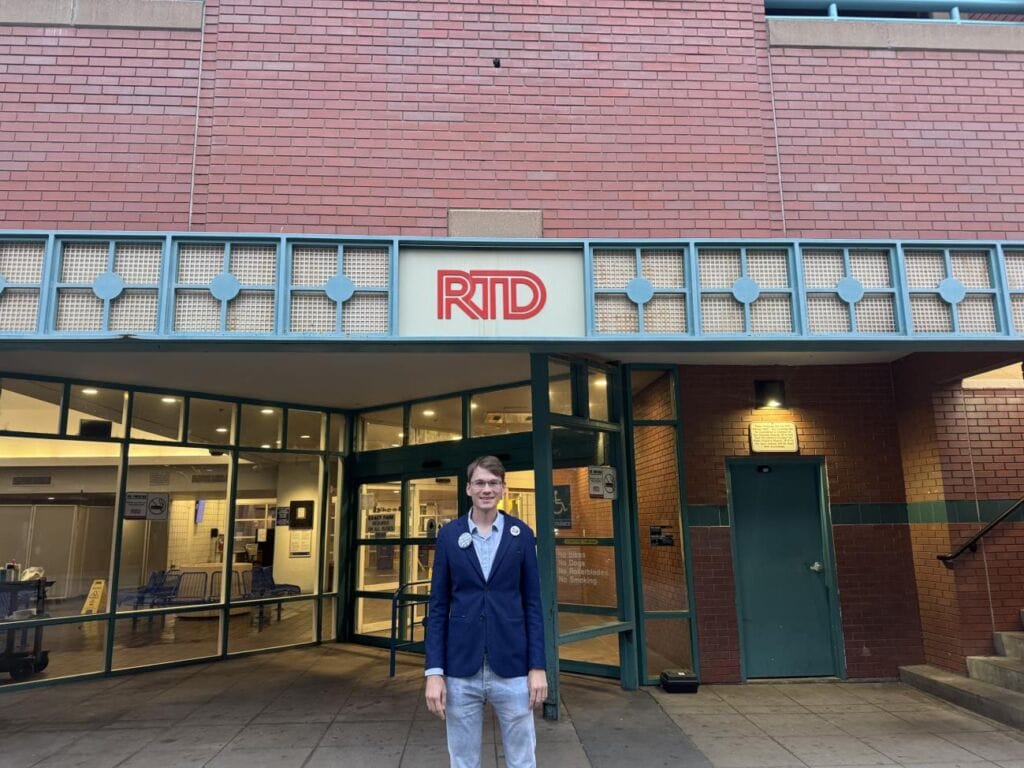
RTD District O: Audrey DeBarros vs. Jack Rosenthal
RTD District O voters are being asked to choose a new person for the RTD Board of Directors. This district covers Boulder, Louisville, parts of Lafayette, Nederland, Ward and other parts of Boulder County.
Audrey DeBarros, 59, is the executive director of Commuting Solutions, a nonprofit that improves transportation throughout the northwest metro. She’s also a staff administrator at the Northwest Mayors and Commissioners Coalition.
DeBarros is campaigning on a platform of her decades of experience in transportation and regional relationships.
Her supporters include former District O board members — Chuck Sisk, John Tayer and current board director Lynn Guissinger — who say DeBarros’ experience qualify her for this role. There is little public criticism of DeBarros.
Jack Rosenthal is a 30-year-old software engineer and transit advocate who lives in Louisville. He is campaigning on a platform of data-driven solutions and his frequent ridership. He previously fought for Route AL, which is RTD’s new airport bus, and helped to write a new state law that required transit agencies to post clear transit maps at stops and online in multiple languages.
Rosenthal’s supporters, including Boulder Progressives and the union that represents 2,500 RTD workers, say Rosenthal is a daily rider who understands the needs of RTD operators and riders alike. Opponents criticize his lack of experience in transit leadership and local government.
— Haley Hubbard Godfrey
CU Board of Regents, Districts 2, 6 and 7
The CU Board of Regents manages the $6.7 billion budget for the University of Colorado system. The board is made up of nine members, one member from each of the eight districts and the ninth being a statewide representative.
District 2 is on the Boulder-area ballot, but all districts have influence on what happens at CU Boulder.
District 2
Edie Hooton, 68, is the Democratic candidate. She served as a member of the Colorado House of Representatives for six years, and is currently the co-chair of Rocky Mountain Planned Parenthood. Her platform prioritizes affordable tuition for in-state students and improving retention and graduation rates.
Hooton’s constituents appreciate her career-long dedication to politics. But Kubs Lalchandani, who ran against Hooton in the primary, said that they wished she “would take a role of mentoring younger people.”
Marty Neilson, 84, is the Republican candidate. She spent her career as a financial executive, including at IBM, and is the former treasurer of the Boulder County Republican Party. Neilson wants to explore additional funding for universities, and ensure safe, superior and affordable education for Colorado’s students. Neilson also backs the Protect College Sports Act, which is moving through Congress.
Neilson’s supporters have strong trust in her skills and knowledge in finance. Opponents point to her age as being an issue.
District 6
Ilana Spiegel, 57, is currently a regent, and is running for reelection. The Democrat has served on dozens of statewide education boards and committees. Her campaign slogan is “fighting for public education, standing up for every student.” Spiegel’s work as a regent includes capping tuition growth, investing in student mental health and launching equity-driven initiatives.
Her supporters say she’s proven herself as a regent and has been part of the CU community for over 20 years. Spiegel, who is Jewish, has faced backlash from both pro-Israel and pro-Palestinian protestors multiple times.
Veanessa N. Burbage, 70, is the Republican candidate. She operated a skin care business and touts her experience as a wife and mother. Burbage’s platform is “bringing accountability, affordability and common sense back to the University of Colorado.” Public supporter comments were not available online, and her opponents point to her lack of political knowledge and experience.
District 7
Nolbert Chavez is a current regent running for reelection. The Democrat is the chief of external initiatives and executive director for CityCenter at CU Denver, and previously held a state House seat. He is running on additional state funding for schools, climate change, civility, curriculum, DEI and an equitable financial model for in-state students.
Chavez’s supporters praise the policies and initiatives he’s brought to the table. Opponents say they’re not a fan of his policies, including his backing of collective bargaining rights for CU employees.
Paul Duane Mueller is the Republican candidate. He holds a PhD, is a senior research fellow at the American Institute for Economic Research, as well as an economist, author and small-business owner. Mueller’s website on his platform says he’ll “be a faithful steward of public funds, defend free inquiry and keep CU nonpartisan and focused on its mission: the pursuit of truth in the public interest.”
His supporters say that his former position as a professor gives him the experience to lead in higher education. His opponents point to the fact that Mueller leans heavily conservative in his policies.
— Jane Kiernan
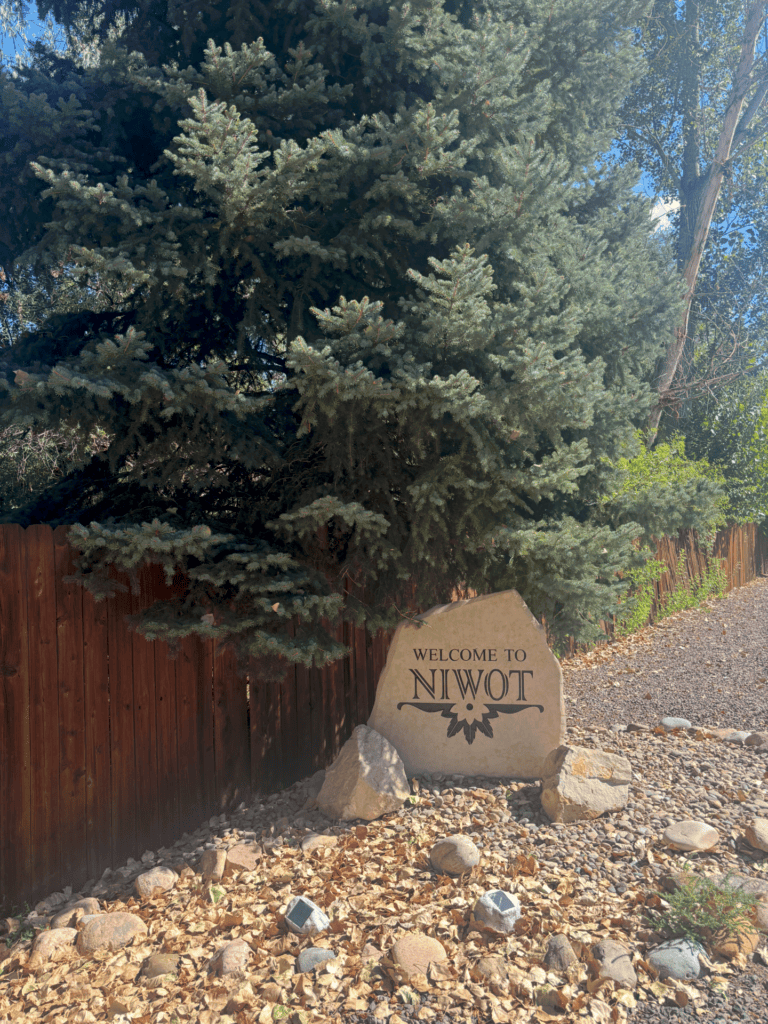
Niwot Question 1
Residents of Niwot, a roughly 4,000-person community in Boulder County, will decide whether to form its own municipality. There are three related ballot questions for Niwot voters, as well as five related issues.
Currently, Niwot is unincorporated, which means they follow county laws and regulations. The people behind the measure want to have a more representative government. The push started over the county’s minimum wage increases and a delay on downtown development, among other things.
If incorporation passes, Niwot will set up its own mayor and city council, and set up its own services, regulations and tax codes. Opponents of the effort point to the creation and expense of Niwot-specific taxes on top of usual taxes.
To read the full ballot measure, go here.
— Caitlyn Garza