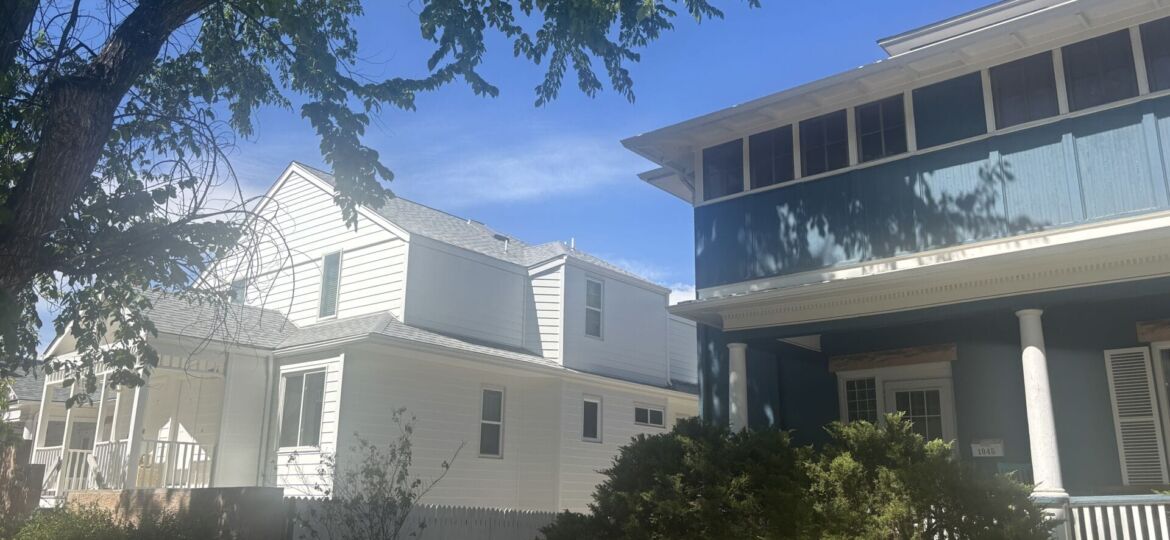
Two homes sit along Pennsylvania Avenue on Sept. 9, 2026, in Boulder. (Photo by Caitlyn Garza)
Boulder asks voters if city should put extra tax on homes that are empty for 183 days a year
By Caitlyn Garza
At the end of the day, most CU students have the same goal after class: to head home. However, for many students, it took them months to find those homes in Boulder.
Campbell Gunderson, a sophomore at the University of Colorado Boulder, is already looking for housing for next year like many CU students are.
Most students, including Gunderson, look for a place on the “Hill” neighborhood close to CU Boulder.
“Anytime we do find a house, it’s, like, $2,300 a person,” Gunderson said. “It’s really expensive and kind of ridiculous.”
In 2024, a document provided for a Boulder City Council study session estimated vacant units in Boulder ranged from 1,000 to 4,000. And according to Zillow, rent for a house in Boulder typically runs about $2,300.
To address these housing issues, the City Council put a measure for a vacancy excise tax to appear on the Nov. 3 Boulder ballot.
According to the City of Boulder, the vacancy excise tax would apply to residential properties left empty for 183 days.
The tax is $4,000 for each vacant unit, capped at $7,000. Property owners would pay this tax for a vacant property, and it gradually increases each year it remains unoccupied.
City council member Tina Marquis helped initiate the proposed tax as part of her campaign when she first ran. The City Council explored it, but they thought it wasn’t the right time, until recently.
“We discussed all the different things we could do. We have lots of taxes on this ballot,” Marquis said. “Then we voted to put it on the ballot.”
The ballot measure won 7-2 and was approved to be put on the ballot.
Mayor Aaron Brockett supports the measure.
“For helping to raise revenue and then to disincentivize empty homes, I think it’s a great idea,” Brockett said.
Brockett believes that if the tax passes, it won’t make a huge impact on the cost of housing and the challenging search at first.
“It’s not going to solve all these problems by itself, but I do see it as a good tool for making at least a little bit of progress,” Brockett said.
Marquis also believes it won’t have a profound effect, but that it will contribute to the vitality of Boulder.
“Our primary role isn’t to build housing for second homeowners and administrators,” Marquis said. “It was to help people who are currently commuting into Boulder work here, or people who are renting to own here and stay here.”