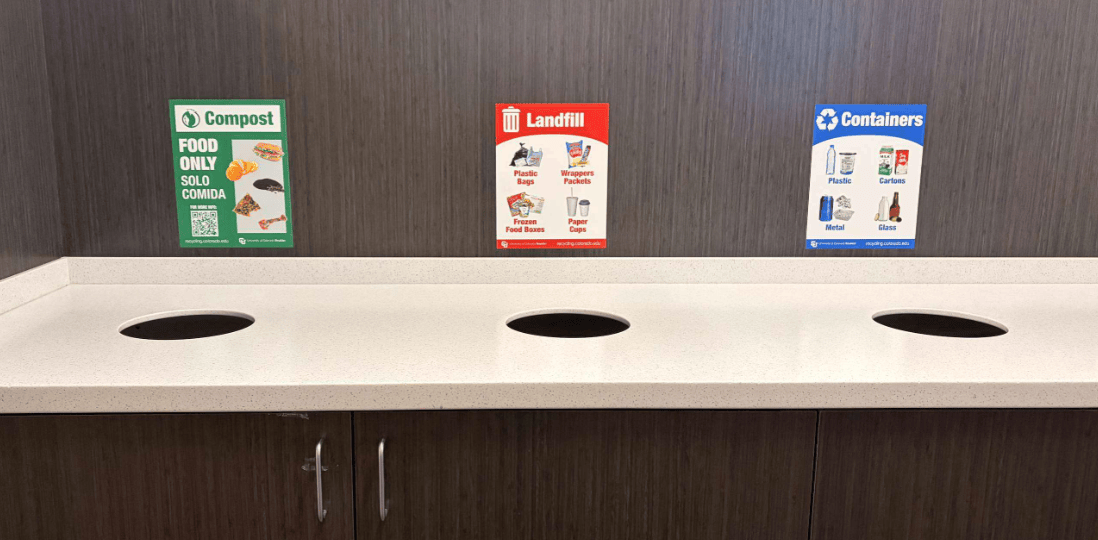
Color-coded and image-based instructions guide students on where to dispose of waste all over CU Boulder’s campus in September 2026. (Photo by Anjali Flagg)
How CU Boulder is fighting stagnant sustainability
By Anjali Flagg
Walking around the University of Colorado Boulder, you might see color-coded bins urging students to properly sort their waste. However, many students and visitors alike ignore the instructions.
“Most people I know, including myself, will choose to throw things in the trash if it is closer than the recycling bin,” said Caroline Herzog, a junior at CU Boulder.
CU Boulder’s plans to become a zero waste community began in 2006. Despite nearly two decades of efforts, the university has struggled to make consistent progress toward its waste diversion goal. As the university continues to pursue its goals, it is educating its students and staff on how to sustainably sort waste as a solution.
“We have stayed stagnant for a long time, but are now poised to change this,” said Chris Herr, director of the Environmental Center at CU Boulder.
In 2025, the city of Boulder self-reported that it had reached 49% of its zero-waste promise. Meanwhile, CU Boulder is sitting at 51% waste diversion, according to Herr.
The goal, in accordance with the city of Boulder, is to reach 85% waste diversion.
In 2022, CU Boulder changed its composting rules after their compost processor began to refuse contaminated loads. The university was forced to revoke their requirements for front-of-house composting, pushing their waste diversion goals back.
This year, the university has reinstituted front–of-house compost into all food programs and reducing contamination in compost bins.
CU Boulder’s campus climate team has been modifying its current website and guidelines to encourage students to take this issue seriously.
“Of what we throw in the landfill, maybe as high as 40% of that is organics, so finding a way to capture and compost it all, that is a priority,” said Joshua Radoff, the university’s director of campus climate.
These strategies fall under the new environmental outreach engagement plan working to educate students on the how, what and why of composting, trash disposal and recycling. Already, CU Boulder has those color-coded bins, as well as educational flyers and extra food compost plans in dining halls.
“I think most people think most waste that you recycle doesn’t actually recycle — there’s a lot of misinformation out there, so we need to be a lot more aggressive in terms of combatting that,” Radoff said.
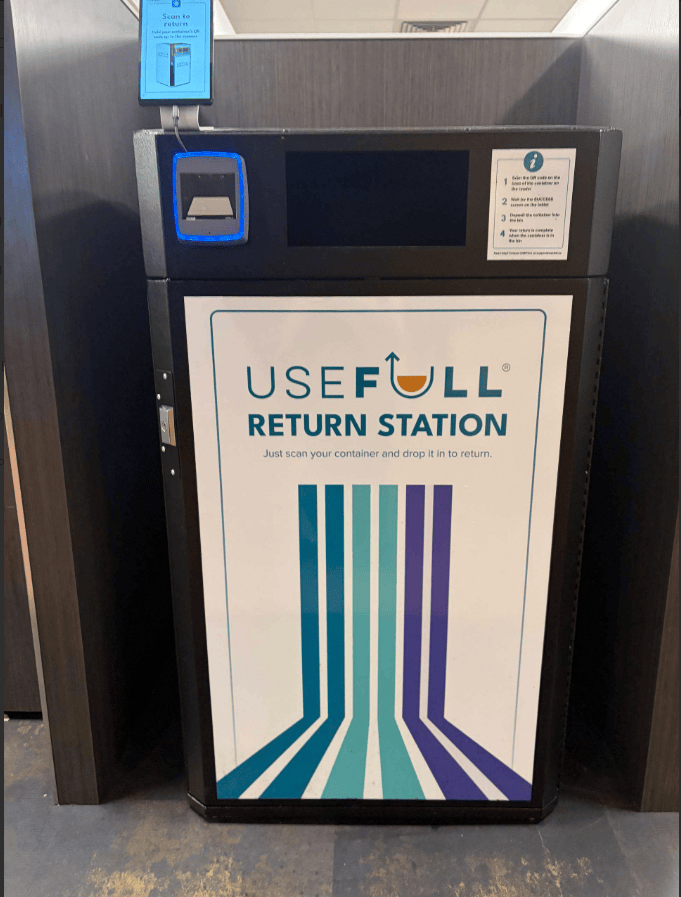
More significant measures are happening, too. The Alfred Packer Grill, located in the University Memorial Center on campus, recently reopened and has eliminated of single-use containers.
Instead, students can take their food to go in metal containers but must track them on their phones to return to the food hall.
These types of initiatives are looking to be implemented everywhere by the end of 2027 if the pilot goes smoothly.
“By reducing the amount of waste we put in landfills we save virgin materials, reduce greenhouse gas emissions and reduce fertilizer production,” Radoff said. “This way we aren’t damaging ecosystems and we save energy.”