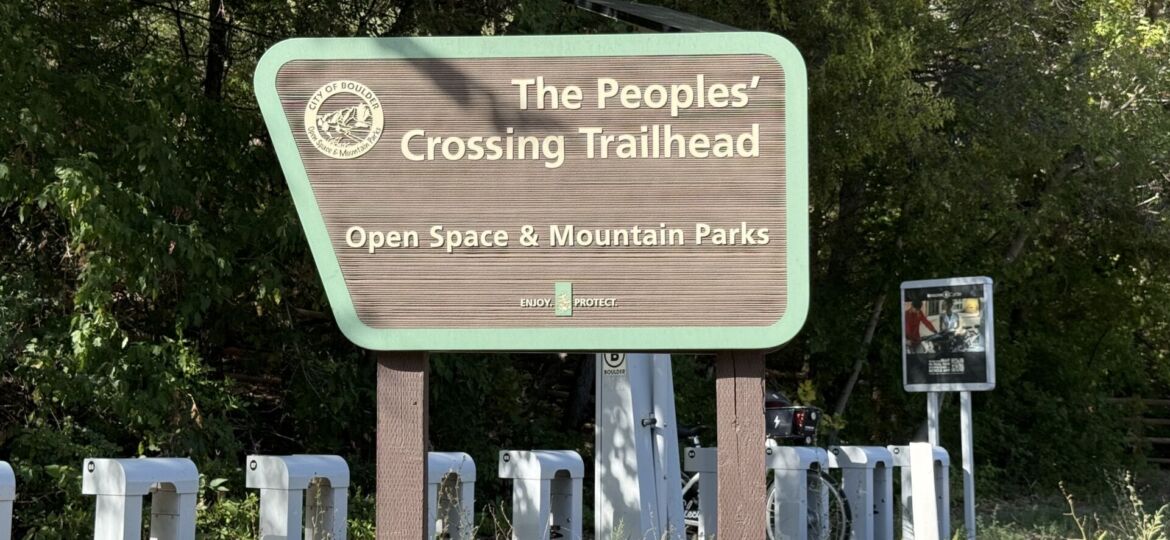
The Peoples’ Crossing Trailhead marker sits at the entrance of Boulder Canyon in September 2026. This trail was closed during emergency operations and gave the wildfire its name. (Photo by Ellie Chase)
‘We live in a place meant to burn’ as Colorado wildfire threat grows
By Ellie Chase
The first morning of CU Boulder’s fall semester began under a veil of smoke. Before classes even started on Aug. 20, a brush fire broke out at the entrance of Boulder Canyon fewer than two miles from the University of Colorado campus.
The half-acre blaze triggered trail closures, evacuation warnings and a two-hour emergency response. The fire, quickly contained by Boulder Fire-Rescue, served as an immediate reminder of Colorado’s wildfire threat, landing right at the edge of campus life.
“Boulder Canyon is like a second home for me,” said CU Boulder sophomore James Mason, who estimates he visits the canyon at least twice a week for rock climbing, hiking and swimming.
Later named the People’s Crossing Fire, this local fire joins the list of 1,143 fires recorded in Colorado this year. Colorado’s recent fire seasons have grown increasingly severe, with four of the top five largest wildfires occurring in the last six years.
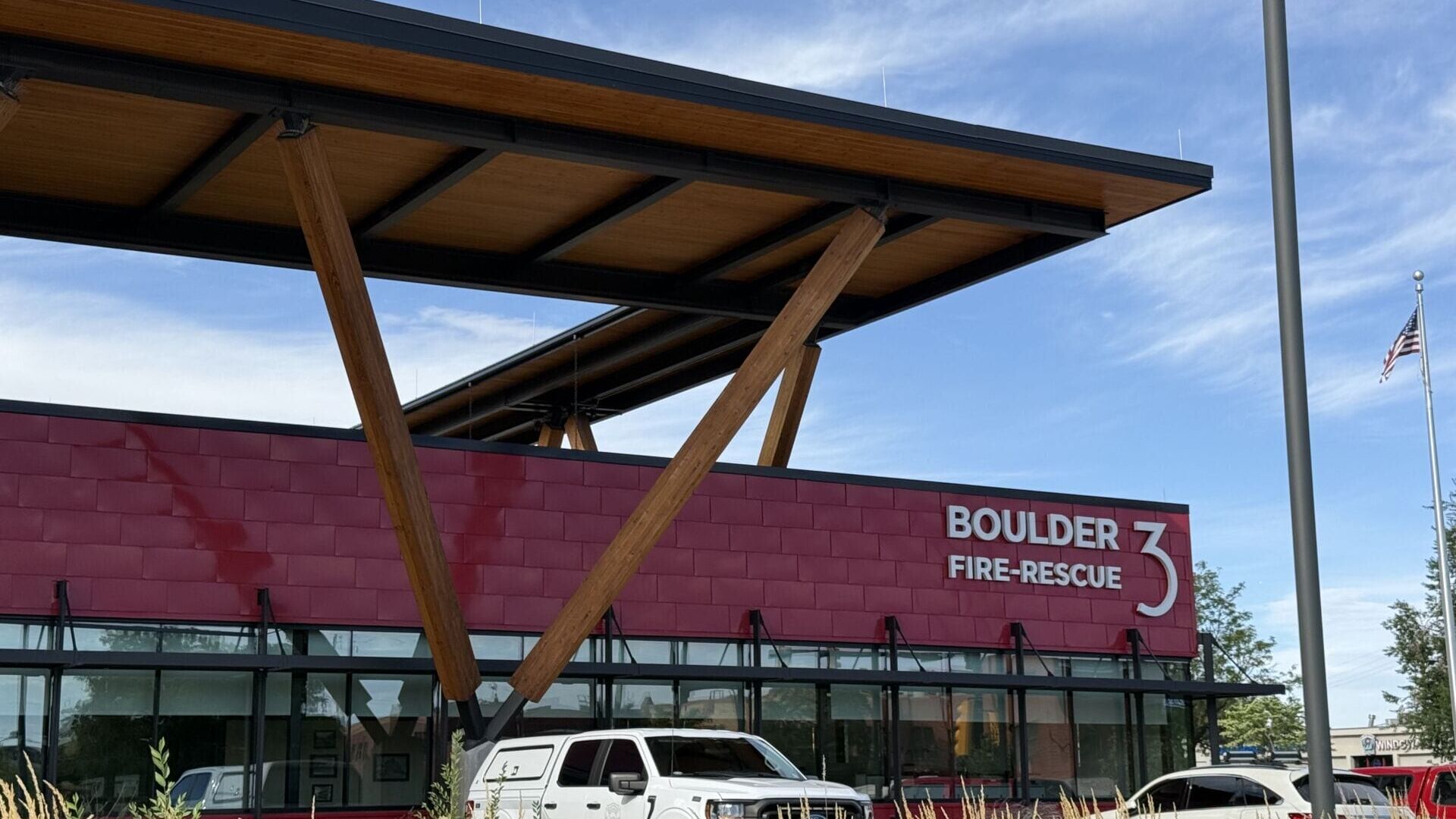
Boulder Fire-Rescue Station 3, located on Regent Drive, is one of eight stations in Boulder responsible for all-hazard response and wildland fire operations. (Photo by Ellie Chase)
Experts say record heat and shrinking winter snowpack related to climate change are an obvious factor in Colorado’s intensifying fire seasons.
“What climate change is doing is prolonging the fire season. Spring is coming earlier and fall is lasting longer. The average wildfire season has now been extended by around three months compared to where it was in the 1980s,” said Kimi Barrett, principal researcher at the Alliance for Wildfire Resilience.
This research organization advocates for using wildfire science to help inform strategic decision-making in federal policy. Barrett’s expertise reinforces that climate change exacerbates the conditions for more frequent and intense fires year-round.
However, destruction from wildfires cannot be blamed on the climate crisis alone.
“It’s not just a climate change issue. It’s also very much a human society issue,” Barrett said.
Building patterns and community location allow fires to spread directly through urban infrastructure.
Aleksander Berg, a master’s student in geography at CU Boulder, focuses his research on wildland-urban interface communities, areas where human development meets wildland. Boulder is a classic example of this — surrounded by vegetation and backing into the Rocky Mountains and Flatirons.
“That’s the problem. We are living in places that are supposed to burn ecologically, and the way we build makes our built environments more fire-prone,” Berg said. “We are in this maladapted situation — we have two environments that shouldn’t be entangled and we’ve built it in a way that our homes become the fuel themselves.”
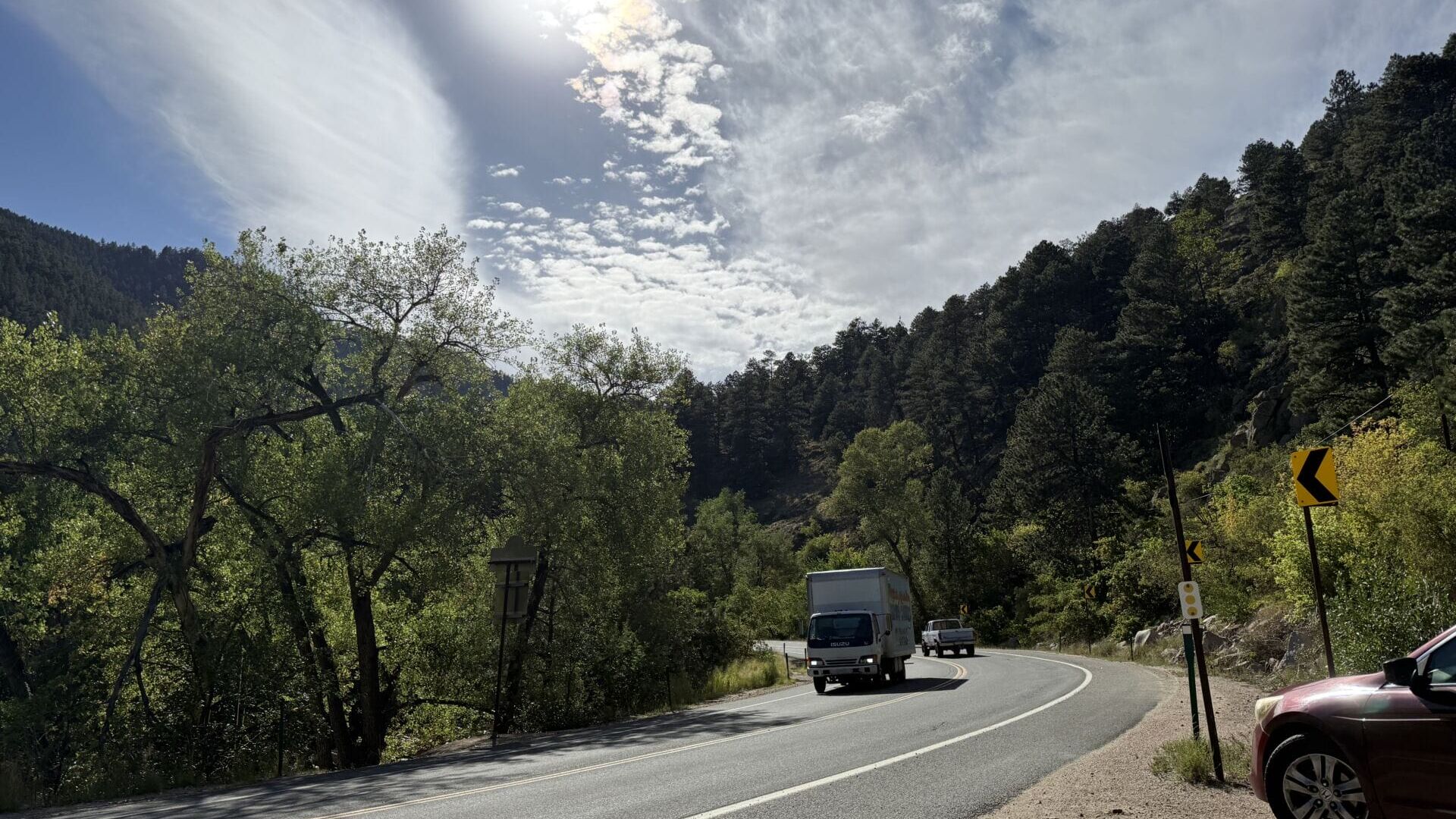
Vehicles pass the entrance to Boulder Canyon, which is where the People’s Crossing Fire initially broke out on Aug. 20. The fire started on the north side of the intersection of Boulder Canyon Drive and Arapahoe Avenue. (Photo by Ellie Chase)
Constant fire suppression has led to dense vegetation buildup. By constructing neighborhoods in heavily vegetated areas, communities place structural fuel directly in a fire’s path.
Colorado has recently implemented a wildland-urban interface code, a building code requiring that new home construction meet certain resistant standards. Berg believes the next step toward mitigation is creating defensible space — clearing flammable vegetation from the immediate perimeter around the home. Other precautions include changing building materials and adding mesh grills to vents.
These mitigation efforts aim to limit the fire hazards that wildland-urban communities face and protect Colorado residents from increasingly dangerous wildfire seasons. Climate change has raised the stakes, but how people build and expand remains a major factor.
“Yes, climate change is driving these events, but also the decisions we make and how we build where we live matters just as much,” Berg said.