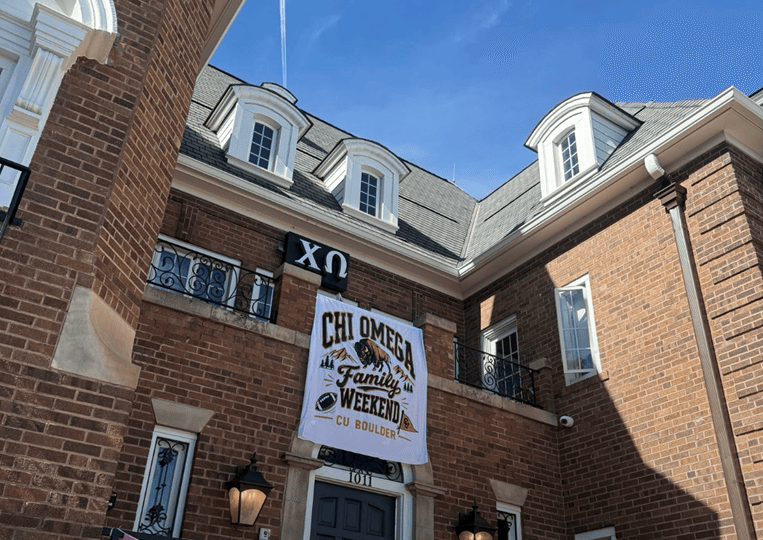
The Chi Omega sorority house in Boulder, Colo., displays a family weekend banner in 2026. A chapter member said the sorority’s anti-hazing policy helped her feel comfortable joining. (Photo by Kaylie Cunningham)
Hazing investigations raise questions about CU Boulder's oversight of fraternity life
Two reports of potentially dangerous hazing near the University of Colorado Boulder have raised questions about how much authority the university has over fraternity life, particularly when some organizations operate independently of the school.
On Sept. 24, CU Boulder Police announced investigations into two separate reports of hazing involving conduct that could have resulted in serious bodily injury. The university did not identify the organizations involved or announce findings of wrongdoing.
The investigations highlight a longstanding divide within Boulder’s fraternity community. University-affiliated fraternities agree to follow institutional policies and receive direct oversight, while unaffiliated fraternities operate independently. Both systems prohibit hazing, but they differ in who establishes and enforces organizational rules. CU can discipline individual students regardless of affiliation, although its authority over independent fraternities as organizations is more limited. The distinction raises questions about how students are protected, how violations are handled and whether either accountability system can prevent misconduct.
According to CU’s Office of Fraternity and Sorority Life, affiliated fraternities sign a Registered Social Greek Organization agreement committing them to university expectations. In exchange, chapters receive educational programming, administrative support, health and well-being resources and prevention training addressing hazing and sexual violence.
Sarah Barwacz, associate director of Issues Management and Spokesperson, emphasized that the university’s responsibilities extend beyond affiliated organizations.
“While there are important distinctions between affiliated and unaffiliated fraternities, our commitment to student safety and accountability extends to all CU Boulder students,” Barwacz said.
Barwacz explained that Student Conduct and Conflict Resolution reviews hazing reports and determines whether to investigate, contact affected students or coordinate with law enforcement.
For affiliated fraternities, CU can pursue consequences against both individual students and organizations, including educational requirements, restrictions, suspension or expulsion. Its authority to sanction unaffiliated fraternities as organizations is more limited, but it can still discipline individual students under its conduct code and notify national fraternity headquarters.

Independent fraternities also have their own governing organization, IFC on the Hill, which operates separately from CU’s affiliated Interfraternity Council.
Keaton Smith, chief justice of IFC on the Hill, said its bylaws prohibit hazing without exception and automatically refer violations to its Judicial Board.
“We are not a recognized student organization at CU, and we do not pretend we are the same thing as one,” Smith said in an emailed response. “It means the standards we are held to are ours to write and enforce, and we have chosen to make them strict.”
According to Smith, new members must complete education addressing hazing, alcohol and sexual harassment before attending chapter events. He said the council also conducts risk-management workshops and requires chapters to meet national fraternity health and safety standards.
Smith said the independent council maintains relationships with Boulder police and fire officials, including semester meetings between chapter presidents and assigned police liaisons.
He also criticized CU’s handling of alleged hazing within affiliated fraternities, claiming the university has taken little action in some cases. Smith did not identify specific incidents or provide evidence supporting that allegation in his response.
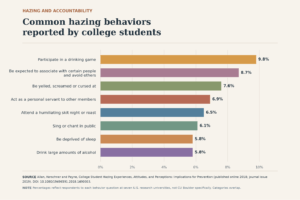
CU’s definition of hazing extends beyond physical violence. University guidelines identify conduct that endangers a person’s health, safety, or welfare as part of joining or participating in an organization, including forced alcohol consumption, humiliation and psychological abuse. Consent does not automatically exempt an activity from being considered hazing.
National research illustrates the range of behaviors associated with hazing. A study by Allan, Kerschner and Payne involving students at seven U.S. research universities documented drinking games, social restrictions, verbal mistreatment and sleep deprivation. The findings are not specific to CU Boulder.
On Dec. 4, CU issued an alert identifying Phi Kappa Sigma in a credible hazing report concerning an incident that occurred Dec. 1 and was reported Dec. 2. The university placed the chapter on interim suspension, halting fraternity activities while investigating. The announcement did not establish a final disciplinary finding.
A CU Boulder fraternity member, who requested anonymity for himself and for his fraternity because he was advised not to discuss the situation, described experiencing chapter-wide restrictions following a hazing investigation.
“We basically went from having a normal semester to having everything shut down,” the student said. “All of our fraternity activities were suspended, and we weren’t informed on how long this was going to last.”