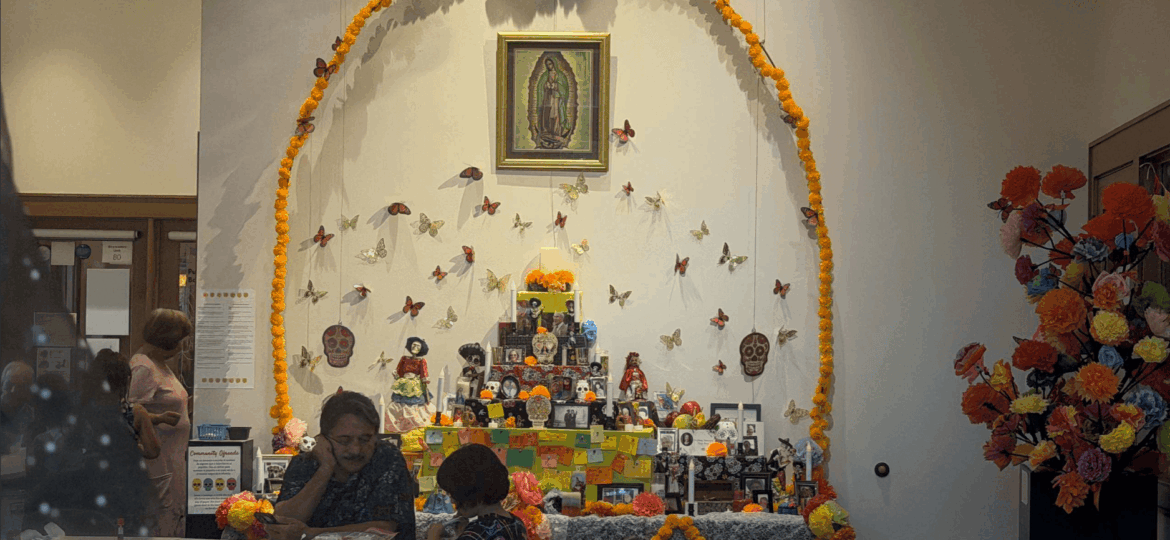
A community altar at the Collective Community Arts Center honors deceased loved ones and invites visitors to remember those who have died. (Photo by Aramis Loma-Guzman)
Hispanic Heritage Month events highlighted Latino culture and history in Boulder County
Sept. 15 marked the beginning of Hispanic Heritage Month, an annual celebration recognizing the history, culture and contributions of Hispanic and Latino communities across the United States. At the University of Colorado Boulder, that celebration began a day later, on Sept. 16, Mexican Independence Day.
Hundreds gathered on Farrand Field for food, live music and a traditional grito — a celebratory Mexican shout — turning the center of campus into a celebration of Hispanic and Latino culture.
“I’m a transfer student; it’s my first year, so this is a nice welcome to campus,” said sophomore Bryan Mendoza. “It’s nice seeing a nice plethora of students celebrating and being immersed in cultures from different countries.”
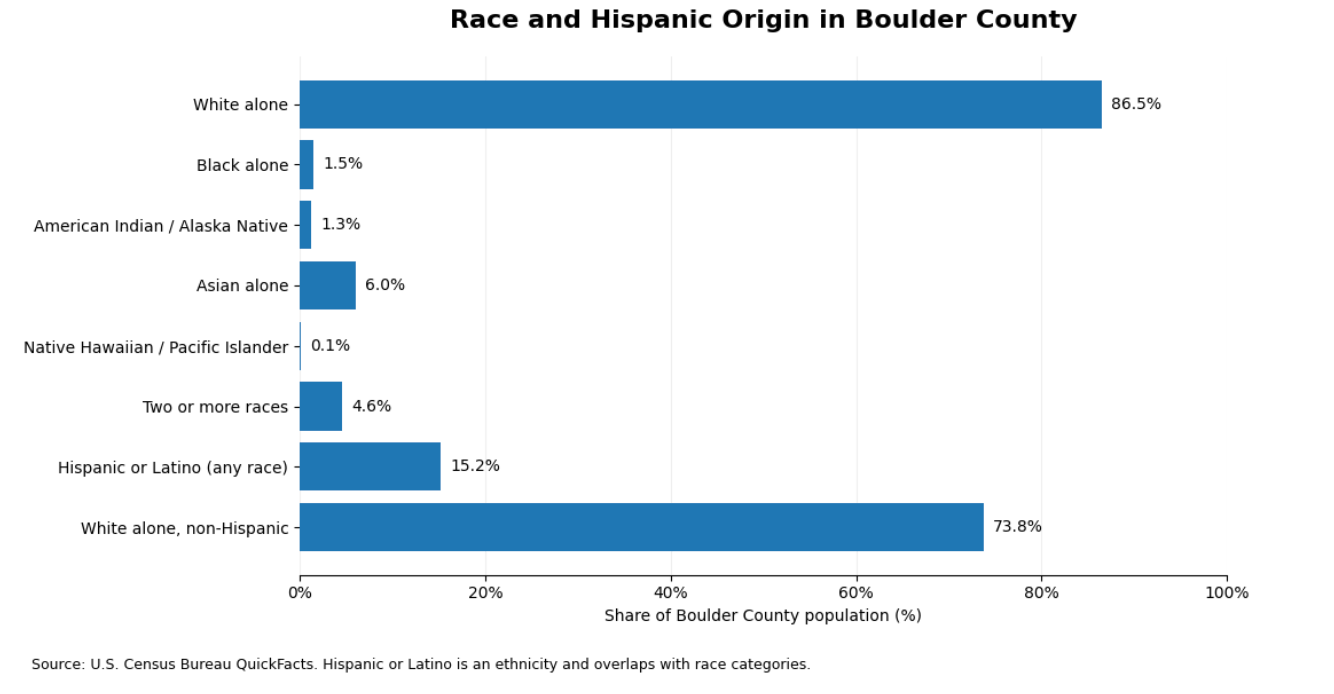
According to the U.S. Census Bureau, 15.2% of Boulder County residents identified as Hispanic or Latino in the 2020 Census. But those numbers tell only part of the story.
Latino history in the Boulder area stretches back generations.
Many early Latino migrants came to Colorado to work in the sugar beet fields and mines, according to Boulder County. Some settled in Boulder and surrounding communities, building families and businesses while contributing to the region’s workforce.
However, Latino residents continued to face barriers to equal treatment.
During the early 20th century, Hispanic and Latino communities faced discrimination, segregation, and deportation efforts. The Ku Klux Klan gained influence in Boulder County during the 1920’s, targeting Latino residents and other religious and ethnic minorities.
Still, Latino families remained and established roots. By the 1950s, community members were organizing around the Chicano Movement, which advocated for greater equality and self-determination.
Two decades later, activism surrounding the Chicano movement reached CU Boulder itself.
In 1974, six Chicano activists affiliated with CU Boulder were killed in two separate car bombings. They are remembered today as Los Seis de Boulder.
More than 50 years later, students are gathering on the same campus not only to remember that history but also to celebrate a culture whose place in Boulder was hard-fought.
It’s very cool seeing people with my background, and people that can relate to me all in one place,” said Lucyna Herrera, a first-generation Mexican student at CU. “It’s good knowing that in a time like now, we can still be celebrated in certain areas.”
Boulder’s Latino community continues to preserve its culture and traditions, both on CU’s campus and throughout the Boulder area.
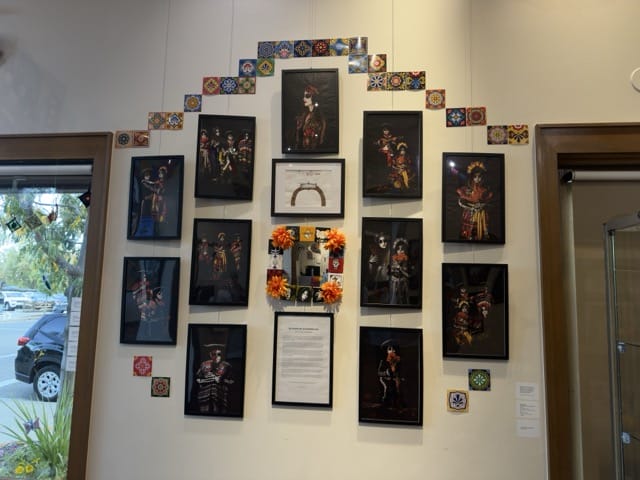
The Collective Community Arts Center in Lafayette is hosting a Día de los Muertos exhibit, which opened Sept. 24 and runs through Nov. 8.
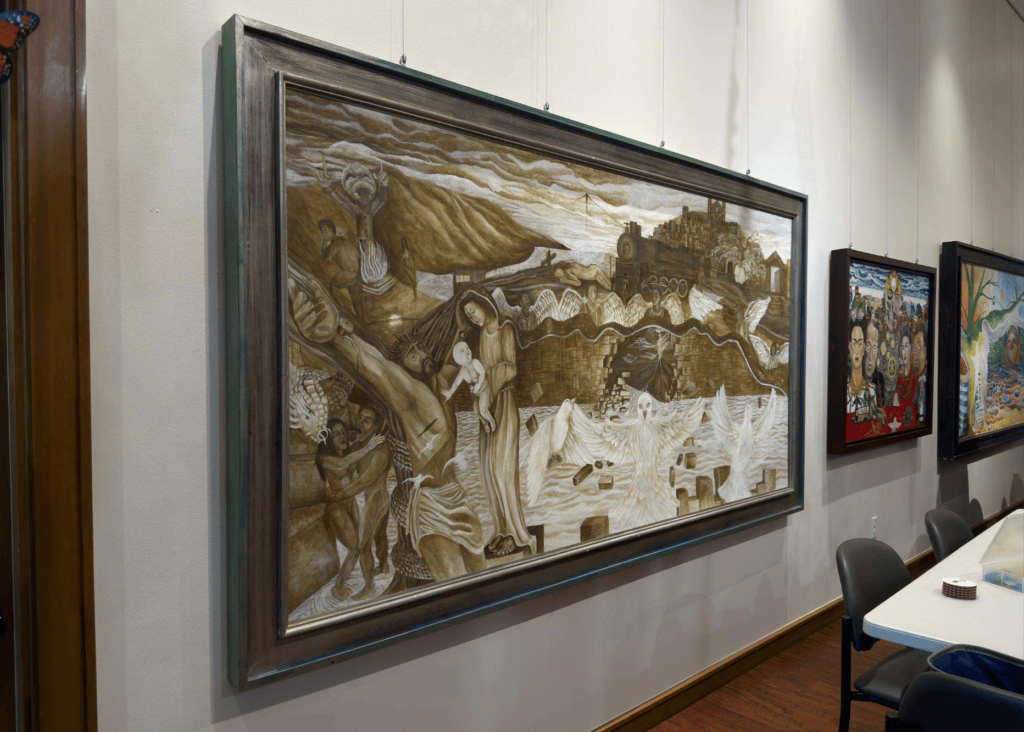
The exhibit features community altars, known as ofrendas, that visitors can contribute to. The building also includes artwork created by students from Justice High School and Centaurus High School.
On Oct. 9, The Collective held a paper workshop that allowed members of the community to craft a Catrina, an elegantly dressed female skeleton, out of paper. The workshop was led by local crafter Martha Ramirez.
“We try to involve our underrepresented community members as much as possible,” said Claudia Fleming, the center’s bilingual outreach and grants coordinator. “It’s important to celebrate this month and this holiday because it’s important to so much of our population. We shouldn’t just stop our celebrations because we aren’t in our birth countries; we have to keep being us.”
The arts center’s exhibit will remain open for the remainder of the month and will culminate in a Día de los Muertos celebration on Oct. 29.
For the Latino community in and around Boulder, it’s important to preserve the culture. Instead of just ignoring it, they chose to embody it.
“For me, it’s so important to continue these traditions and just keep being me,” said Herrera. “I can’t just change because I’m in a new area; I can’t be forced into change.”
For Herrera and others in the community, celebrations like those held at CU Boulder and The Collective are about more than just recognizing a holiday. They offer an opportunity to share traditions, connect with others and maintain a sense of cultural identity.
While celebrations may look different from those held generations ago, the importance of keeping traditions alive remains the same.
Events like the Día de los Muertos exhibit in Lafayette and the Hispanic Heritage Month kickoff at CU Boulder also give people unfamiliar with Latino culture an opportunity to experience its traditions firsthand.
“It’s important to all of us; it’s our duty to continue our traditions,” said Jaime Ramirez, a CU student and founder of the Latinos for Democracy club. “We have to be welcomed, but we also must make others feel welcome as well. Events like the kickoff celebration help, but we also have to create safe spaces.”
More than five decades after the Chicano Movement brought demands for equality to CU Boulder, a new generation of students is finding its own ways to express and celebrate its cultural identity.