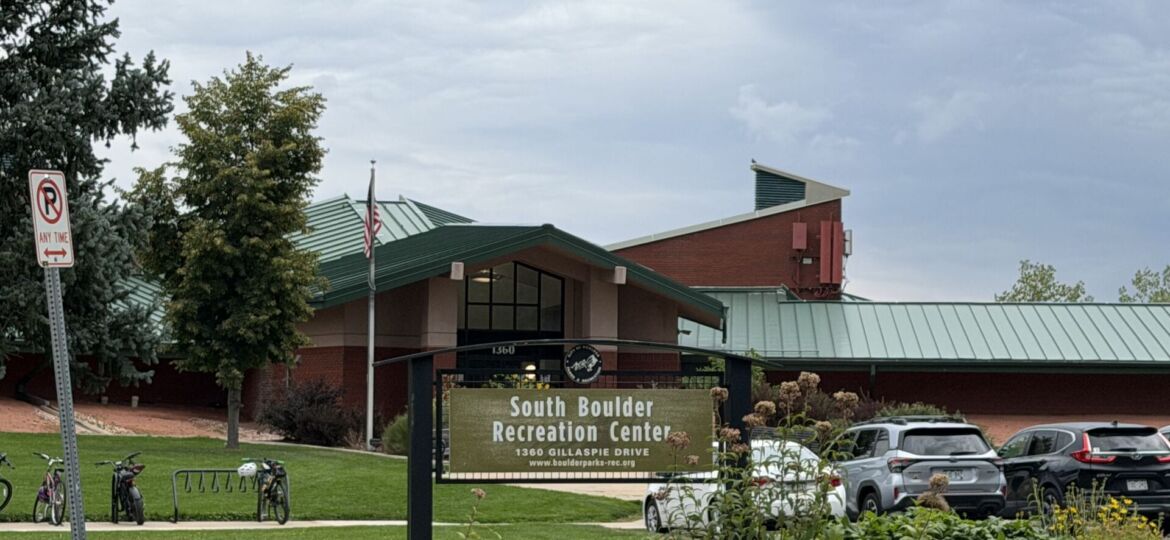
The current entrance to the South Boulder Recreation Center, which is one of several city buildings that would benefit from the $400 million bond issue on the Nov. 3 ballot. (Photo by Kathleen Szott on Sept. 24)
'Boulder’s biggest tax increase ever': $400 million bond issue generating discord among residents
The city of Boulder’s proposed $400 million bond on the Nov. 3 ballot to address aging buildings is stirring debate about the city’s use of funds.
The ballot measure’s price tag and reignited concerns regarding previous over-budget projects have left Boulder residents with questions about the proposed renovations.
According to Boulder’s website, 50 percent of the city’s facilities were built in the 1970s, bringing the average age of these buildings to 47 years old.
To keep these buildings serving the community, Boulder introduced the Recreation and Safety Bond ballot measure, which will grant the city $400 million in bonds to restore multiple city department buildings. The loan will be repaid through a property tax increase on properties valued over $1 million. The current funding estimate is only an estimate, and the full cost with interest would be upwards of $650 million.
“Just generally speaking, we did some community engagement about what mattered to the community through some surveys. And some of the concerns or priorities included our recreation centers,” Boulder City Council member Tina Marquis said. “Public safety has been a really big priority in my last election as well … Our current… police building is basically falling apart.”
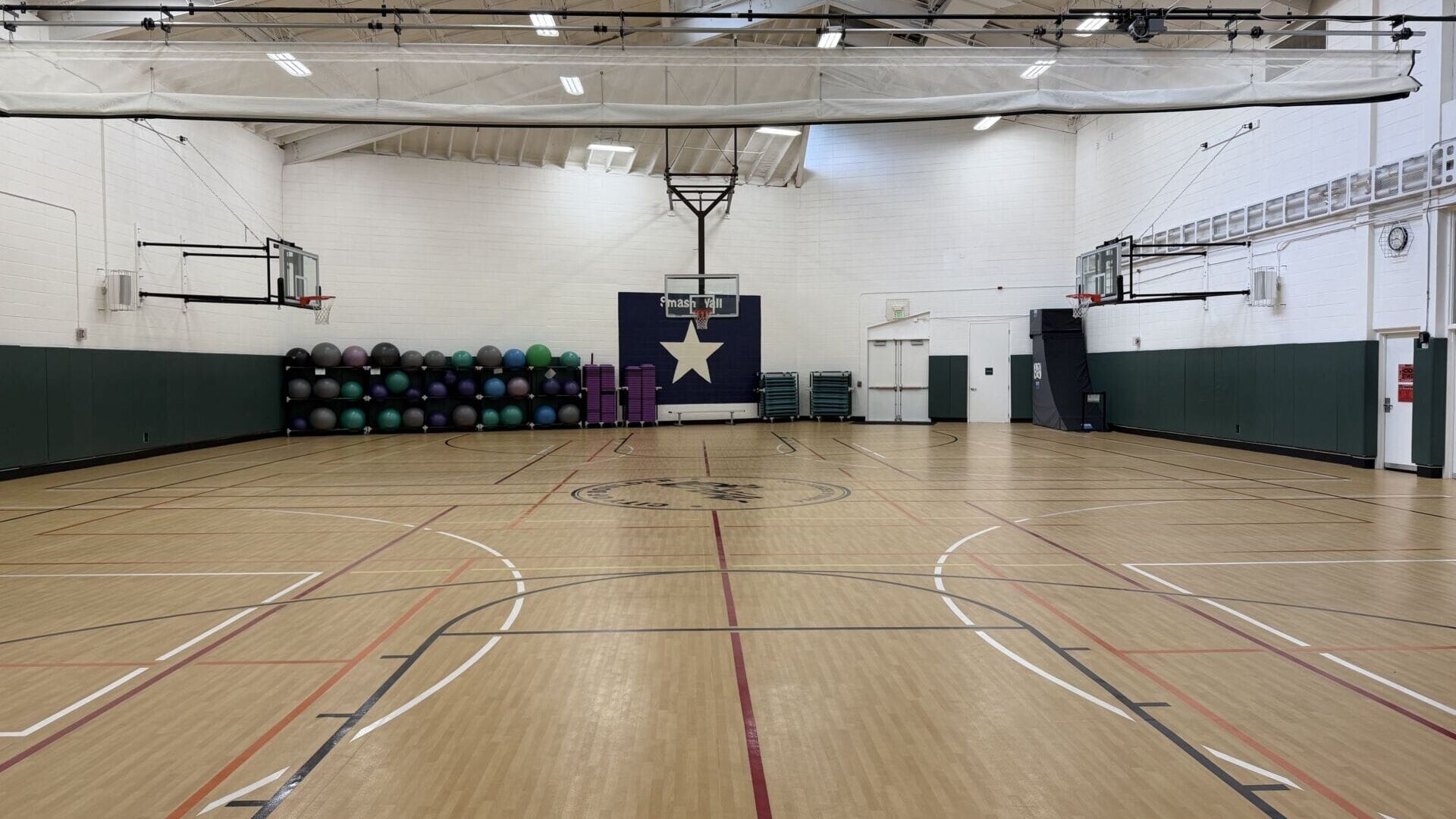
The ballot measure would cover the renovations in the North and South Boulder Recreation Centers, the Public Safety Center and 911 Dispatch. The dispatch center will receive $170 million for renovations — the most dedicated to any single building from the bond. Renovations made to fire stations will focus on improving conditions for firefighters with $7 million be used to reduce exposure to carcinogens, update living quarters, fix windows and upgrade electrical systems.
“This bond would require residents, on average, to pay an extra $350 a year or $400 for a $1 million valuation of your house, and businesses would pay about four times that,” Marquis said.
North Boulder Recreation Center will get $72 million for replastering the pool, revamping the showers and locker rooms and expanding the fitness center. The South Boulder Recreation Center will receive $65 million to cover an entirely new facility. The cost is subject to change, as the construction will happen over a 10-year span.
“We have some critical buildings that are in serious need of either repair, renovation or rebuilding,” said city of Boulder spokesperson, Sarah Huntley.
Critics have said the proposed funding estimates are not clear enough to approve.
KC Becker, who formerly served as a state representative and a Boulder City Council member, believes the city’s plans lack specificity, clear budgets and project prioritizations.
“In the past, the city has developed its capital improvement plans with a lot more resident involvement, and have tied specific costs to specific improvements,” Becker said. “The bond measure will cost $650 million with interest, so this is Boulder’s biggest tax increase ever. With that kind of money, we need more transparency and clarity about the projects.”
While the bond includes cost estimates, actual budget numbers are pending further analysis.
“It would take millions of dollars of design work for us to come up with an itemized cost accounting of what each piece would need,” Boulder Mayor Aaron Brockett said. “We don’t have that right now unless the bond passes.”
On Aug. 6, Boulder City Council members voted unanimously to present the voters with the bond ballot measure. Though added to the ballot unanimously, the bill was not without debate in the council.
“I said, ‘No, $400 million is too much.’ And the rest of the council didn’t agree with me,” councilmember Tara Winer said. “And then I tried again at the following discussion, and there I still got no takers.”
Winer proposed that a $200 million bond measure might serve the community better while also addressing the most pressing issues in the facilities. She also pushed the city to use more direct language when describing the bond, specifically when speaking about the proposed amenities being added to the South Boulder Recreation Center.
Winer said a group of advocates were asking for a lap pool to be added to the new building during a council meeting. The ballot measure previously only stated that there would be new aquatic facilities.
Winer asked if that could include the lap pool; the city agreed to put it on the ballot. After that specification, she ultimately changed her mind and decided to vote in support of the full $400 million ask.
Even those in the fight to find funding are unsure of the reality of the budget’s promises.
Chrissi Brescoll is part of Reimagine South Boulder Rec Center, a group fighting for renovations on the community hub.
“When we have these huge (dollar) amounts with no actual binding language, we don’t know what we are going to get from that. Why are approving a huge bond for projects when later down the line these estimates will not even be accurate?” Brescoll said, “We’re going to be making rent and housing costs more expensive without guaranteeing that South even gets money.”
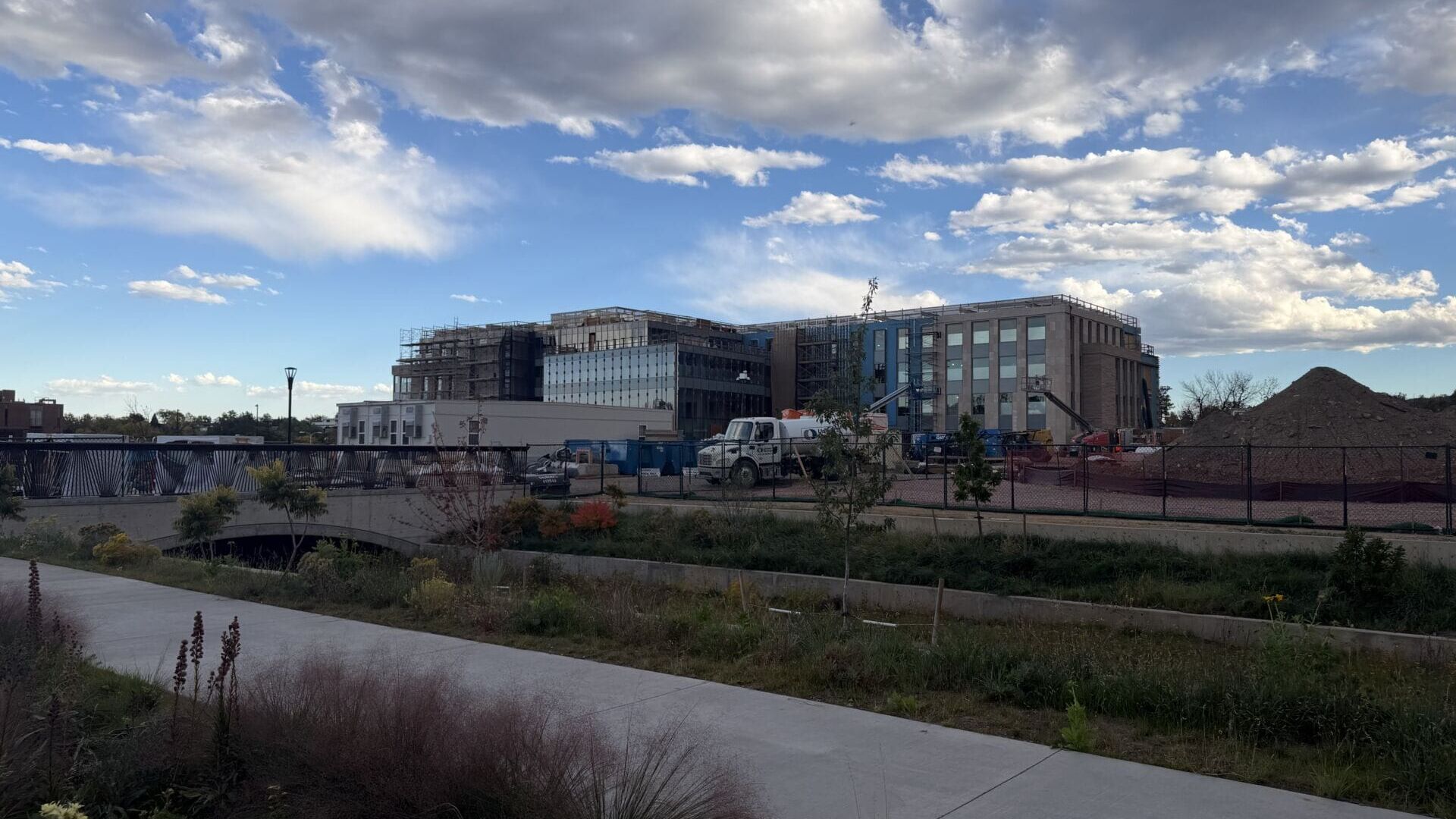
Winer, Marquis and councilmember Taishya Adams all said residents are mistrustful due to the controversy around the development of Alpine-Balsam, which is a project that aims to renovate 8.8 acres of land in north Boulder, as well as demolish the old hospital.
In 2019, the city of Boulder proposed this development, and its cost has changed many times since its introduction.
“Right now, we are getting so much pushback on Alpine-Balsam because of the financial management and the initial cost versus the current cost, or the initial projections versus the current projections, which are so wildly different,” Adams said.
In a 2026 opinion article by the Boulder Reporting Lab, 2023 City Council candidate Terri Brncic cited concerns about the bond proposal and expressed frustration about the lack of communication surrounding the Alpine-Balsam budget, pushing for a cost breakdown and funding transparency.
Since then, Marquis has proposed a capital infrastructure committee that hopes to prevent another mishap of this kind.
“(The committee) is modeled after a similar committee in the Boulder Valley School District,” Marquis said, “Where you have … a citizen and council committee that looks just at infrastructure, how it’s maintained, what the maintenance schedule is for each building.”
She hopes this will help the city government be more transparent about what goes into development projects.
Marquis said the public doesn’t know the full scope of certain ongoing projects, namely water infrastructure in Nederland and new wastewater treatment facilities. Her hope is to address citizen concerns and demonstrate that the city is using constituent money appropriately.
Adams voted in support of the bonds but still has concerns about money management and the voter response. She voiced concerns about the impact that the current economic problem in the United States will have on the costs of development.
“We need to revisit the criteria that we used for the financial projections for the construction, given the increase in diesel and gas prices, which will significantly impact construction,” Adams said. “The workforce considerations, water and energy costs are also expected to go up exponentially compared to when those initial projections were done.”
Adams believes the bonds will benefit the community overall, though she sees room for improvement in the city’s approach. Winer expressed a similar sentiment. While council members voted to bring the measure to voters, final approval rests with the community since property owners will fund the loans.
“I don’t quote Brené Brown very often, but I do like what she has to say about the anatomy of trust,” Adams said. “It talks about integrity, accountability, and transparency, and there can’t be accountability if it’s not clear what’s going to be built, when it’s going to be built and how much it’s going to cost.”