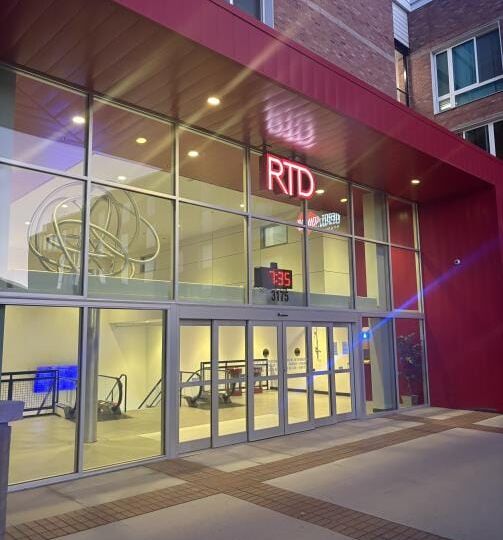
The proposed location for Boulder’s rail station is located at the intersection of 30th and Pearl Street. (Photo by Gwen Strickland)
Is everyone all aboard Colorado’s new commuter train?
By Gwen Strickland
A new railway system is coming to the Front Range, and University of Colorado Boulder students and faculty are anticipating its arrival.
The Colorado Connector, or “CoCo,” would connect communities all over the Front Range. The first phase, which connects Fort Collins, Boulder and Denver, is funded and estimated to debut in 2029.
The other phases will happen if voters in several communities approve a sales and use tax in November.
Talks of a railway system have been floating around the Front Range for at least 20 years with no plans ever seeming to come to fruition, said Kevin Krizek, a CU professor of transport in the Environmental Design and Environmental Studies programs.
He casts some doubt on the success of CoCo.
“Trains serve really well when we have high densities going to other high densities. We don’t have a lot of high density in the Front Range,” Krizek said.
However, the populations along the Front Range have been growing; 92% of the state’s growth happened there between 2023 and 2024, according to the Colorado Population Summary.
Sal Pace, the general manager of the Front Range Passenger Rail District, said, “We’ve seen with (the ski train up to Winter Park) that the more capacity that the state has put on rail corridors, the more people use it.”
Front Range voters will have to decide Nov. 3 whether to implement a .33% sales tax on non-essential items to fund the second and third phase of the project. Pace said the Colorado Department of Transportation and the Regional Transportation District are partners for the first phase, meaning the sales tax is only needed for the expansion of the railway system.
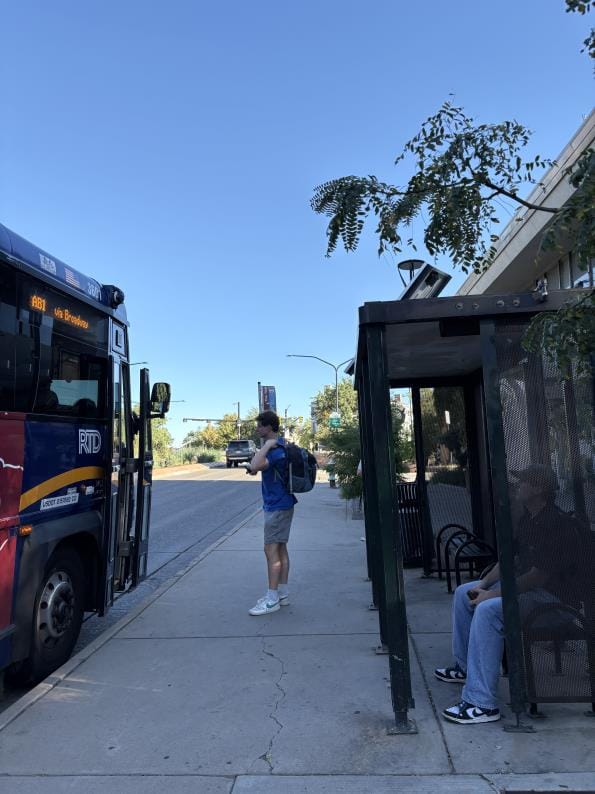
Henry Kelsey, a longtime resident and student at CU, shares much of the public’s excitement about the train.
“I think it’s absolutely a good thing if my tax dollars are being used to fund something that’s actually helping me, helping people,” Kelsey said.
Kelsey also highlighted the accessibility for CU students needing to get in and out of the Denver area, a notoriously difficult endeavor, especially for college freshmen, most of whom are without a car and still want to explore.
CoCo’s website claims the train will take 45 minutes to get from Boulder to Denver, with only five-to-10-minute possible delays, instead of the unpredictability of traffic.
Krizek supports the newfound accessibility for those without a car.
“The accessibility that it brings to those that are car ‘light’ is great,” Krizek said. “They didn’t have that before.”
For commuters, whether it be students or professors, this could be a major milestone in public transportation.