This bakery has Moxie
By Pauline Rawson
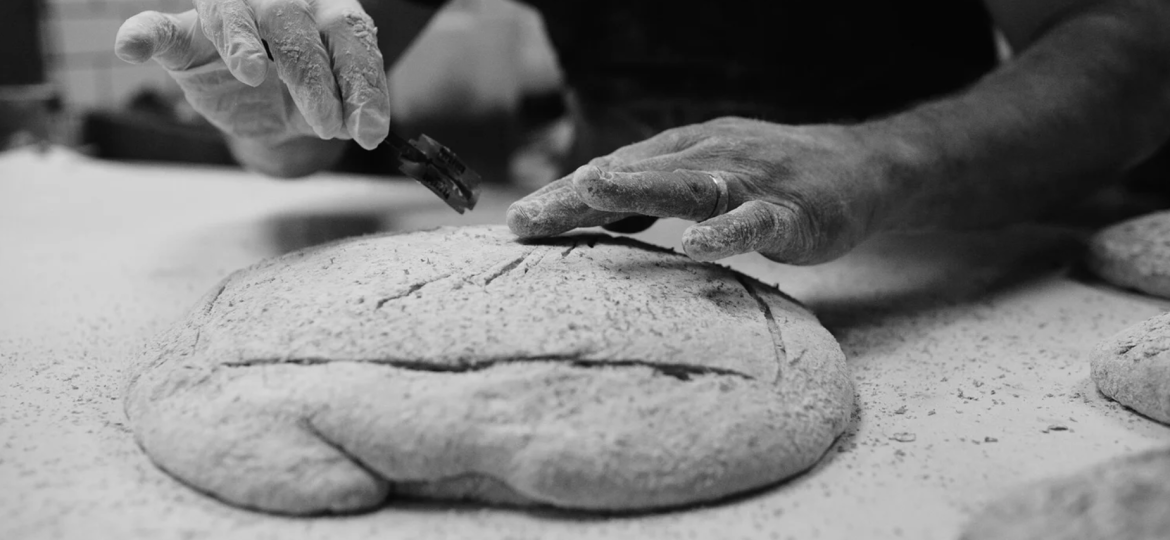
Before the morning sunlight shines upon the Flatirons, the lights are already on inside Moxie Bread Co.’s bakery in Lyons, Colorado. The comforting smell of bread flour drifts through the kitchen as bakers, shapers, mixers and millers move between long tables covered in balls of dough. The preparation starts at 1:30 a.m.
“It has to all be baked before 6 a.m. so that it can go out to each retail location,” said Laura Fessenden, Moxie’s director of operations. “The baker comes in pretty early so that they can get it all baked off.”
Artisan bread making is a slow and deliberate process. The dough must be mixed, shaped and then left to ferment before it ever reaches the oven. Some loaves rest overnight and others even longer as the dough slowly develops flavor.
“The longer it’s fermenting, the more sour it’ll taste,” Fessenden said. “Most of the bread has a whole day to ferment. The mission loaf actually takes two days.”
The fermentation leaves the bread with a taste that customers recognize.
“The big difference is the sourness,” said baker Emma Christy. “With commercial sourdoughs, you don’t get that strong of a flavor.”
Throughout the morning, bakers shape the dough, prepare loaves and organize racks that will be baked later that night. Some dough batches are shaped into baguettes, round loaves or batards and then placed into proofing baskets and stored in the refrigerator to ferment overnight.
Around 7:00 a.m., Christy begins sealing and shaping dough into loaves and bagels. She says timing is the biggest challenge when working with large batches.
“Keeping track of time and temperature is really important,” she said. “Having the bread touch or the feel of the dough, helps us understand when it should be in the fridge or when it should be out so it can keep fermenting at a faster rate.”
Kaylie Stenhouse also works as a baker at Moxie. She was as a teacher before pursuing a career in baking, while Christy studied culinary arts and pastry at CU Colorado Springs. Regardless of their training, their experience helps to make quality bread.
“Doing it every day helps,” Stenhouse said. “We both do this exact thing 40 hours a week.”
She says the difference between Moxie’s bread and a grocery store loaf is easy to notice.
“There’s a real crust on our bread that you can’t get in a commercial loaf,” Stenhouse said.
The ingredients play a role in the bread’s character. Moxie sources heirloom grains from regional farmers and mills their flour in-house.
“Heirloom grains are really important because they’re well suited for different climates and different growing necessities,” Christy said. “And our climate is changing, It’s important to find things that are drought resistant and high yield in their own right.”
“None of it is gluten-free,” Fessenden said. “It’s very gluteny, but because it is sourdough, people tend to process it and digest it a little bit easier. And because we use heirloom grains that affect people’s digestion in a positive way as well. So, people that are gluten sensitive swear by our bread and pastries.”
Still, the bakery is careful to warn customers with severe allergies, as flour is everywhere.
Carlos Castro is the head miller who oversees the grain mill that supplies all of the flour for the bakery. Several of the grains come directly from family farms in Colorado, Nebraska and Kansas.
“Heirloom grains tend to be a little more regionally adapted,” Castro said. “The drought has affected them, but they’re a little more resistant than other, more modern varieties of wheat.”
Castro also works with initiatives such as the Rye Resurgence Project in the San Luis Valley.
“It’s a movement to grow more rye,” Castro said. “Rye is much less water-intensive than a lot of the other crops grown in that region.”
The bakery also partners with local organizations such as Tomorrow’s Bread to provide food to people in need.
“People can come into the retail locations and buy a loaf of bread for someone else,” Christy said. “We take the order, make all of the bread and then send it out to different food banks or organizations that distribute it to the people that need it.”
Moxie Bread Co has four locations in Colorado: Boulder, Louisville, Lyons and Longmont. In addition to their breads and pastries, the bakeries offer coffee, muffins, works from local artists and bagged heirloom grains so you can make your own loafs at home.