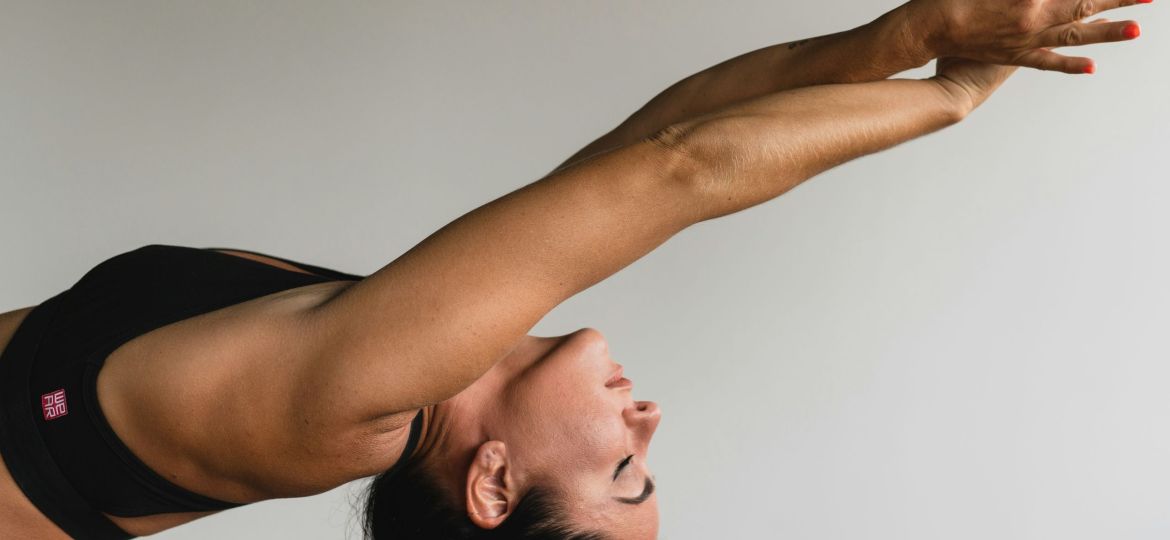
Caption: Copyright-free photo courtesy Dane Wetton, March 9, 2019, a free-to-use Unsplash License.
Yoga sculpt? Don't call it yoga.
By Emma Winkelbauer
One year after her mother died, Alison Litchfield stepped into her first yoga class. She was feeling stiff and disoriented from grief but was kindly welcomed by the yoga instructor. When the class started, Litchfield began to move and flow through the postures, breathing into the tension within her body.
“For the first time, maybe in my life, I felt my body,” she said.
Now, Litchfield is an experienced yoga instructor of more than 35 years, teaching health and wellness and conducting yoga teacher trainings at her own Boulder yoga studio called Roots and Wings.
According to Harvard Health Publishing, practicing yoga can help strengthen parts of the brain that govern memory, attention, awareness and language. This makes yoga an effective aid in managing mental health and mood disorders such as stress, anxiety, and depression.
“It’s a great practice to regulate our nervous systems,” Litchfield said.
Yoga is a practice rooted in breath work, where a person’s breathing guides them through different poses. Litchfield says her practice allows her to feel grounded, especially in the digital age.
“When we go out into the world these days, there is a disconnect,” she said. “Yoga is a sanctuary, a place where I can come home to myself, to feel myself different from the chaos of the world,” she said.
Biz Levin is also a yoga instructor who works at CorePower Yoga in Boulder. She says yoga allows her to become more self-aware.
“You just have so much time to reflect and notice how your body is feeling,” Levin said. “It makes me feel so good about myself after, and I want to have that same effect on people.”
There are different styles of yoga including vinyasa, hatha, yin, restorative and a more athletic form of yoga called yoga sculpt, which was introduced by CorePower Yoga in 2004. The style combines vinyasa with weights, strength training and cardio and typically takes place in a heated studio.
Sadie Smith has been practicing yoga since elementary school. She has mixed feelings about yoga sculpt.
“Some people might have a different religion and don’t want to base their practice off the Buddhist beliefs that yoga stems from,” Smith said. “ So I understand why people want to get into more sculpt. But that kind of reaches a limit where those intense or heated classes sort of aren’t really yoga anymore, and they’re more just a way of working out, which is great and beneficial, but I think that there’s a point where it might not even be considered yoga.”
A few other local exercise studios offer some form of yoga sculpt classes including Lifetime Fitness, Yoga Pod and HOTWORX.
Litchfield considers herself a yoga traditionalist.
“People have diluted it and made it into a popular workout with a few spiritual sprinkles on top,” she said. “The thing that concerns me is the lack of respect for the lineage and where it’s come from. People are just playing loud music and making it into a sweaty workout class that doesn’t even resemble yoga. My concern is, don’t call it yoga.”
Levin says that yoga sculpt can be effective in introducing individuals to a more traditional side of yoga.
“I feel like if I’m doing a workout, I want to break a sweat and not just do slow movements,” Levin said. “I really like to do fast paced and have it be really hard on my body. But yoga is more low impact, but it can be however you like.”
While Litchfield, Smith and Levin experience yoga in different ways, all three yogis said the practice helps them mentally and physically.
“Yoga is one of the best practices to teach us about embodiment and staying present with our emotions,” Litchfield said. “I would highly recommend yoga to anyone who is even thinking about it.”