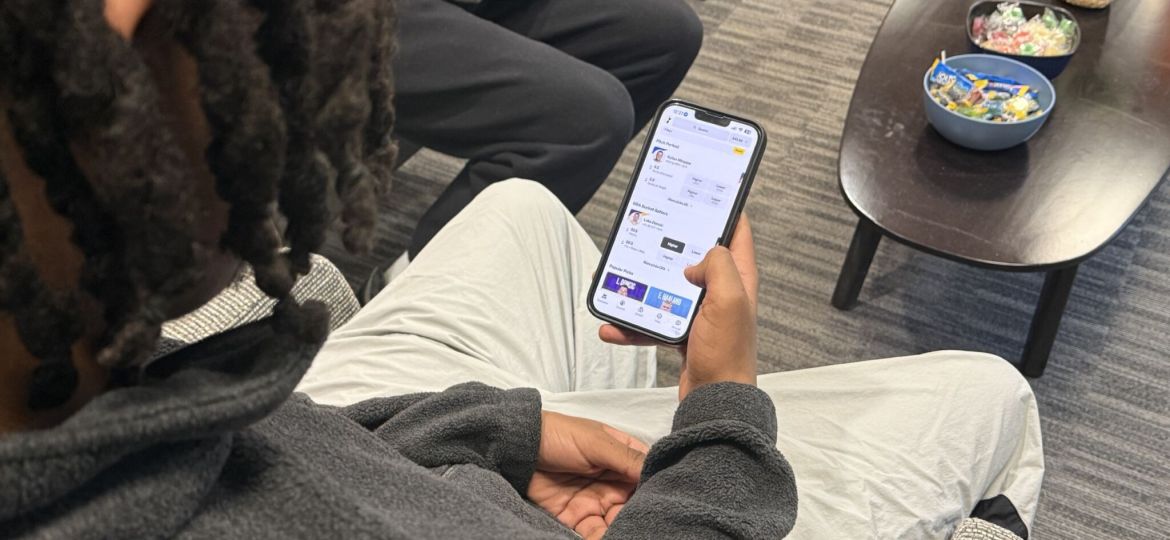
The Hidden Addiction of Sports Betting
By Skyler Landry
In recent years, online sports books and betting apps have become readily accessible. There are growing concerns about how the trend is affecting college students both financially and psychologically.
Forty to 75% of college students report they placed a bet within the past year, according to the Massachusetts Council on Gaming and Health.
While some students describe betting as a routine part of the sports culture, experts warn that frequent betting can increase the risk of addiction.
Matthew Biehl, a crisis worker for Counseling and Psychiatric Services at the University of Colorado Boulder, provides informal consultations each week for students with gambling-related problems.
“It’s no longer about the entertainment of athletes and the game,” he said. “It’s more about the bet. You start crossing a line that you might want to take a good look back and be like, am I in control of this or am I not in control.”
Biehl says that 7% of those who gamble are truly addicted.
“Money is an issue for most college students,” he said. “So all of a sudden, you have this chance I can make money, and I can make this a side hustle.”
The reason students gamble varies from person to person.
Nathan Megersa, 19, a CU math and engineering major, occasionally bets and says it’s just a distraction.
“When people give that illusion of having skill for gambling, I feel like people start going deep into spending more money on it – sacrificing more time in their lives,” Megersa said.
Ryan Garcia is the owner and founder of Denver Sports Betting. He has been placing sports bets since he was in the sixth grade.
“It’s better that it became legal, but a lot of people still wish it didn’t become legal,” he said. “But everyone was betting with bookies back then, and there’s no way to regulate that.”
Sports betting became legal in Colorado in 2020 after voters narrowly passed proposition DD with slightly over 51% of the vote.
Garcia says the financial stakes of sports betting is tied to the integrity of betting itself.
“One thing you don’t do is mess with billionaires’ dollars,” Garcia said. “That’s what betting does. When someone tries to shave points or do anything like that, and you know that, that’s bad for business. So the biggest thing is to protect your integrity.”
CU journalism professor Ever Figueroa teaches a sports media class and is concerned over the rise of sports gambling.
“One time, a student openly confided to the class that they’d lost several thousand dollars gambling,” Figueroa said. “We’re talking $3,000 to $4,000. I don’t know if you have $3,000 or $4,000, that you can lose right now. I certainly don’t.”
Figueroa says sports gambling has become normalized among college students.
“The reason why gambling culture has taken such a strong hold, especially right now, media and marketing is part of it,” he said. “But also, people are very desperate right now. The economy is not good. Economic outcomes are terrible.”
Sports betting comes with risks that some people may not want to talk about, according to Biehl.
“It’s called a hidden addiction because it hits your wallet,” he said. “A lot of people don’t know that your friend might be having a problem with gambling. They can hide it.”
If you or someone you know needs help with a gambling problem, you can reach out to CU’s Counseling and Psychiatric Services any time at (303) 492-2277.
You can also get more information on responsible gambling on the university’s Health and Well-Being website.
Story edited by Taylor Brown.