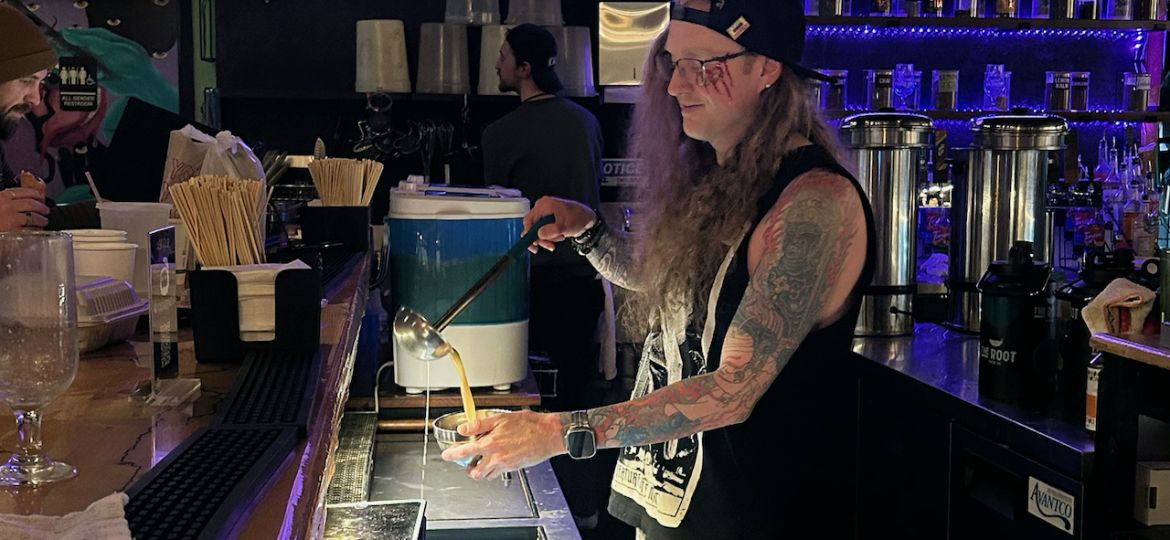
Caption: A bartender, who goes by the name E-Rock, serves plant-based drinks at The Root Kava Co. in Boulder, Colorado, on Oct. 28. (Katelyn Whitcomb/The Bold)
A booze-free buzz gets more buzz
By Katelyn Whitcomb
Tekoa Williams scoops a murky substance into a coconut-shaped metal shell and tops it with a skewer of fresh pineapple. He slides the drink down the bar to a waiting customer. Then he makes one for himself.
“I do a few shells every day, normally the traditional kava,” Williams said.
Williams is one of seven co-owners of The Root Kava Company in Boulder and a kava enthusiast. He sometimes works behind the bar while chatting with regular customers about the history of this ancient plant.
“You could be at a wedding, at a birthday party, going over to your neighbor’s house… they drink it all the time,” Williams said. “You pour a shell and say, ‘Bula!’ which in Fiji means good health and long life.”
Kava is a root found in the South Pacific and used for centuries in Polynesian cultural ceremonies. In its most traditional form, kava was served inside a carved-out coconut shell. In American culture, the vessel has been replaced with a metal shell or cup that avid kava consumers collect and decorate.
“I have a shell here that I’ve had since I started,” he said. “It has stickers all over it. A few people here have their own shells.”
Kava bars have popped up around the U.S. Twenty years ago there were about 30 kava bars in the country. Now, there are about 300, according to a kava community page called Deviant Kava.
In addition to kava, some bars like The Root offer other botanical mixtures such as Kanna, a supposed mood enhancer, and kratom, an opioid alternative, according to Williams. He claims that kava has calming and psychoactive effects. Kava distributors market their botanical drink as a relaxing, non-intoxicating alternative to alcohol.
Despite its earthy origin, little is known about kava’s side effects. Jarratt Pytell is an internal medical clinician who specializes in drug and alcohol addictions.
“I don’t think there are any known positive health effects from the chemical constituents of kava,” he said. “But there could be some positive social effects like bringing people together or enjoying a ceremony.”
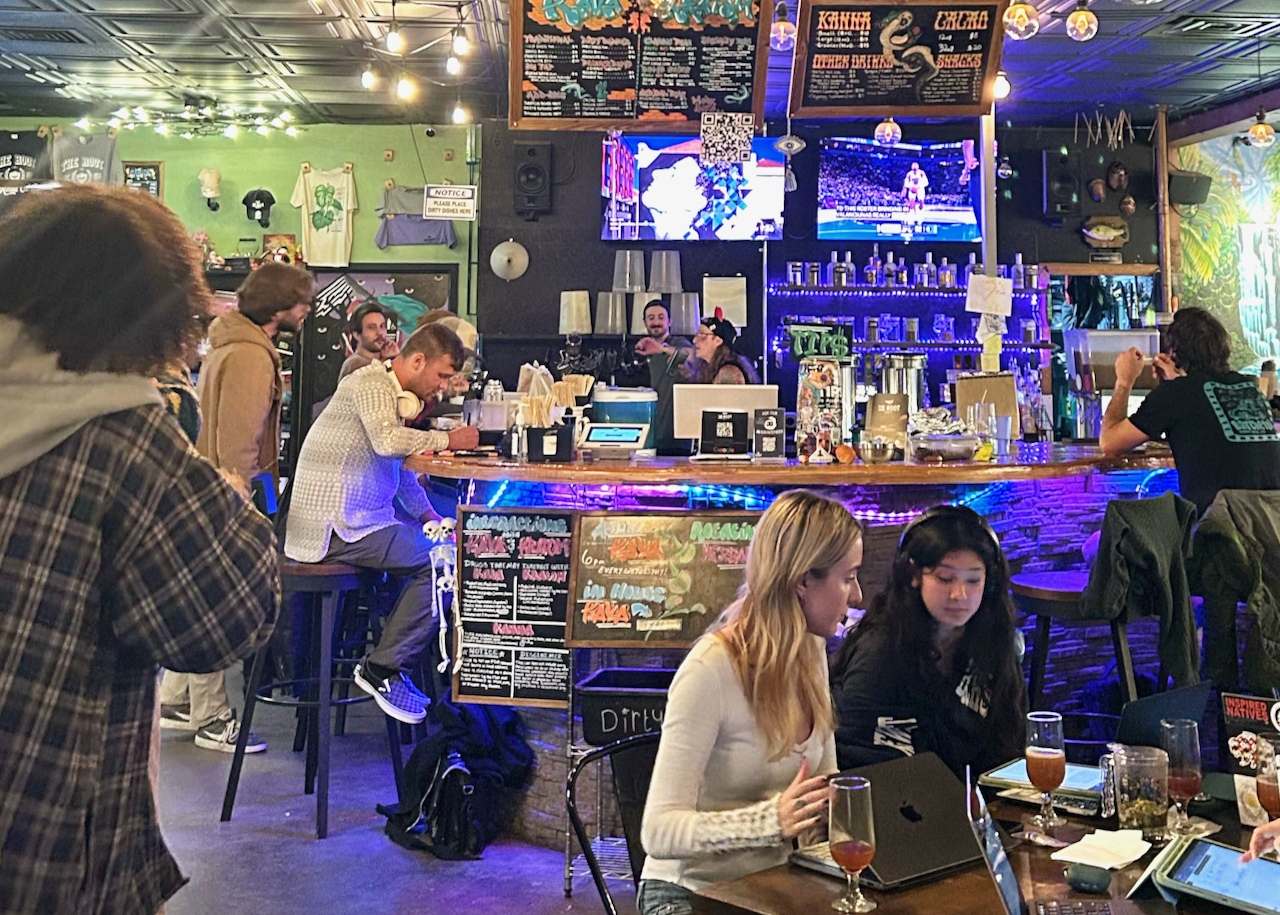
John Fernandez hangs out at The Root a few times a week and says kava helps him feel relaxed.
“I usually order a shell of traditional kava,” Fernandez said. “It definitely hits you the way it’s supposed to when it’s consumed in its most traditional form. So, I try to stick to that.”
On a brisk fall Monday evening, Fernandez gets comfortable on his usual barstool nestled in the back corner of the bar and orders his usual drink. He decompresses from his workday by chatting with his friend about the most recent episode of “Dancing With The Stars” and other mindless gossip.
“It’s that same parallel atmosphere as a dive bar, where everyone knows each other,” Fernandez said. “They’ve been coming here for a while. It’s really a sense of community.”
While sometimes used as an alcoholic substitute, kava still can be harmful despite the health marketing claims. Pytell says that kava may be associated with liver damage and toxicity.
“It’s not a zero-risk substance,” Pytell said. “Hypertoxicity or liver injury from kava, there seems to be a pretty strong association and causable mechanism there, and we don’t know who’s going to develop these adverse effects from using kava.”
The other popular plant-based drink served widely at kava bars, kratom, remains controversial due to its opioid-like effects.
Williams discovered kratom while practicing complicated tricks at the skate park and says he was drawn to its pain-relieving effects. That’s when he began drinking kratom every day.
“It really helps with the aches and pains that I get,” Williams said. “Drinking kratom helps me endure that pain and move on from it.”
Despite Williams’ claims, there are reported risks associated with kratom. A 2018 Food and Drug Administration warning on kratom alerted users of its potential for addiction and adverse health conditions when used in high doses. In extreme situations, the FDA warned that kratom can even lead to death when used with intoxicating products such as fentanyl.
“Kratom has been around in popular culture a lot more, and kava is just now on the rise,” Pytell said. “What we do know is people can develop a dependence and tolerance for kratom, and it can require treatment.”
Two years ago, a jury awarded $2.5 million to the family of Patrick Coyne, 39, who died in 2020 after consuming a large amount of kratom.
The increased number of kava bars across the U.S. raises questions about safety and the “all natural” marketing of the potentially harmful substances. Nevertheless, kava bars have proven popular.
“It has only been a couple decades since kava was introduced into the U.S., and new things are scary for people,” Williams said.