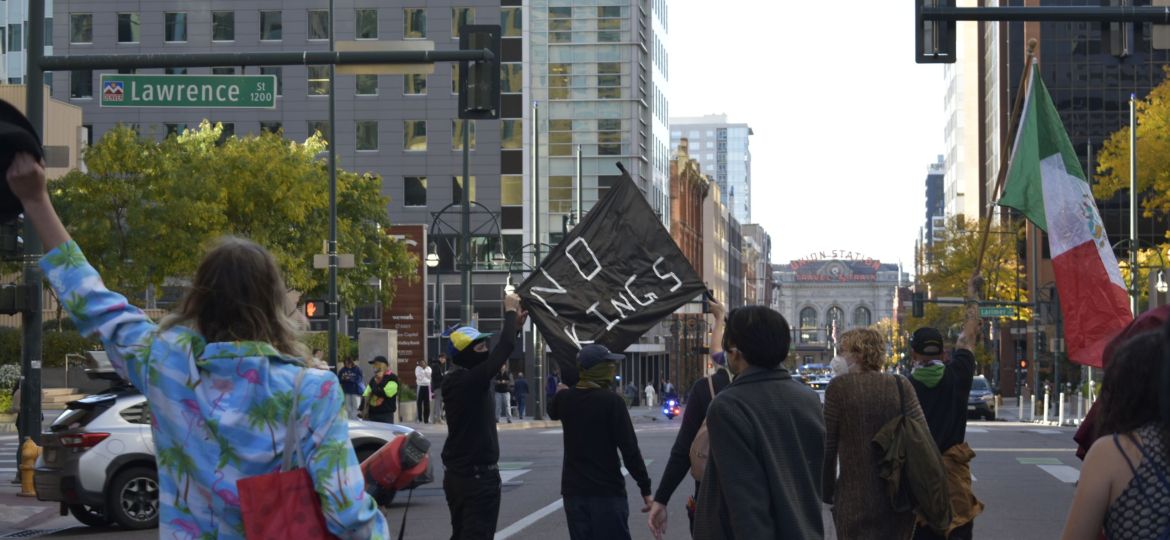
Grasping For Grassroots
Hope is alive and it resides in your next-door neighbor.
By Keeley Haynes
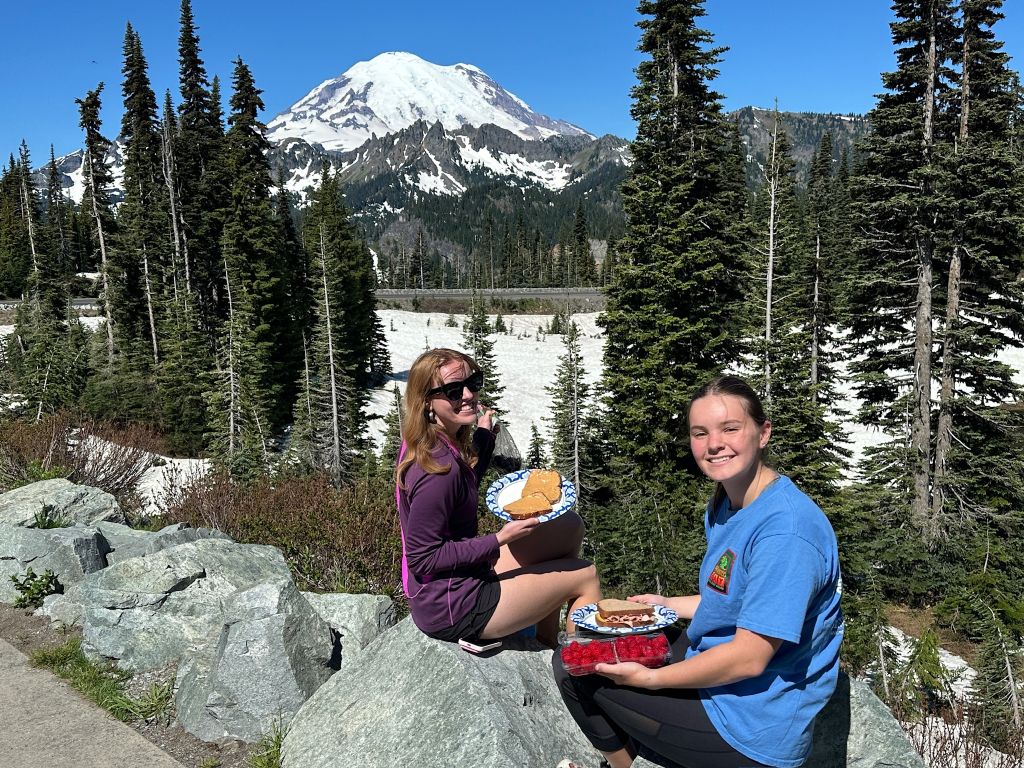
This past summer, my best friend Kate and I drove 5,000 miles, hiking our way through 12 national parks in 17 days. The height of the Redwoods made us question the power of gravity, and the magnitude of Yosemite’s mountains made us question the weight of our existence. The Pacific Ocean’s sand grounded me, and Crater Lake’s cliffs cradled me.
Yet, surprisingly, the most impactful experience I had on the trip was not witnessing some of Earth’s grandest beauties in the company of my favorite person. It was meeting Cedar Brooks.
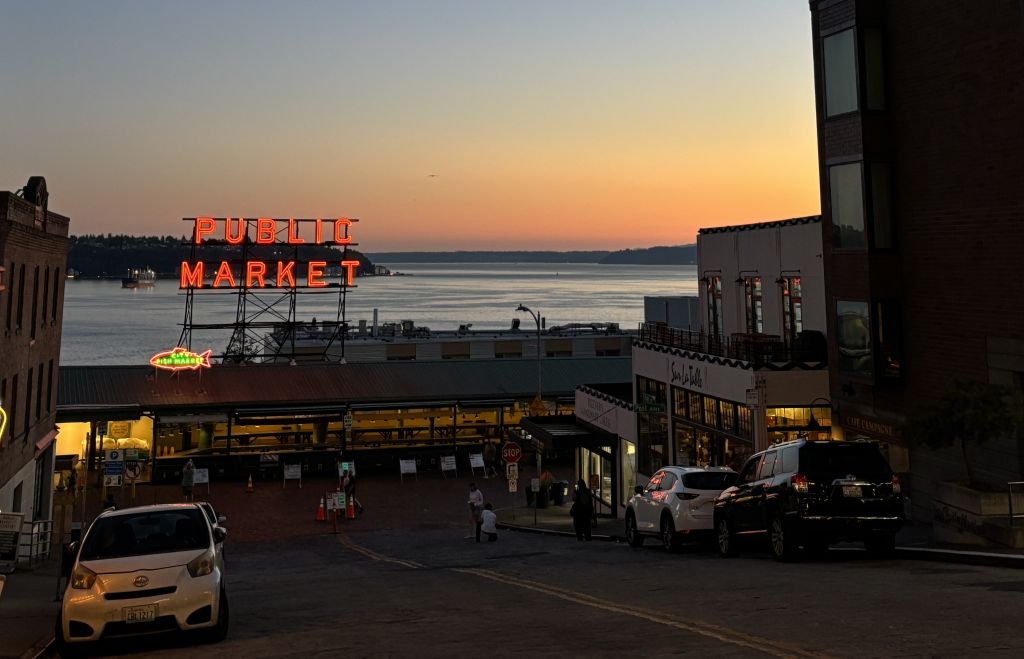
One night, after an overpriced dinner on the Seattle pier, Kate and I needed to kill time. We roamed the boardwalk, searching for a place to let our food settle. We found a vacant seat on a sticky wooden bench in front of a tourist shop. Next to us sat a cross-legged woman in a worn green pullover. A half-open navy suitcase leaned against her side. I could only tell her age from the faint streaks of gray coursing through her mousy brown hair. She wore a pair of reading glasses missing their left arm, causing the frames to lay crooked across the narrow bridge of her nose. Her brow was furrowed, fixated on the small object her nimble fingers fidgeted with.
Kate and I disregarded the mysterious woman. Instead, we people-watched – rating outfits, making up stories, giving life to the people passing by us. But right as we were about to play another round of “Are They European?,” the woman broke the unspoken barrier between us.
“Take this magnet from me, will you? I’m going to go crazy if I keep playing with it.”
Cedar handed me a metallic Pike Place Market souvenir magnet, and our 90-minute conversation began.
She asked what we were studying in school, showered us with blunt compliments (“You could make it on TV. You have the teeth for it.”), shared about her journey on the Angel Trail, and – most importantly – scolded Seattle’s local government.
Cedar’s life revolved around Seattle. Her grandfather was an old Washington farmer. Her parents taught at the University of Washington, so the majority of her childhood was spent among college students on Capitol Hill. During her adult life, she moved to Fremont but continued to live next to a rambunctious gay couple who loved to party. Cedar’s stories made it clear: Seattle was her love.
However, Cedar could not help but express her disappointment in what her city had become. During COVID, the city spent $50,000 on new trash cans to “clean up the city,” while homeless shelters remained at capacity and were unable to accommodate housing requests. Shelters in Seattle have continued to close their doors due to funding cuts and crime rates, which leave houseless people endangered on the streets.
Cedar felt the pain of the shelter’s shutterings personally. She knew two women who took their own lives after Mary’s Place, a local nonprofit women’s shelter, closed the doors of their day center. The anger she felt over this loss only caused her to get active. She began attending city council meetings to advocate for those in need of day centers and shelters, frequently and fervently enough to the point where city council members sighed when they saw her face at public forums. She knew everything from Seattle’s budget breakdowns to the corruptive money laundering that occurred throughout the city’s shelter services. Even during our brief and fleeting conversation, her abhorrence at Seattle’s response was infectious enough to rile me up about the local politics of a city I was just passing through.
Witnessing her visible passion – her tonal inflections, her leaning posture, her shaking hands – sparked something in me that I haven’t felt since 2020.
In my lifetime, only two social movements have made me feel like the people hold the power in America: the 2016 Women’s March and the 2020 Black Lives Matter protests. Maybe it was my early-teenage naivety, but the mobilization of the masses across the country made me believe that change was on the horizon. Citizens were taking action, and the people in power were getting scared.
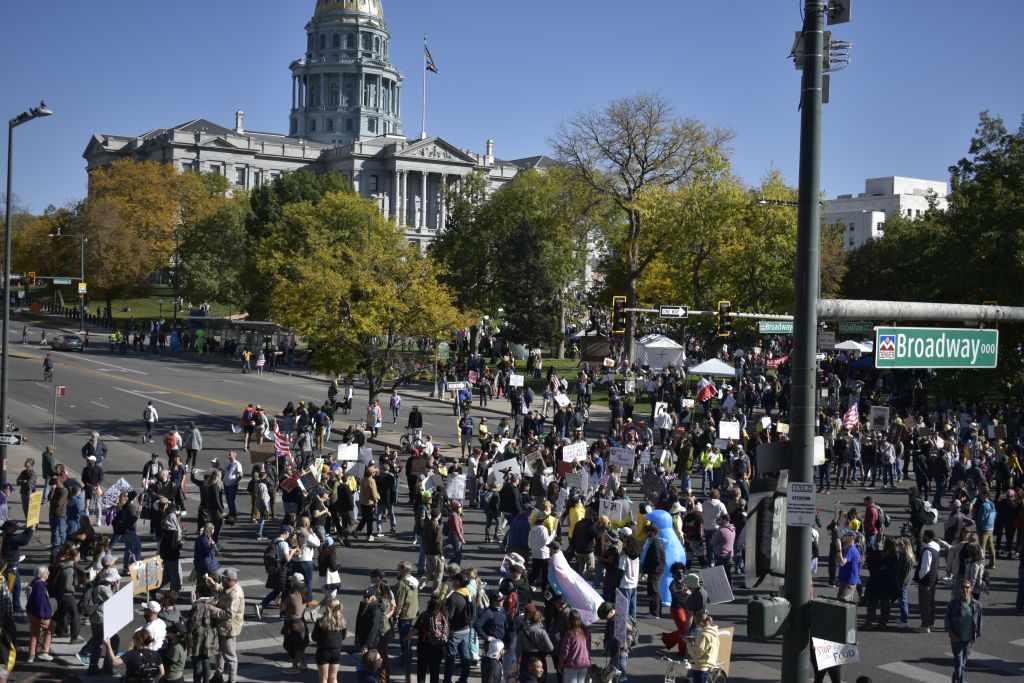
I can’t help but compare these examples to the mass protests of today. Take the No Kings protest, for example. On Oct. 18, 7 million people gathered across the country to denounce the tyrannical reign and absolute power Trump threatens. People lined major highways with signs reading “Defend Our Democracy” and “United Against Hate.” And while I agree with the organizers’ mission and the protestors’ sentiment, something about these protests feels lacking to me. They feel directionless. Actionless. Even scarier, they feel helpless. Like a loose, broad attempt at resistance because the American people are so paralyzed by doom that they don’t know what else to do.
Since Trump reclaimed his seat in the Oval Office, I’ve perceived the world through a nihilistic lens of hopelessness. I no longer feel any emotion when I read about another defunded multicultural education center or another ICE raid or another missile attack on Palestinians. I numbly accept these atrocities as reality because it feels like there is nothing I can individually do to change them.
And to me, that is the most evil thing Donald Trump has done: killing my – and America’s – revolutionary spirit.
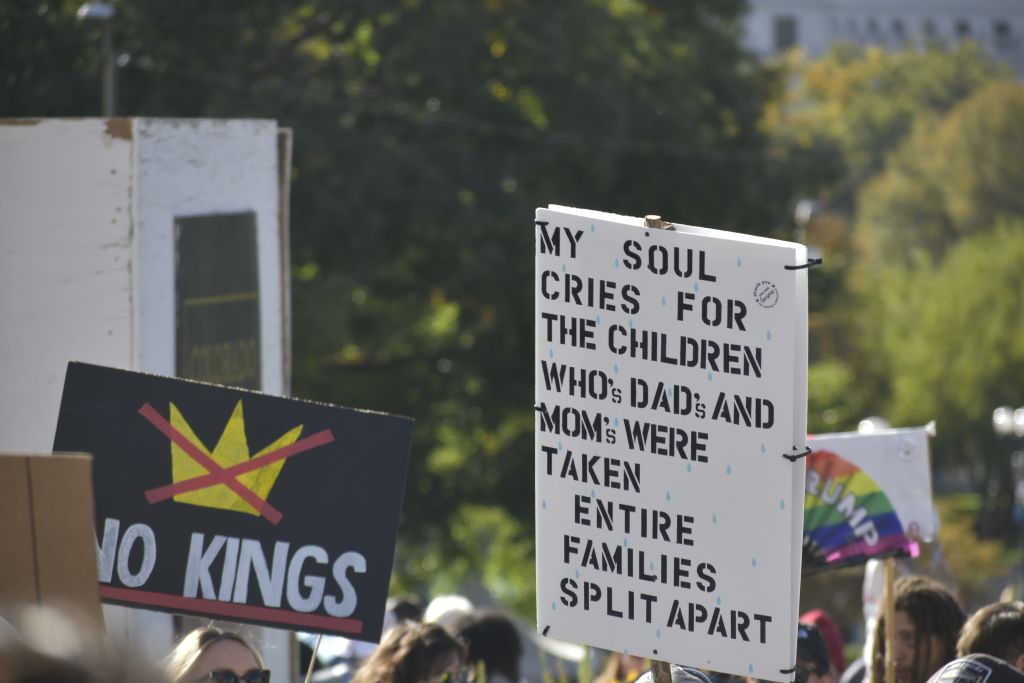
Yet it only took an exchange of a magnet and one conversation with a stranger to rekindle the lost fire inside me. To remind me that the human voice has power, and that it is loudest when it is not overshadowed by senseless Congressional noise. It echoes in the ears of the community. It inspires. It mobilizes. It restores hope.
As a whole, we Americans need to exert our anger, our fear, our sadness, our exhaustion into our local communities. We need to shadow Cedar and become experts on our towns and cities’ bills, policies and mandates. We need to start attending city council meetings. We need to start voting in local elections. We need to reconnect with each other to spark small, good and visible change.
So take the hand of your neighbor. Within their embrace is the democratic power we have a civic duty to protect. Feel it. Hold it. Act on it.