
A map of Latin America is pinned to show the countries of origin for students living at CU Boulder’s Hallett Hall as of Oct. 21, 2026. (Photo by Ašiihkionkonci Parker)
CU Boulder's centers for Latine students are struggling one year after funding cuts
CU Boulder’s Latin American and Latinx Studies Center has canceled a new language learning program after the loss of a $150,000 National Endowment for the Humanities grant.
Following the reelection of President Donald Trump, the administration began cutting U.S. Department of Education funding for universities around the country, including CU Boulder.
By September 2025, the university had nearly $30 million in federal funding cut over misaligned goals regarding DEI. The targeted initiatives disadvantaged white students, the Trump administration alleged, citing the Civil Rights Act of 1964.
Most of the cuts fell on STEM departments that were able to make up for lost revenue through nonprofits and international funding. Social sciences, however, were forced to find external funding sources.
Two of the major cultural and social science research centers at CU Boulder that were most affected were the Bilinguals United for Education and New Opportunities (BUENO) Center and the Latin American and Latinx Studies Center.
Both of these centers have historically operated through government stipends without institutional support.
“It’s like they’re attacking my family and my culture,” said third-year Chicano Studies student Isabella Garwood.
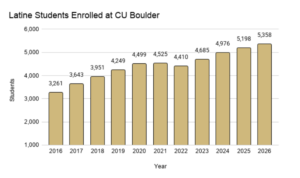
Both the BUENO Center and Latin American and Latinx Studies Center (LALSC) serve the slowly increasing Latine population on CU Boulder’s campus. As that population has grown by almost 200 students in the last year, the centers have struggled to stay afloat.
The BUENO Center lost over $3 million in Department of Education financing for three of its programs: a GED program for migrants and farmworkers; the College Assistance Migrant Program (CAMP), which provides tuition and community for migrant students; and a master’s program for rural educators.
CAMP has been renamed Patitos (Ducklings) to differentiate the CU-specific program from the Department of Education’s CAMP initiative.
“For me, our work is more than just programs and funding,” said Tania Hogan, executive director of the BUENO Center. “It’s the people and the possibilities that we bring … and I think that’s my even bigger concern.”
The BUENO Center received short-term funding from the university to cover the bare minimum cost of these programs, which lasted until June 2025.
Now, it operates based on private funding from various grants, individual donations and professional workshops for teachers.
“In the last year, I’ve applied for 31 grants total … the year before, I might have applied to five,” Hogan said.
Out of the $3 million loss, Patitos was the majority with $1.76 million. Before receiving an official letter of noncontinuation, they had stopped receiving money for these programs entirely from the federal government.
The funds had been promised to the program as part of a five-year grant.
“We went down from three full-time staff members to two,” Patitos program director Robert Garcia said. “Instead of serving 30 to 35 students, we’re serving 20 to 25 because that’s what’s manageable per year.”
These are not the only ways in which the Patitos program has had to reshape itself since having to rely on community and alternative grant funding.
The staff has also stopped recruiting and relies on word of mouth about the program because they can’t make any guarantees, Garcia explained.
“You’re lucky if you even make it into the few spots available,” Garwood said. The waitlist for the migrant-assisting program is long, and other Colorado colleges offer more support, according to Garwood.
The change within the campus Latine community can be felt and Garwood said there’s not a lot of organizational support for migrant students at CU Boulder.
“I have friends who feel like the university has abandoned them,” she said. “They were recruited and told they could find community, but now it’s hard to even stay in the community.”
The BUENO Center and its programs weren’t the only ones directly impacted by the loss of funding.
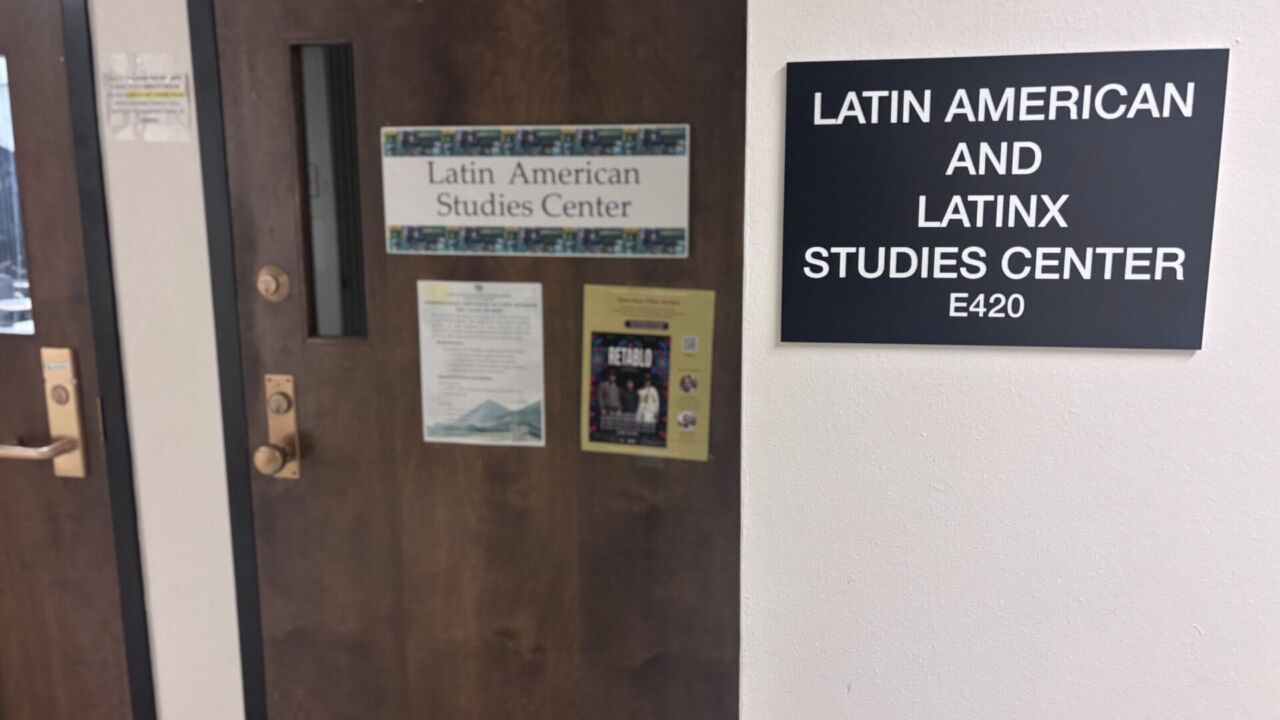
The LALSC lost two major grants that totaled $400,000, which helped fund Latin American Studies classes, an undergraduate certificate and the Quechua Indigenous language program.
LALSC received a federal Title VI Grant, which is used to fund international language education.
Previously, they had also been selected to receive a highly competitive National Endowment of the Humanities grant to fund Quechua and a planned Zapotec program, but cuts to both grants stopped progress on the new language program.
“The funds were rescinded, we believe due to the (Department of Government Efficiency) screening of grants and selective pulling they did based on keyword searches,” said Joe Bryan, the director of the LALSC and is an associate professor in geography.
Elon Musk’s DOGE was a federal agency with the goal of reducing government spending.
Another problem the LALSC faces comes from the College of Arts and Sciences. They’ve adopted a new budget model which emphasizes student credit hours of classes.
“Indigenous languages are just never going to be big enrollers to put it straight,” Bryan said. “And that doesn’t mean it’s not important, far from it.”
Because there is a large focus on enrollment, Indigenous language classes that don’t have large numbers of students will be scrutinized and potentially cut, according to Bryan.
Despite issues, the LALSC has been able to stay afloat by growing visibility.
“Why shouldn’t we be able to study our own communities and cultures? Defunding these programs sends the message that we aren’t worth the academic time,” Garwood said, adding that she believes it’s an attempt by the Trump administration to prevent dissent.
“When the Chicano communities organized and advanced their learning in the ’70s with other marginalized groups, we shook the core of this country,” Garwood said. “The structures of power don’t want that to happen again.”
CU Boulder was the home to tumultuous events surrounding the Chicano Movement and the death of six activists in two car bombings known today as Los Seis de Boulder (The Boulder Six).
Members of United Mexican American Students protested and organized for equal representation on campus, leading to the creation of today’s Ethnic Studies Department.
“There’s an old saying from the Chicano Movement,” Garwood said. “Lost to our land, education is our stand — I think it still holds up for the Latino community today.”