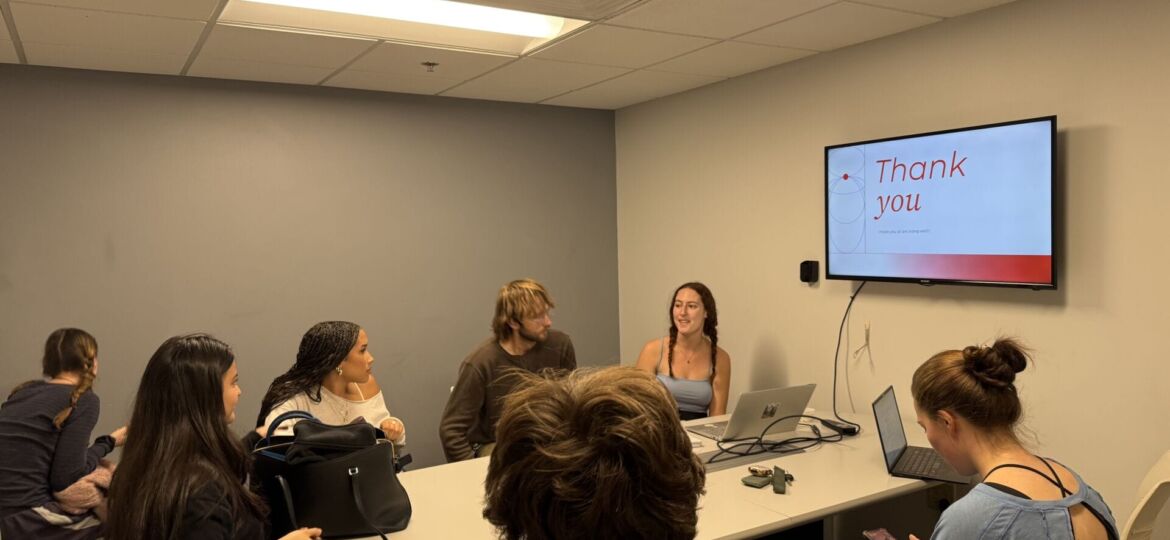
Circular Solutions members gather for their weekly meeting on Oct. 20, 2026. (Photo by Ellie Chase)
Reusing graduation gowns and fraternity recycling initiatives coming to CU Boulder
The University of Colorado Boulder Environmental Board subcommittee, Circular Solutions, met Oct. 20 to discuss its next two campus-based initiatives: graduation cap and gown reuse and implementing recycling into fraternity parties.
Both projects are part of the subcommittee’s push to cut single-use waste and shift the campus and broader Boulder community toward a circular economy centered on reuse.
Circular Solutions operates under the environmental board, a joint board between CU Student Government and the Environmental Center that shapes campus sustainability policy and oversees the center’s $2 million budget.
“Our role on campus helps reduce emissions by keeping the economy in a loop rather than encouraging people to buy new,” said Abbey Baldwin, a senior and founder of Circular Solutions. “We want to stop this one-time use waste and turn it into something more productive.”
The meeting introduced a new project to substantially increase cap and gown donations this year to support financial accessibility and reduce the mass of textile waste produced from graduation.
The initiative will include making boxes to disperse at more convenient locations off-campus and pushing for announcements at graduation urging students to donate their attire after the ceremony.
“The cap and gown project will help reduce emissions because they are made out of polyester, and you only wear them once,” Baldwin said.
Polyester can take from 20 to 200 years to decompose naturally, according to Biology Insights, compared to four months for cotton fabrics. Not only that, but the production of these textiles also contributes to greenhouse gas emissions.
Additionally, the chemical form of polyester is polyethylene terephthalate, which is used to produce plastic beverage bottles. Plastic bottles take about 450 years to decompose, according to a Texas-based energy company called Chariot Energy. Only 9% of these single-use plastics are recycled worldwide, the Organisation for Economic Co-operation and Development estimates.
“I’ve grown up recycling; it’s always been an important part of my life and I think it’s so important to keep things out of the landfills,” said senior Christian Vandenberg, co-chair of Circular Solutions.
Circular Solutions is combating plastic beverage waste on campus with its second new initiative to introduce conscious recycling at fraternity parties.
Representatives met with 10 fraternity presidents to propose recycling competitions, which, according to the committee, were “well received.”
The project is headed by co-chair Alex Gonder, a senior majoring in environmental studies, who plans to gradually replace fraternity trash bins with recycling bins and educate first-year members on correctly sorting waste.
“When you’re trying to make positive environmental change, it’s to mitigate the negative effects of climate change,” Gonder said. “We want to make change by students, for students.”