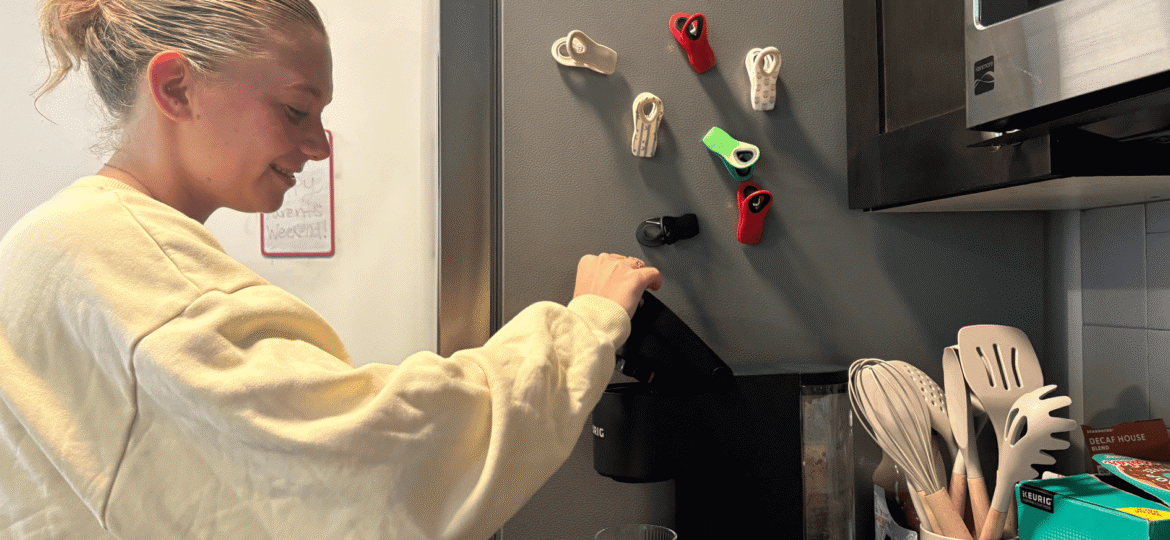
CU Boulder student Lily Kay makes coffee at home on Oct. 1, 2026. (Photo by Ava Strauss)
CU students' caffeine consumption could be putting them at risk
University of Colorado Boulder sophomore Lily Kay consumes up to three coffees and an energy drink on an average day.
“I wake up, the first thing I do is make a 10-ounce coffee, hot coffee, then I typically eat lunch with another coffee that I get from Starbucks, and then around 5 p.m. I have an Alani energy drink,” said Kay, “And sometimes I’ll end the night with a decaf coffee.”
At CU Boulder, students are actively balancing class, work, studying, social activities and exercise. Caffeine is a common way to stay energized and on top of daily tasks.
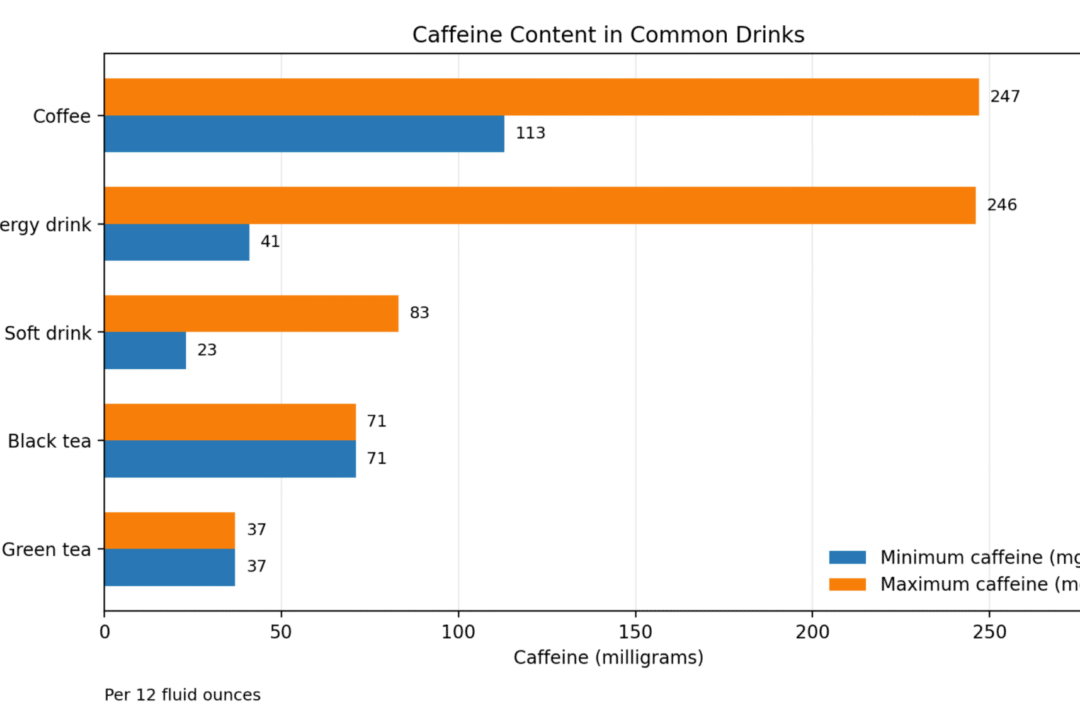
Caffeine content varies widely among common drinks, with coffee and energy drinks containing some of the highest amounts per 12-fluid-ounce serving.
For Ava Frankel, another sophomore at CU Boulder, caffeine consumption looks different.
“I would say I probably consume caffeine once a month, like that’s pushing it,” Frankel said.
People can develop a tolerance to caffeine relatively quickly, meaning they may need to consume more caffeine or consume it more frequently to achieve the same effects, said Albert Angiolillo, an assistant teaching professor of integrative physiology at CU Boulder.
“People that develop the habituation to caffeine are going to experience withdrawal-like effects,” said Angiolillo. “You’re going to experience more of the lethargy, of course, so people will be very tired. And on top of that, a lot of people experience headaches, and those can even be as significant as migraines.”
Kay says that cutting back on the caffeine has been difficult. She has tried to go without coffee, but the effects can interfere with the rest of her day.
“I get insane migraines if I don’t have coffee by like 12 p.m., and it affects the rest of my day if I don’t have at least two cups of coffee, I’m really tired and exhausted and I typically get a headache,” Kay said.

Caffeine works in part by blocking adenosine, a chemical that builds up in the brain and promotes feelings of sleepiness. Lisa Whalen, a registered dietitian nutritionist with CU Boulder Campus Dining, said regular caffeine consumption can make it harder for people to recognize when they are tired.
“Caffeine does not provide energy in any sense. It simply helps to increase your resistance to fatigue,” said Angiolillo. “The way that it functions physiologically is just that it makes you feel more alert. But it’s not actually giving you energy.”
Caffeine use is common among college students. A 2019 study published in Clinical Nutrition surveyed 1,248 students at five U.S. universities and found that 92% had consumed caffeine in the year prior.
Students most commonly reported using caffeine to feel awake (79%), because they enjoy the taste (68%), the social aspects of consumption (39%) and to improve concentration (31%).
“I honestly just don’t like it. I think also growing up, my mom was addicted to coffee, and she would always just be like ‘never have coffee, don’t get in, don’t do it, I can’t start my day without it.” Frankel said. “I think that just put me off from it, she never really let me have coffee, and then I think the first time I tried coffee was in eighth grade, and I just didn’t like the taste of it.’”
“Up to 400 milligrams per day isn’t a lot of cups of coffee. Very, very easy to go over, especially if it’s finals or, you know, any type of studying,” Whalen said. “If a student can’t function without it, they can’t get up in the morning without it or stay awake to study: That’s when, you know, anybody would know they have probably a little bit of an issue with it.”
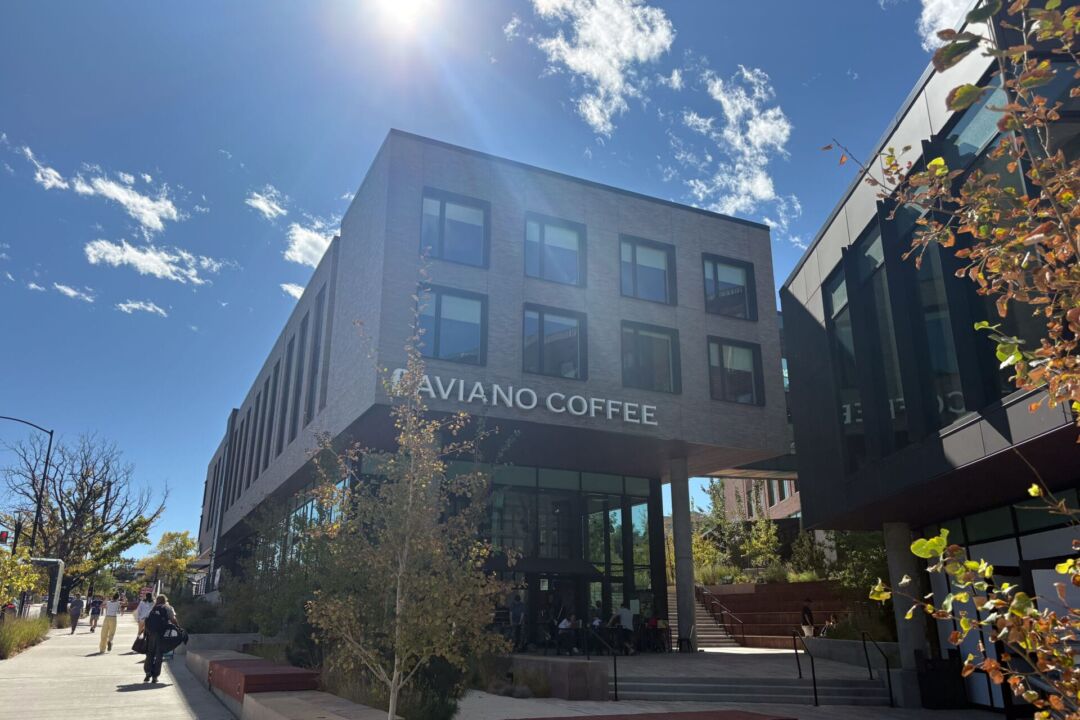
Coming to college has only made Kay’s caffeine reliance stronger.
“I think I drink more coffee now than ever,” Kay said. “I have coffee to keep me motivated for class and keep me energized to do my homework at night, and I just think that since we have so many coffee places on the hill, it makes it easier to just want to get it because I also like the taste of coffee.”
Frankel says on days where she feels more lethargic than others, she never turns to caffeine but finds other remedies that fit her lifestyle better.
“I could be tired and I’ll still do everything I need to do.” Frankel said. “Like to wake myself up, I’ll take a cold shower or I’ll take a nap.”