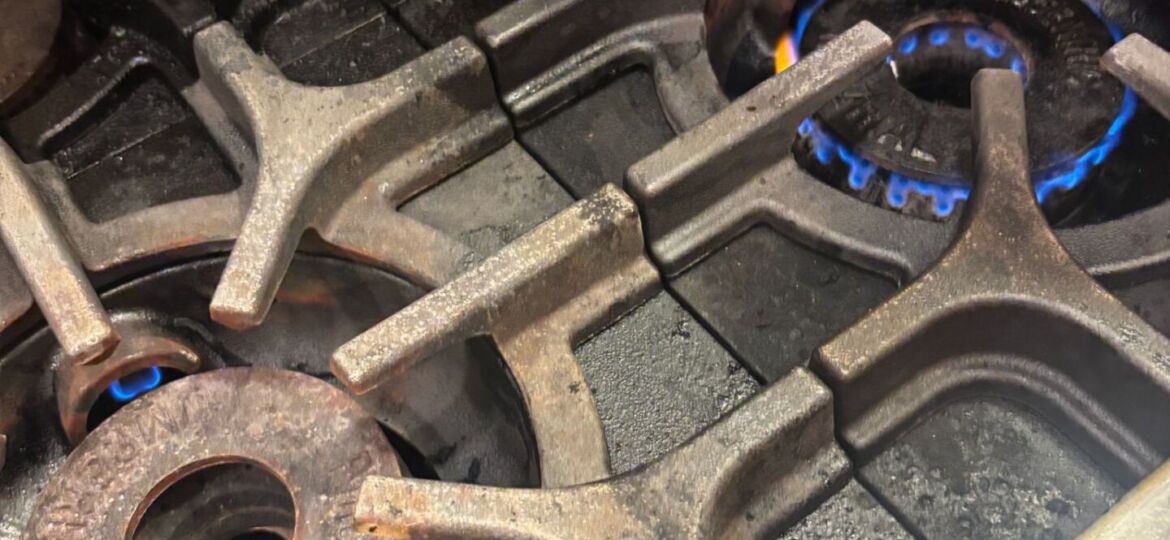
These burners on the stovetop at Kappa Alpha Theta sorority house at CU Boulder, pictured on Oct. 18, 2026, use natural gas. (Photo by Caitlyn Garza)
The constitutional right to natural gas is on the ballot. How will it impact Colorado residents?
By Caitlyn Garza
As colder weather approaches in Colorado, residents will switch from AC and fans to heating. However, 83% of residents’ home-heating method is on the 2026 Colorado ballot.
Amendment 82 would put into the constitution that consumers have the right to buy natural gas for cooking and heating. It would give distributors and utilities the right to sell natural gas to homes and businesses. The key word is the right — the amendment would protect the ability to buy and sell natural gas.
The amendment targets Colorado residents who use gas for cooking and heating in their homes; that 83% number comes from the U.S. Energy Information Administration in 2020. At that time, 10% of the state’s homes were all electric.
The former camp includes Frank DeMauro, a Denver resident of 21 years.
“I don’t know if the choice for heating and cooking is one of those things that needs to be protected,” DeMauro said.
DeMauro sees it as unnecessary because nothing is happening to take his gas heating and cooking system away. He predicted that it could affect future homes being built, but as a current homeowner, he doesn’t need this right.
“I’m already using gas. There’s already the infrastructure to deliver gas to my house,” DeMauro said.
Valencia Martinez is the facilities manager at the Kappa Alpha Theta house at the University of Colorado Boulder. A boiler system heats the house, but they use a gas stove and oven to cook the food.
Martinez recognizes a benefit to having this amendment: the choice to keep natural gas.
The sorority house is very old, and the gas appliances have been in the house since it was built. If any legislation prohibited gas-cooking appliances, it would cost a pretty penny to add new electric stoves and ovens.
“I think that it is important to have that option,” Martinez said.

Amendment 82 would also threaten regulations that prevent the sale and distribution of natural gas. This includes Colorado’s Clean Heat Plan.
According to the Colorado Public Utilities Commission, the Clean Heat Plan sets greenhouse gas reduction targets —22% less in 2030 than in 2015 — and regulates natural gas utilities, like Xcel Energy, that sell to retail customers.
The organization opposing this proposed amendment is Conservation Colorado, a nonprofit environmental organization.
Jenny Gaeng, senior political program manager at Conservation Colorado, thinks that the amendment will affect low-income communities and communities of color.
“Low income communities and communities of color are more likely to live in heavily polluted areas. We see that in Denver and all across the state, unfortunately,” Gaeng said.
The right to natural gas could become the right to pollute for corporations, Gaeng said, believing the amendment could loosen protective regulations involving natural gas — like how close fracking sites can be to homes.
“It gives corporate polluters the ability to look at any regulation, and challenge it, and say, ‘This interferes with my constitutional right to sell natural gas,’” Gaeng said.
Advance Colorado, a conservative nonprofit organization that sponsored Amendment 82, didn’t respond to The Bold’s requests for comment.
The debate on gas stoves has become a partisan topic since research in 2023 showed children with breathing problems like asthma can experience health effects from exposure to gas stoves. Republican politicians like Florida Gov. Ron DeSantis and Ohio U.S. Rep. Jim Jordan rallied to protect Americans’ rights to have gas stoves.
The debate became a trendy topic that gained clicks and created a new issue to take sides on, and has resurfaced in 2026 through Amendment 82 in Colorado.